o p t i m a r o b o t i c s

Blogs

10 Tips for Choosing Air Tube Fittings?

Choosing Air Tube Fittings seems straightforward until a connection leaks, loosens, or fails under pressure. In real workshops, small choices often create expensive problems. Tube size, fitting material, thread type, operating pressure, and temperature can all affect performance. This guide presents ten practical tips for making safer, more reliable decisions. Fit matters.

The discussion reflects common maintenance experience and established pneumatic practices. A technician should measure the tube’s outside diameter, inspect its surface, and confirm the fitting’s rated pressure. He should also consider vibration, moisture, chemicals, and repeated disconnection. A fitting that works well in a clean laboratory may struggle beside an oily compressor. Small details matter. Seal selection matters, too. PTFE tape, O-rings, and thread sealants are not interchangeable in every application.

Reliable recommendations should come from manufacturer specifications, testing data, and careful field observation. Still, no checklist can replace professional judgment. Some product labels remain unclear, and actual conditions may differ from catalog examples. That is worth admitting. When specifications conflict, pause and verify them with the manufacturer or a qualified engineer. Never guess.

By following these ten tips, readers can compare fittings more confidently, reduce leakage risks, and improve service life. The goal is not simply to buy a connector. It is to select a compatible component that performs consistently in its actual working environment. A thoughtful choice today may prevent hours of downtime tomorrow.
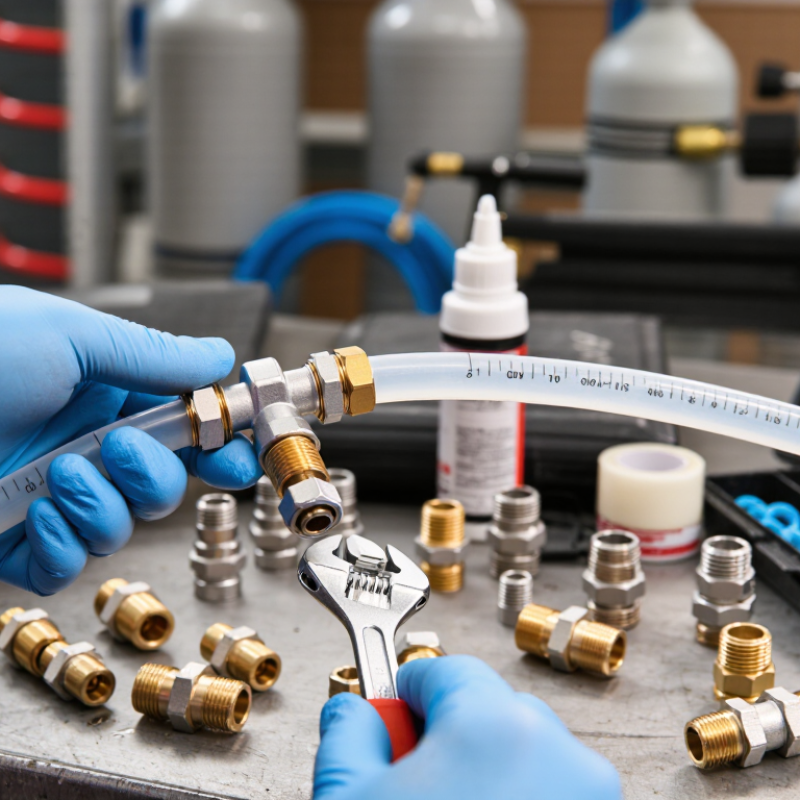
10 Tips for Choosing Air Tube Fittings?

Identify the Air Tube Fitting Type and Connection Standard

Choosing an air tube fitting starts with identifying the connection standard, not its appearance. Check the tube’s outside diameter, such as 6 mm or 1/4 inch, with a caliper. Then identify the port thread: NPT, BSPP, BSPT, or metric. These standards are not interchangeable. A fitting may screw in while still leaking.

The ISO 14743 standard covers push-in connectors for thermoplastic tubes. ISO 4414 also emphasizes safe pneumatic-system design, including pressure control and leakage prevention. In practice, confirm the fitting’s pressure and temperature ratings against the actual equipment.

Polyurethane, nylon, and polyethylene tubes can behave differently under heat, vibration, and repeated bending. I have seen installations fail because the tube size was correct, but the thread standard was wrong.

Tip: Read the port marking first. Use a thread gauge when markings are unclear. Do not rely on visual matching.

The U.S. Department of Energy reports that compressed-air systems can represent about 10% of industrial electricity use. Its compressed-air guidance also indicates that leaks may waste 20–30% of system output. Correct fitting selection helps reduce this avoidable loss.

Inspect the sealing method, insertion depth, and tube cut. A slanted cut can damage the seal. An adapter may solve a mismatch, but it also adds another leak point. That trade-off deserves review. Record the standard, size, material, and rated pressure before ordering replacement parts.

Match Fitting Materials with Pressure, Temperature, and Fluid Conditions

Choosing air tube fittings is not only a thread-size decision. Material must match pressure, temperature, and fluid conditions. The U.S. Department of Energy reports that compressed-air leaks can waste 20–30% of compressor output. A poor material choice may create those leaks. Use brass for common dry-air systems, stainless steel for corrosive surroundings, and engineered polymers where weight and chemical resistance matter. Check the fitting’s pressure rating at the actual operating temperature, not at room temperature.

Use these ten checks: confirm tube material, verify outside diameter, compare working pressure, review temperature limits, identify fluid contaminants, inspect moisture exposure, check thread compatibility, select the correct seal, avoid sharp bending, and test every joint after installation. ISO 4414 stresses safe pneumatic design, isolation, and controlled pressure release. Those requirements make small fitting details important. Hot air can soften polymers. Water can corrode unsuitable metals. Oil mist can damage some sealing compounds.

Field experience shows that technicians often trust the fitting body more than the specification sheet. That is risky. Pressure ratings may change with temperature, tube hardness, vibration, and repeated assembly. The DOE sourcebook also recommends controlling leaks through regular inspection, not occasional tightening. I have seen a fitting pass a bench test yet fail after vibration and condensation. That detail is easy to miss. Leave room for movement, keep tubes clean during cutting, and perform a pressure-drop check under operating conditions. A fitting that looks perfect may still waste energy.

Choose the Correct Tube Size, Shape, and Compatibility

Choosing the correct tube size is the foundation of a dependable pneumatic connection. Measure the tube’s outside diameter, not only its internal opening. A small mismatch can cause leaks, even when the fitting appears secure. Metric and inch sizes may look nearly identical. They are not interchangeable. Check the supplier’s dimensional chart before ordering.

Tube shape also affects performance. Straight fittings suit open runs, while elbow fittings help tubing turn around tight machine frames. Y-shaped fittings can divide airflow, but they may create uneven pressure between branches.

Keep bends smooth. Sharp bends can restrict flow or fatigue the tube wall. I have seen a neatly installed line fail because the tube was forced against a metal edge.

Compatibility requires more than matching size. Confirm the fitting material against the tube material, working pressure, temperature range, and surrounding chemicals. Nylon, polyurethane, and fluoropolymer tubes can behave differently under heat or repeated movement. Thread type matters too. Verify thread size and sealing method before assembly. Test the connection at operating pressure, then inspect it after several hours. A soap solution can reveal tiny bubbles. Do not rely only on hand-tightening. In practice, I sometimes choose a more flexible tube than necessary, then question that decision after routing it through a crowded panel. Rechecking the installation is not wasted effort.

Evaluate Sealing Methods, Installation, and Maintenance Needs

10 Tips for Choosing Air Tube Fittings

Air tube fittings should be selected around sealing performance, installation conditions, and maintenance access. Check the tube material, outside diameter, and working pressure before comparing fitting shapes. Match the fitting seal to air quality, temperature, vibration, and chemical exposure. Prefer designs that maintain sealing force during pressure cycles. Inspect threads and sealing surfaces for scratches or contamination. Small defects can cause large losses.

The U.S. Department of Energy’s Improving Compressed Air System Performance sourcebook estimates that leaks may waste 20–30% of compressor output. The figure varies by system age and maintenance quality, but it deserves attention.

Test fittings with approved leak-detection fluid after installation. Never rely only on sound; small leaks can remain almost silent. Choose push-to-connect fittings when quick replacement matters, but verify tube insertion depth carefully. Use threaded fittings with suitable sealants, while keeping sealant away from the air passage. That detail is easy to miss.

Allow enough space for tool access and tube bending. Tight bends can pull fittings sideways and weaken seals. Consider vibration-resistant connections near cylinders and moving equipment. Mark inspection points on maintenance drawings. Replace damaged tubes instead of forcing a fitting to compensate. A practical review should include installation time, spare-part availability, and cleaning requirements. I have seen teams select the cheapest fitting, then overlook repeated retightening. That choice needs reflection. A fitting that installs quickly but fails often is not economical. Record pressure, temperature, and leak-test results during commissioning for more reliable future maintenance.

Compare Safety, Durability, Cost, and Supplier Quality

Choosing air tube fittings is a safety and cost decision, not merely a size check. Match tube material, pressure rating, temperature range, thread type, and sealing method. ISO 4414 requires pneumatic systems to address safe design, installation, and maintenance. Check for clear pressure markings, burr-free threads, and positive tube retention. Pull-test samples when possible. A fitting that looks secure may still leak under vibration.

Durability depends on corrosion resistance, cycle life, and installation quality. Select materials suited to moisture, oil, and cleaning chemicals. Inspect the collet after repeated disconnections. Replace damaged seals, even when leakage seems minor. The U.S. Department of Energy reports that compressed-air leaks can waste 20–30% of compressor output. Small leaks become expensive quickly. Use ultrasonic testing during commissioning, then record leak locations for future audits.

Cost should include labor, downtime, replacement tubes, and air consumption. Compare tested service life, not only purchase price. Ask suppliers for dimensional tolerances, material certificates, pressure-test results, and lot traceability. ISO 9001-based quality systems can support consistency, but certification alone proves little about field performance. Review response time, technical support, warranty terms, and delivery history. A cheap fitting that fails during a night shift is not cheap. I would still challenge one assumption: the most expensive option is not automatically the safest. Trial a small batch, document failures, and let measured results guide the final purchase.

Brands

Proudly Trusted by Top Suppliers Worldwide

Let us know and we will automate, together to fit your industrial needs.

Clients

Proudly Trusted by Top Companies Worldwide

Do you need Help? Get in touch.

X

Please fill out the form below and we will get back to you as soon as possible.

    Subscribe our newsletter & get updates