o p t i m a r o b o t i c s

Blogs

2026 Best High Quality Pipe Machine Equipment Types

Choosing the right High Quality Pipe Machine Equipment in 2026 requires more than comparing prices and production speed. Manufacturers must examine pipe materials, diameter ranges, wall thickness, tolerance requirements, and expected output. A machine built for HDPE may not suit PVC, PPR, steel, or multilayer applications. The wrong match can create uneven walls, unstable dimensions, and costly material waste.

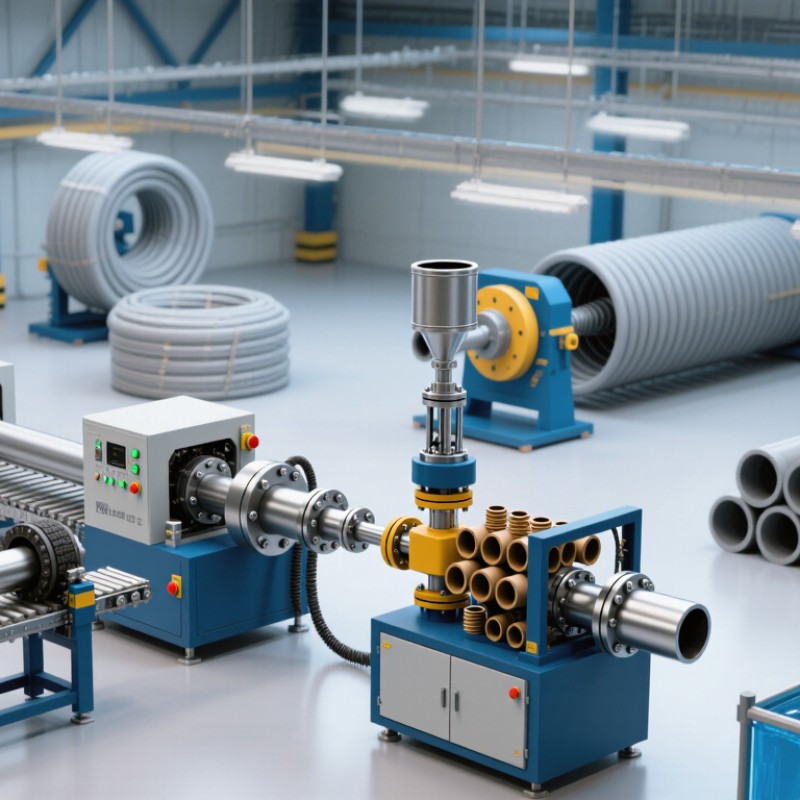
This guide introduces key equipment types, including pipe extrusion machines, injection molding systems, spiral pipe machines, corrugation lines, and precision cutting units. Each category serves a different production purpose. Extrusion lines support continuous manufacturing, while injection systems produce shaped fittings with repeatable accuracy. Corrugation equipment creates flexible drainage pipes with defined profiles. Small details matter. Cooling tanks, haul-off units, die design, and automatic control systems can influence final quality as much as the main machine.

Reliable selection should combine practical experience with supplier documentation, factory testing, and verified customer feedback. Look for clear specifications, accessible spare parts, operator training, and responsive technical support. A polished brochure is not enough. Ask how the machine performs after years of daily operation. Review energy use, maintenance intervals, safety functions, and control-system stability before making a decision.

No machine is perfect.

Even advanced equipment may require adjustment when raw materials change or production conditions shift. This article compares leading machine types through a practical, evidence-based perspective. It also highlights limitations that buyers may overlook, helping manufacturers choose dependable equipment with realistic expectations and stronger long-term value.
2026 Best High Quality Pipe Machine Equipment Types

Pipe Machine Equipment: Definition, Purpose, and Industrial Applications

Pipe Machine Equipment: Definition, Purpose, and Industrial Applications

Pipe machine equipment includes the tools and systems used to form, cut, weld, bend, and finish pipes. Common types include tube mills, pipe bending machines, threading machines, and automated cutting units. Their main purpose is to produce accurate pipes with consistent dimensions and reliable surface quality. In practical operations, equipment selection depends on pipe material, diameter, wall thickness, and production volume. Not every machine fits every workshop.

These machines support construction, water management, energy, transportation, and general manufacturing. A tube mill can shape steel strips into continuous welded pipes. A bending machine creates smooth curves for fluid lines and structural frames. Cutting and end-finishing equipment prepares clean connections for later assembly. On a production floor, sensors help control speed, pressure, and alignment. Small errors matter. A slight bend can affect installation, sealing, or long-term safety.

Tips: Check material compatibility before purchasing equipment. Review motor power, tooling range, maintenance access, and operator safety features. Keep calibration records and inspect welds regularly. A specification may look perfect on paper, yet real production conditions can expose weaknesses. Trial runs are useful, although they can reveal issues that planning missed. Clear training and practical maintenance routines often improve results more than extra automation.

Main Types of High-Quality Pipe Manufacturing Machines

High-quality pipe manufacturing begins with choosing the right machine for the material, diameter, and production target. Extrusion lines form plastic pipes by pushing heated polymer through a calibrated die. They usually include a cooling tank, haul-off unit, and automatic cutting system. Small temperature errors can create uneven walls. That detail is easy to underestimate.

For steel and stainless applications, tube mills shape strip into round sections before welding the seam. High-frequency welding machines create continuous joints, while laser systems can offer narrow, precise weld zones. Roll-forming stations must stay aligned; otherwise, pipes may twist or show unstable dimensions.

Seamless pipe equipment works differently. It uses piercing, elongation, and sizing processes to produce pipes without a longitudinal weld. These systems require stronger process control and careful inspection.

Other important machine types include pipe straighteners, end-facing units, threading machines, hydrostatic testers, and surface treatment lines. A reliable production cell connects these stages with sensors, traceable records, and regular calibration. In practical machine evaluations, testing equipment deserves the same attention as forming equipment. A beautiful surface cannot hide weak pressure performance. Energy use, changeover time, maintenance access, and operator safety also affect real quality. The fastest line is not always the best choice. Sometimes, a simpler system produces more consistent results. That trade-off deserves honest review.

Key Components and Operating Principles of Pipe Machines

2026 Best High Quality Pipe Machine Equipment Types

Key Components and Operating Principles of Pipe Machines

Choosing high-quality pipe equipment in 2026 requires more than comparing output rates. Each machine must match the material, diameter, wall thickness, and production target. Common types include extrusion lines, spiral forming machines, and seamless pipe systems. Their essential components include a rigid frame, drive motor, gearbox, forming unit, cooling section, haul-off unit, and cutter. A programmable controller coordinates these parts. Sensors monitor temperature, speed, pressure, and alignment.

In an extrusion machine, heated material moves through a rotating screw inside a barrel. The screw melts, mixes, and pushes the material through a die. The die shapes the pipe continuously. Vacuum sizing then controls its outside diameter, while cooling stabilizes the structure. Haul-off rollers maintain consistent speed. Cutting equipment produces fixed lengths. Even a small temperature drift can create uneven walls. That assumption is often wrong.

Reliable operation depends on calibration, maintenance, and operator judgment. Experienced technicians inspect screw wear, die surfaces, roller pressure, and cooling flow before production. They also compare sensor readings with physical measurements. A clean control panel cannot correct poor mechanical alignment. No setup is perfect. Operators may overlook vibration because the pipe still looks acceptable. However, vibration can signal bearing wear or unstable feeding. Regular checks reduce waste and support repeatable quality, although real production is less tidy than technical manuals suggest.

2026 Best High Quality Pipe Machine Equipment Types

Key components, operating principles, and representative pipe diameter capabilities

The chart shows representative outside-diameter ranges commonly associated with different pipe-processing equipment. Actual capability depends on material, die design, tooling, cooling capacity, wall thickness, and production speed.

Single-Screw Extrusion

A heated barrel melts thermoplastic resin, while a rotating screw conveys and pressurizes the melt through a forming die. Main components include the hopper, screw, barrel, die, vacuum sizing tank, cooling tank, haul-off, and cutter.

Twin-Screw PVC Extrusion

Intermeshing screws provide intensive mixing and controlled melting for PVC compounds. Typical components include gravimetric feeders, twin screws, temperature zones, a die head, sizing equipment, cooling sections, and a haul-off.

Corrugated Pipe Extrusion

A continuous extruder forms the pipe while paired molding blocks create the corrugated profile. The system normally includes an extruder, corrugator, forming molds, cooling system, haul-off, and cutting unit.

Butt-Fusion Equipment

Pipe ends are faced, heated with a plate, and pressed together under controlled pressure to form a joint. Key components are the clamping frame, hydraulic unit, facing tool, heating plate, and control system.

Quality, Safety, and Performance Standards for Pipe Equipment

2026 Best High Quality Pipe Machine Equipment Types

High-quality pipe equipment must prove more than production speed. It should protect operators, maintain dimensional accuracy, and support stable output. ISO 12100 recommends structured risk assessment and risk reduction during machine design. ISO 13849 also guides safety-related control systems. These standards matter beside the machine, not only inside manuals.

Performance deserves measurable evidence. The International Energy Agency reported that industry consumed about 37% of global final energy in 2022. Efficient drives, controlled heating, and reduced scrap can therefore influence operating costs and emissions. The World Steel Association recorded approximately 1.89 billion tonnes of crude steel production in 2023. That scale increases pressure on forming, cutting, welding, and testing equipment. In practice, a strong pipe line should hold diameter tolerance, weld consistency, and surface quality across long production runs. Real factories are less perfect. Material variation, worn tooling, and rushed maintenance still create failures.

Tips: Check emergency stops, guarding, interlocks, and noise levels during a live demonstration. Request test data using your actual pipe grade and dimensions. Measure scrap rates, changeover time, and energy use, rather than trusting brochure claims. Keep calibration records and inspect rollers before visible defects appear. A useful purchase decision includes operator feedback. Engineers may overlook awkward access points, and operators often notice them first.

2026 Best High Quality Pipe Machine Equipment Types - Quality, Safety, and Performance Standards for Pipe Equipment

Equipment Type Primary Application Typical Pipe Materials Key Quality Indicators Relevant Standards and References Important Safety Features Performance Evaluation Criteria
Plastic Pipe Extrusion Line Continuous production of solid-wall thermoplastic pipes and tubes. PE, PP, PVC, ABS, and multilayer thermoplastics. Outside diameter, wall thickness, ovality, surface finish, melt homogeneity, and dimensional stability. ISO 4427 for PE water pipes; ISO 1452 for PVC-U pressure pipes; ISO 12100 for machinery risk assessment. Guarded rotating parts, emergency stops, temperature and pressure alarms, electrical protection, and controlled access to heaters. Stable melt pressure, consistent haul-off speed, accurate temperature control, low scrap rate, and repeatable dimensions.
Twin-Wall and Corrugated Pipe Line Production of structured-wall pipes for drainage, sewerage, cable protection, and non-pressure applications. HDPE, PP, and PVC. Profile geometry, ring stiffness, joint integrity, inner-wall smoothness, length accuracy, and layer bonding. ISO 9969 for ring stiffness; ISO 21138 for structured-wall thermoplastics pipes; ISO 12100 for machinery safety. Interlocked guards, mold-zone protection, pinch-point protection, emergency stops, and cooling-water monitoring. Uniform corrugation pitch, stable vacuum forming, consistent wall structure, and reliable socket dimensions.
Pipe Belling and Socketing Machine Forms sockets for push-fit joints on cut thermoplastic pipe sections. PVC-U, PVC-O, ABS, PP, and PE-based systems where specified. Socket diameter, insertion depth, roundness, sealing-groove accuracy, and material integrity. Applicable product standards such as ISO 1452 and ISO 16135, depending on pipe material and application. Heater shielding, guarded clamping areas, over-temperature protection, emergency stops, and safe tool-change procedures. Repeatable heating cycle, controlled forming force, short changeover time, and accurate socket dimensions.
Butt Fusion Welding Machine Joins thermoplastic pipe ends by heating and pressing aligned faces together. PE, PP, and other compatible thermoplastics. Pipe alignment, heating temperature, bead formation, fusion pressure, joining time, and cooling time. ISO 21307; ASTM F2620; ISO 12100; ISO 13849-1 for safety-related control systems where applicable. Guarded heating plate, anti-crush controls, pressure relief, electrical grounding, emergency stop, and secure pipe clamps. Accurate pressure control, low misalignment, repeatable fusion cycles, reliable data logging, and uniform weld beads.
Electrofusion Control Unit Supplies controlled electrical energy to electrofusion fittings for pipe joining. PE and compatible polyethylene systems. Voltage and current stability, barcode or parameter accuracy, fusion time, cooling control, and joint traceability. ISO 12176-2; ISO 12176-3; ISO 12176-4; ISO 21307 where applicable to the joining system. Overcurrent protection, earth-leakage protection, insulated connectors, overheating alarms, and automatic cycle interruption. Stable output, accurate fusion parameters, automatic fault detection, data recording, and compatibility with specified fittings.
CNC Pipe Cutting and Chamfering Machine Cuts pipe to length and prepares ends for sockets, welding, threading, or mechanical connections. Steel, stainless steel, ductile iron, PVC, PE, and other specified materials. Cut-length accuracy, perpendicularity, burr level, chamfer angle, surface condition, and repeatability. ISO 12100; IEC 60204-1; applicable dimensional tolerances specified by the pipe product standard. Blade guarding, interlocked doors, chip containment, two-hand or safeguarded controls, emergency stops, and lockout provisions. Cutting repeatability, tool life, spindle stability, automatic measurement, low vibration, and efficient material handling.
Pipe Threading and Grooving Machine Produces threaded or grooved ends for detachable pipe connections. Carbon steel, stainless steel, galvanized steel, and other machinable metals. Thread profile, pitch, groove width, groove depth, concentricity, burr control, and dimensional conformity. ASME B1.20.1 for inch pipe threads; ISO 7-1 for pipe threads where applicable; ISO 12100. Chuck guarding, overload protection, coolant management, foot or emergency stop, and protection from rotating workpieces. Threading accuracy, groove consistency, tool-change time, spindle torque, chip evacuation, and surface quality.
Pipe Coating and Lining Equipment Applies corrosion protection, insulation, abrasion resistance, or internal lining to pipe surfaces. Steel, ductile iron, concrete, and compatible thermoplastic or composite systems. Coating thickness, adhesion, holiday detection, surface cleanliness, cure level, coverage, and uniformity. ISO 21809 series for pipeline coatings; ISO 8501-1 for surface preparation; ISO 12944 for corrosion protection principles. Ventilation, dust and vapor extraction, grounding, explosion-risk controls where required, temperature monitoring, and PPE provisions. Controlled application speed, stable coating thickness, efficient curing, low overspray, and repeatable surface preparation.
Hydrostatic Pressure Test Bench Verifies pressure resistance and leakage performance of pipes and fittings using water. Plastic, steel, copper, ductile iron, and other pressure-rated pipe products. Pressure stability, test duration, pressure decay, leak detection, end-load control, and calibrated measurement. ISO 1167 for thermoplastics; ISO 9080 for long-term hydrostatic strength evaluation; applicable product standards. Physical barriers, pressure relief valves, interlocked access doors, automatic depressurization, remote operation, and protected hose connections. Pressure-control accuracy, stable water temperature, calibrated sensors, automated test records, and safe cycle completion.
Air and Vacuum Leak Tester Detects leaks, porosity, or inadequate sealing in pipes, fittings, and assembled systems. Thermoplastics, elastomers, metals, and assembled pipe systems. Leak rate, pressure decay, test repeatability, sealing quality, temperature compensation, and calibrated instrumentation. ISO 20485 for leak testing principles; ISO 12100; product-specific pressure and leakage requirements. Pressure limitation, guarded test chambers, automatic venting, sensor fault detection, emergency stop, and safe fixture locking. Detection sensitivity, cycle time, pressure stability, false-reject rate, calibration traceability, and digital reporting.
Pipe Inspection and Measurement System Measures pipe geometry and identifies surface or dimensional defects during production or final inspection. Thermoplastics, metals, composites, and lined pipes. Diameter, wall thickness, ovality, surface defects, length, straightness, and defect classification. ISO 3126 for thermoplastics pipe dimensions; ISO 4630 and applicable product-specific measurement standards. Enclosed optical paths, laser safety controls, guarded moving components, electrical isolation, and clear status indication. Measurement repeatability, calibration interval, sampling rate, defect-detection reliability, data traceability, and integration with line controls.

Note: Applicable requirements depend on pipe material, pressure class, diameter range, joining method, installation environment, and the governing local regulations.

How to Select the Best Pipe Machine Equipment in 2026

Selecting the best pipe machine equipment in 2026 requires more than comparing purchase prices.
Start with the pipe material, diameter range, wall thickness, and expected production volume. A machine designed for small irrigation pipes may struggle with heavy industrial tubing. Check these limits carefully.

During equipment trials, inspect the extrusion or forming line at operating speed, not only during an empty demonstration. Watch the temperature display, motor vibration, cooling stability, and cutting accuracy. Ask for measured output data from similar materials. Independent test records are more useful than polished sales claims. Also examine control access, emergency stops, guarding, and maintenance space. A cramped layout can turn a simple repair into hours of downtime.

Energy use matters in 2026. Select systems with stable heating zones, efficient drives, and clear power-monitoring functions. Confirm whether spare parts, technical training, and remote support are realistically available in your region. I once focused too heavily on maximum speed and overlooked changeover time. That decision looked efficient on paper but increased daily losses. Allow operators to test the controls. Their practical feedback may reveal problems that specifications hide. Choose equipment that delivers consistent quality, not impressive numbers alone.

Brands

Proudly Trusted by Top Suppliers Worldwide

Let us know and we will automate, together to fit your industrial needs.

Clients

Proudly Trusted by Top Companies Worldwide

Do you need Help? Get in touch.

X

Please fill out the form below and we will get back to you as soon as possible.

    Subscribe our newsletter & get updates