o
p
t
i
m
a
r
o
b
o
t
i
c
s

Make a Call


Make a Call
Blogs
2026 Top Rolling Tool Carts for Global Buyers
Global workshops are becoming more mobile, specialized, and demanding. Rolling Tool Carts now support automotive repair, factory maintenance, construction service, and technical training. Buyers need more than attractive drawers and bright powder coating.
The U.S. Bureau of Labor Statistics projects 15% employment growth for industrial machinery mechanics, machinery maintenance workers, and millwrights from 2023 to 2033. This signals continued demand for organized, accessible equipment. Grand View Research’s tool storage market analysis also identifies professional workshops, modular storage, and durable mobile systems as important growth factors. These findings matter because a cart is not merely furniture. It affects movement, retrieval time, workplace order, and sometimes worker fatigue.
Ergonomist Dr. Alan Hedge has repeatedly emphasized that equipment should fit the worker and the task, not the opposite. That principle guides this 2026 comparison of Rolling Tool Carts. We examine load capacity, drawer travel, caster performance, lock quality, worktop height, corrosion resistance, and replacement-part availability. A 900-pound rating may sound impressive, yet thin casters can fail on uneven concrete. A deep drawer may hold power tools, but it can also become difficult to organize. No cart wins everywhere.
Global buyers should also consider voltage-independent features, packaging quality, spare parts, warranty terms, and regional service support. These details are easy to overlook. They should not be. The best choice balances price, durability, safety, and daily usability, while admitting one uncomfortable truth: product specifications rarely reveal the whole working experience.
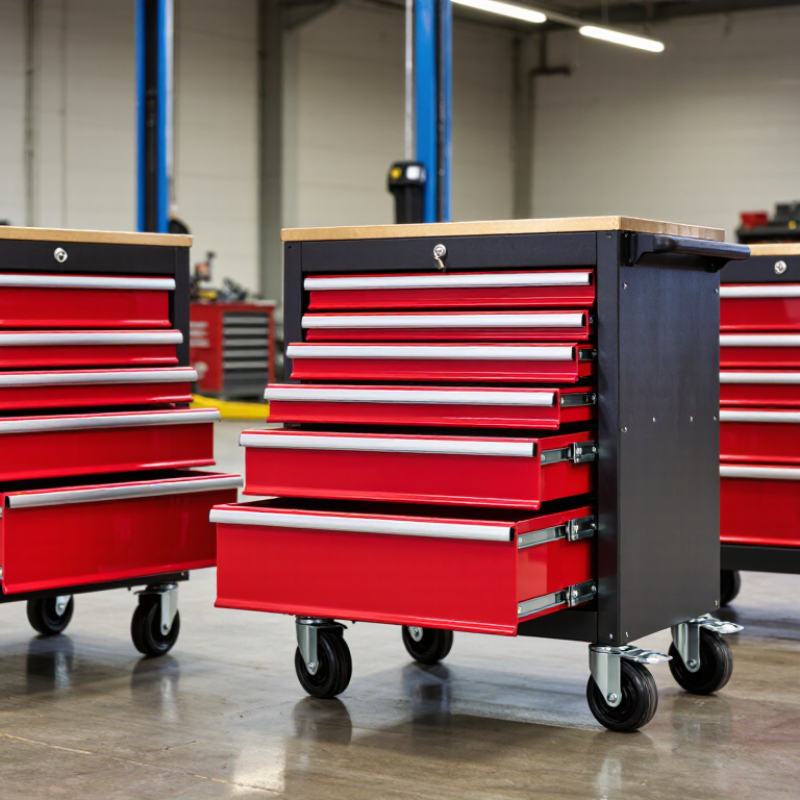
Table of Contents [Hide]
What Defines a High-Quality Rolling Tool Cart in 2026
What Defines a High-Quality Rolling Tool Cart in 2026
A high-quality rolling tool cart begins with controlled movement, not appearance. Grand View Research projects steady growth in the global tool storage market through 2030, driven by organized workshops and mobile maintenance. Buyers should check the stated load rating, not just drawer size. A practical cart needs reinforced frames, smooth full-extension slides, and casters that remain stable on uneven floors. Four casters are common, but two locking swivel casters improve directional control. Small details matter.
Ergonomics now deserves equal attention. NIOSH guidance emphasizes reducing excessive force, awkward postures, and repeated handling. A cart handle should support a neutral wrist position. Drawers should open without sudden resistance. A 2023 U.S. Bureau of Labor Statistics report recorded hundreds of thousands of workplace injuries involving days away from work, although those figures are not specific to tool carts. Safer storage can still reduce unnecessary reaching and lifting. It is not a complete safety solution.
Durability requires evidence. Look for corrosion testing, weld quality, wheel material, and transparent load tests. Powder coating may resist workshop wear, but thin coating can hide weak steel. I would also inspect drawer alignment after repeated opening. Many specifications sound impressive. Some are not independently verified. Buyers should request test methods, warranty terms, replacement-part availability, and climate suitability before purchasing. The best cart feels quiet, balanced, and predictable beside a working technician.
Brands
Proudly Trusted by Top Suppliers Worldwide







Let us know and we will automate, together to fit your industrial needs.
 +91-97254 16844
Clients
Proudly Trusted by Top Companies Worldwide


Do you need Help? Get in touch.
X
Please fill out the form below and we will get back to you as soon as possible.