o
p
t
i
m
a
r
o
b
o
t
i
c
s

Make a Call


Make a Call
Blogs
2026 Best Wear Plate Types for Global Buyers?
Buying Wear Plate in 2026 will demand more than comparing hardness numbers. Global buyers must connect plate type with impact energy, abrasive conditions, welding needs, and maintenance access. A quarry chute handling sharp granite needs a different solution from a dump truck carrying sticky clay. The wrong choice can create premature cracking, difficult fabrication, and avoidable downtime.
Ernest Rabinowicz, a respected authority on tribology, described wear as “the progressive loss of substance from the operating surface of a body resulting from relative motion.” His statement remains useful because wear rarely has one cause. Quenched-and-tempered abrasion-resistant plate suits many sliding and impact applications. Composite overlay plate can deliver exceptional surface resistance in severe zones. Austenitic manganese plate may perform better where repeated impact changes the working surface. However, no type is automatically best.
Real buying decisions should examine chemical composition, certified hardness, thickness tolerance, impact performance, weldability, and available test reports. Ask for traceability from heat number to inspection document. Check whether the supplier explains cutting and preheating requirements clearly. Small details matter. A six-millimetre mismatch can affect fit-up and service life.
The market also has a weakness: marketing language sometimes replaces engineering evidence. A higher hardness value may look attractive, yet it can reduce toughness or complicate fabrication. This guide compares leading Wear Plate types for global buyers, including their strengths, limitations, and practical selection criteria. The recommendations are useful, but they are not universal. Actual field conditions should always challenge the first specification.
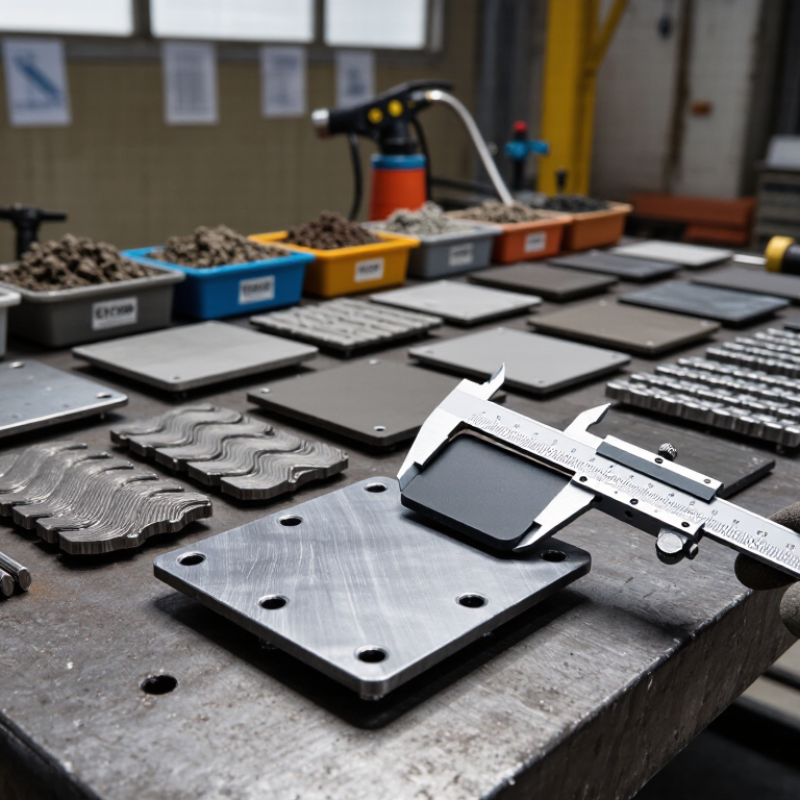
Table of Contents [Hide]
What Wear Plates Are and How Their Performance Is Measured
Wear plates are sacrificial steel surfaces installed where sliding, impact, or abrasive particles remove metal. They protect chutes, hoppers, dump bodies, crushers, and conveyor transfer points.
Common types include quenched-and-tempered plate, high-manganese steel, and chromium-carbide overlay plate. Each suits different service conditions.
A hardened plate may handle sliding abrasion well, while a tougher grade can survive repeated rock impact.
It is measurable.
Reliable performance testing starts with the actual wear mechanism. Hardness is commonly reported in HBW or HRC, using controlled procedures such as ISO 6506. However, hardness alone does not predict service life.
Abrasion resistance may be measured through methods such as ASTM G65, where mass or volume loss indicates material removal. Lower loss usually suggests better resistance under that test condition.
Impact toughness requires separate testing, often with Charpy specimens and recorded absorbed energy.
Experienced buyers also check plate thickness, surface condition, flatness, weldability, and cutting limits.
A thick plate may last longer, but it can increase equipment weight and installation difficulty. Weldability matters.
Ask for test conditions, sample direction, batch traceability, and inspection records.
A plate showing low laboratory mass loss may still fail in a wet chute with sharp, heavy rocks.
Field reality differs.
That gap deserves attention when comparing global suppliers.
Brands
Proudly Trusted by Top Suppliers Worldwide







Let us know and we will automate, together to fit your industrial needs.
 +91-97254 16844
Clients
Proudly Trusted by Top Companies Worldwide


Do you need Help? Get in touch.
X
Please fill out the form below and we will get back to you as soon as possible.