o
p
t
i
m
a
r
o
b
o
t
i
c
s

Make a Call


Make a Call
Blogs
2026 Top Modular Container House Trends for Global Buyers
In 2026, the Modular Container House is moving beyond its industrial image. Global buyers now expect comfort, efficiency, and design flexibility in one compact structure. They want bright interiors, quiet bedrooms, shaded outdoor areas, and reliable performance in different climates. Some buyers still focus only on the purchase price. That can be a costly mistake.
Architect Adam Kalkin, widely recognized for container-based residential design, once said, “The container is a very interesting building block.” His observation remains relevant. A container provides a strong starting frame, but it is not automatically a finished home. Proper insulation, ventilation, moisture control, and structural reinforcement determine long-term quality.
The leading 2026 trends reflect this practical reality. High-performance wall systems will reduce heat transfer around steel surfaces. Solar panels, heat pumps, rainwater systems, and smart energy monitoring will support lower operating costs. Buyers will also see more hybrid layouts, combining containers with timber, glass, and lightweight steel. These designs can create wider living rooms without losing modular efficiency.
Factory production will become more precise, with digital modeling and standardized connection details. Yet local construction rules remain essential. A model suitable for a mild coastal region may fail in a snowy inland climate. Transport access matters, too. A beautiful plan is useless if trucks cannot reach the site.
This guide examines the most important Modular Container House trends for global buyers. It also questions popular claims about speed, sustainability, and affordability. The industry is improving, but perfection is not guaranteed. Careful specifications, qualified inspections, and realistic budgets still separate a promising concept from a dependable home.
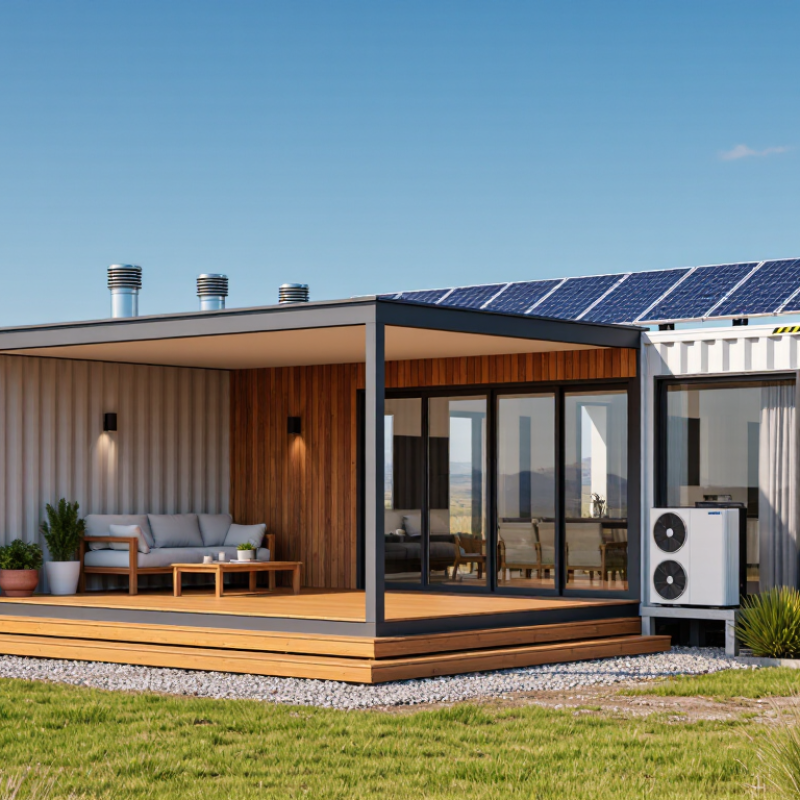
Table of Contents [Hide]
Container House Basics: ISO 668 Dimensions and Modular Construction Terms
2026 Top Modular Container House Trends for Global Buyers
Container House Basics: ISO 668 Dimensions and Modular Construction Terms
For global buyers, ISO 668 is a practical starting point for container house planning. A standard 20-foot unit measures about 6.058 meters long and 2.438 meters wide externally. A 40-foot unit measures about 12.192 meters long. Both usually have an external height near 2.591 meters. High-cube units provide about 2.896 meters of external height. Actual internal space becomes smaller after insulation, flooring, and wall finishes.
Small differences matter.
In project reviews, I check door openings, corner castings, lifting points, and transport limits before approving layouts. A module means one independent building section. Volumetric modular construction delivers that section with walls, services, and finishes partly completed. Flat-pack systems arrive as panels and require more assembly on site. Prefabrication describes factory-made components, while DfMA means designing for manufacturing and assembly.
Do not treat every container-like structure as an ISO container. Some units use compatible dimensions but lack original cargo-frame strength. That changes stacking, lifting, and foundation requirements.
Steel thermal bridges also deserve attention. Poor insulation can create condensation behind interior panels, especially in humid climates. I have seen attractive drawings fail during installation because service routes were never coordinated. It is an easy mistake to repeat. Local building codes, fire separation, ventilation, wind loads, and electrical standards must still govern the final design.
Brands
Proudly Trusted by Top Suppliers Worldwide







Let us know and we will automate, together to fit your industrial needs.
 +91-97254 16844
Clients
Proudly Trusted by Top Companies Worldwide


Do you need Help? Get in touch.
X
Please fill out the form below and we will get back to you as soon as possible.