o
p
t
i
m
a
r
o
b
o
t
i
c
s

Make a Call


Make a Call
Blogs
2026 Best Stainless Steel Wire Mesh Filter Buying Guide
A Stainless Steel Wire Mesh Filter can look simple on a product page, yet small specification changes can affect flow, service life, and cleaning. In 2026, buyers should compare more than mesh count. Check the opening size, wire diameter, weave, alloy grade, and filter shape against the actual fluid and operating conditions. The right choice depends on the job.
A finer opening may capture smaller particles, but it can also restrict flow or clog sooner. Details matter. Wire diameter affects strength, while alloy selection influences resistance to heat, moisture, and process chemicals. Do not assume that two products with the same mesh count perform alike; manufacturing tolerances and weave patterns matter too. This guide explains how to read specifications, assess supplier information, and narrow options for industrial, commercial, or laboratory use. No filter suits every application.
Before ordering, compare stated filtration ratings with test methods and operating limits. Ask suppliers for material documentation, dimensional tolerances, and cleaning guidance. For demanding applications, confirm compatibility with the actual fluid and conditions rather than relying on a broad product description. A sample can help reveal fit and handling issues. Expect trade-offs. A low price may not reflect the full cost of replacement, downtime, or maintenance. Specifications can also be incomplete, so verify important claims in writing. The goal is a filter that meets measurable requirements and remains practical to inspect and maintain. A careful comparison makes that decision clearer.
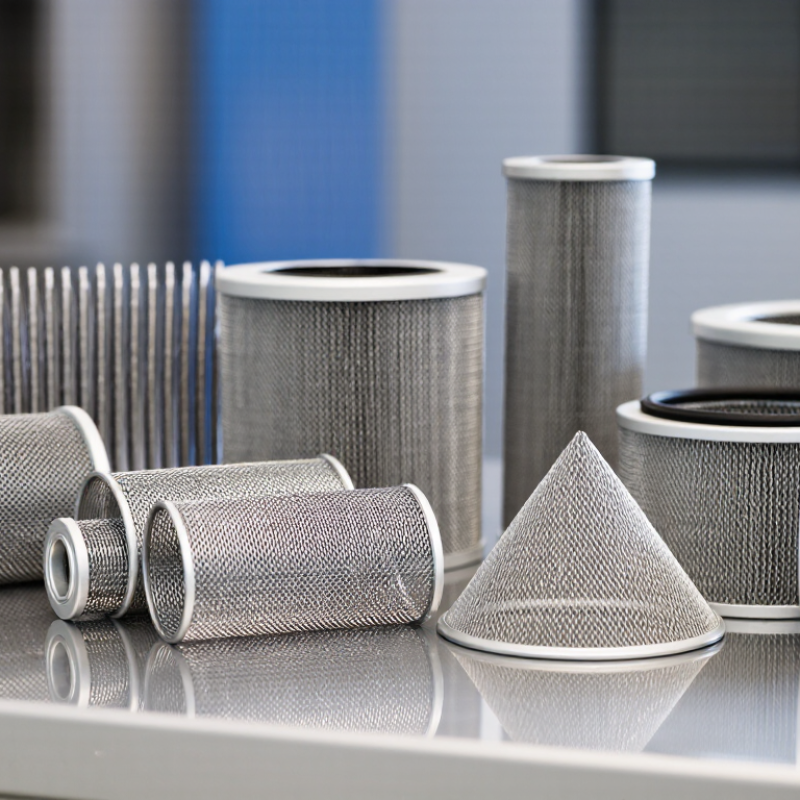
Table of Contents [Hide]
What Stainless Steel Wire Mesh Filters Are and How They Work
Stainless steel wire mesh filters use intersecting metal wires to create a screen with consistent openings. The mesh may be woven, with wires crossing over and under, or welded at each intersection. Liquid or air passes through the openings, while larger particles are held back. That sounds simple. In practice, particle shape, flow speed, and pressure can affect what the screen captures.
Mesh size describes the number of openings across a set distance, but it does not tell the whole story. Wire thickness and opening dimensions also matter. A finer mesh can capture smaller particles, yet it may restrict flow sooner, especially when the fluid is thick or carries a heavy contaminant load. Not quite a simple trade-off. As particles collect, they form a layer on the surface, which can improve capture but reduce flow. A pressure gauge can help operators notice this change.
Stainless steel is valued for strength, heat tolerance, and resistance to many corrosive conditions. Its performance still depends on the specific alloy and the fluid it contacts. A mesh that works well with clean water may not suit a hot, salty, or chemically active process. Check the opening size, wire construction, operating temperature, and cleaning method against actual conditions. It is easy to overlook cleaning access. That matters, because trapped residue can remain between wires and affect later filtration.
Brands
Proudly Trusted by Top Suppliers Worldwide







Let us know and we will automate, together to fit your industrial needs.
 +91-97254 16844
Clients
Proudly Trusted by Top Companies Worldwide


Do you need Help? Get in touch.
X
Please fill out the form below and we will get back to you as soon as possible.