o
p
t
i
m
a
r
o
b
o
t
i
c
s

Make a Call


Make a Call
Blogs
2026 Top BMS Wire Harness Suppliers for Global Buyers
In 2026, global buyers need more than a low quotation when selecting Bms Wire Harness suppliers. Battery management systems depend on accurate sensing, stable connections, and consistent protection. A small crimping defect can create voltage-reading errors, production delays, or difficult field investigations. Quality begins with controlled materials, trained operators, and clear inspection records.
This guide examines leading Bms Wire Harness suppliers through practical purchasing criteria. These criteria include copper quality, insulation performance, connector compatibility, dimensional control, and testing capability. Supplier experience also matters. Teams that understand battery packs can identify routing risks before mass production begins. Look for documented traceability, sample validation, and responsive engineering support. Certifications may support confidence, but they should never replace direct evidence.
Details matter. A reliable supplier should explain terminal plating, wire specifications, pull-force results, and continuity testing. Ask how changes are approved. Ask how rejected parts are isolated. Ask whether production samples match approved drawings. Real factories sometimes have strong equipment but weak communication. Others communicate well but lack stable process control. That distinction is easy to miss.
No supplier is perfect. Buyer assumptions can also create risk. A harness designed for one battery enclosure may fail after a small layout change. Therefore, this overview encourages careful comparison rather than blind ranking. It focuses on evidence, repeatability, delivery discipline, and long-term cooperation. The strongest partner is not always the largest company. It is the supplier that can prove performance, admit limitations, and improve when problems appear. Expect practical insights for evaluating global suppliers with greater confidence in 2026.
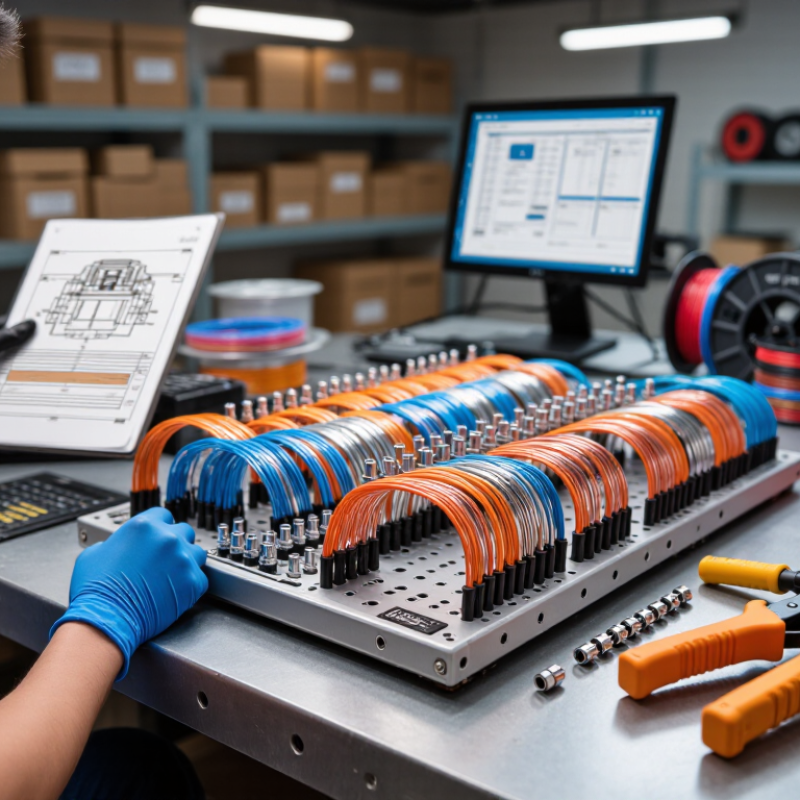
Table of Contents [Hide]
BMS Wire Harnesses: Definition, Functions, and Key Applications
2026 Top BMS Wire Harness Suppliers for Global Buyers
A BMS wire harness is a grouped set of wires, terminals, connectors, and protective sleeves. It links battery cells with the battery management system. The harness carries voltage, temperature, current, and balancing signals. It also supports controlled power distribution inside the battery pack.
In practical assembly work, routing quality affects reliability as much as conductor size. Wires must keep their bend radius near cell modules and avoid sharp metal edges. Abrasion sleeves, locking connectors, and strain reliefs reduce failures caused by vibration. Clear color coding and labeled branches help technicians trace faults faster. Small details matter.
These harnesses serve electric vehicles, energy storage cabinets, industrial equipment, medical backup systems, and low-voltage mobility products. High-temperature areas may require heat-resistant insulation and secured clips. Moist environments demand suitable sealing and corrosion-resistant terminals. A harness for a compact battery pack differs greatly from one used in a large storage enclosure.
It is easy to over-specify a harness. That can increase weight, cost, and assembly time without improving performance. The opposite mistake is riskier. A thin conductor, weak crimp, or loose connector can create unstable measurements. Supplier evaluation should include crimp testing, continuity testing, insulation checks, dimensional inspection, and traceable production records. Samples should also face realistic vibration, thermal cycling, and installation tests. Laboratory results help, but field feedback can reveal design weaknesses.
Brands
Proudly Trusted by Top Suppliers Worldwide







Let us know and we will automate, together to fit your industrial needs.
 +91-97254 16844
Clients
Proudly Trusted by Top Companies Worldwide


Do you need Help? Get in touch.
X
Please fill out the form below and we will get back to you as soon as possible.