o p t i m a r o b o t i c s

Blogs

2026 Top Seamless Pipe Types for Global Buyers?

Choosing the right Seamless Pipe begins with the job it must perform. A line carrying hot oil through a refinery faces different demands from a structural tube supporting a building. Wall thickness, steel grade, outside diameter, and manufacturing route all matter. So does the service environment. A polished product description cannot replace a review of operating pressure, temperature, and inspection records.

Metallurgist John D. Verhoeven’s work on steel emphasizes how composition and processing shape material properties. A practical paraphrase for buyers is: “Judge the pipe by its material, manufacturing route, and verified performance—not its label alone.” This is a paraphrase, not a verbatim quotation. That distinction matters; technical buying guides should not dress up an unverified line as a sourced quote.

This overview compares common seamless pipe types for global buyers in 2026, including carbon steel, alloy steel, and stainless steel options. It will help readers connect each type with typical applications, strengths, and selection checks. Look closely at mill test certificates, dimensional tolerances, and traceability documents. Ask suppliers how they confirm heat numbers and inspection results. Details count.

A few cautions remain. “Best” depends on the duty. And supplier claims need checking. Even a well-specified pipe may disappoint if its grade, dimensions, or documentation do not match the project. The sections ahead offer a practical starting point, not a substitute for qualified engineering review.
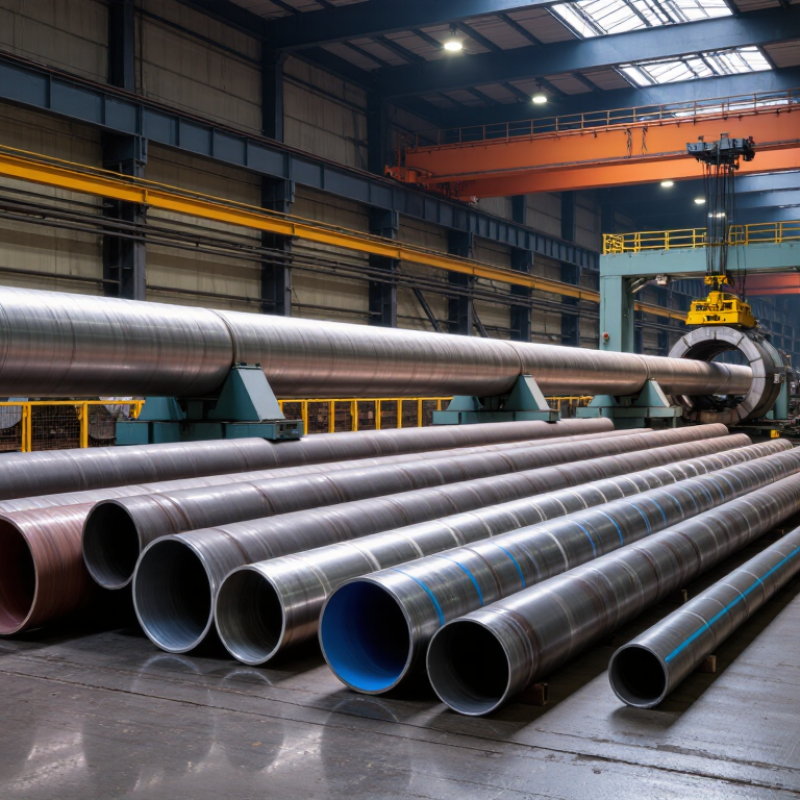
2026 Top Seamless Pipe Types for Global Buyers?

How Seamless Pipes Are Classified by Material and Manufacturing Method

Seamless pipes are classified in two useful ways: by material and by manufacturing method. Material names describe the metal’s chemistry and expected performance. Carbon steel is common for general pressure and structural service, while alloy steel may be selected for elevated temperatures or demanding mechanical conditions. Stainless and duplex grades offer different levels of corrosion resistance, depending on the grade and environment. That distinction matters. A pipe’s label alone cannot confirm suitability; buyers should check the specified grade, dimensions, heat treatment, and inspection requirements.

Manufacturing adds another layer. Hot-finished pipe begins as a heated solid billet, which is pierced and rolled into a hollow shape. It suits many larger sizes and general industrial uses. Cold-drawn or cold-finished pipe is pulled through a die, often improving dimensional control and surface finish. The process can also change the metal’s condition, so heat treatment may be specified. Buyers comparing quotations should verify whether stated tolerances and tests match their project documents. The categories are helpful, but not perfectly tidy: actual performance depends on grade, production route, and service conditions.

Carbon Steel Seamless Pipes for General and High-Pressure Applications

Carbon Steel Seamless Pipes for General and High-Pressure Applications

Carbon steel seamless pipes are formed from solid billets, then heated and pierced to create a hollow tube. With no longitudinal weld seam, they can provide consistent strength under pressure when manufacturing and inspection are properly controlled. That matters in steam lines, refineries, power plants, and process piping, where operating temperature and pressure can vary.

For general service, buyers may prioritize available sizes, practical fabrication, and cost. High-pressure duties call for closer attention to the specified grade, wall thickness, temperature range, and applicable pipe standard. A thick wall alone is not enough. Review mill test certificates and confirm that inspection requirements match the service conditions. Small details count.

Carbon steel is strong and widely used, but it can corrode in wet or chemically aggressive environments. Coatings, corrosion allowances, or a different material may be needed, depending on the fluid and site conditions. One easy mistake is choosing by price before checking operating data. Specifications can also be incomplete; clarify uncertainties before ordering, rather than assuming a familiar grade will suit every line.

Alloy Steel Seamless Pipes for High-Temperature Service

For high-temperature service, alloy steel seamless pipe is common in boiler, refinery, and process-plant lines. ASTM A335/A335M specifies seamless ferritic alloy-steel pipe for elevated-temperature use. Grades such as P11, P22, and P91 differ in alloy content and performance; selection should match design temperature, pressure, fluid chemistry, and applicable code. Seamless construction removes the longitudinal weld seam, but it does not eliminate inspection or fabrication risks.

The World Steel Association’s World Steel in Figures 2024 reports 1,849.7 million tonnes of global crude-steel production in 2023. That figure describes the wider steel industry, not seamless-pipe output, so it should not be used to estimate pipe availability. For buyers, confirm the material test certificate, heat treatment, dimensional tolerances, and traceability. A high-grade pipe can still fail if installation, welding, or service conditions exceed its design limits.

Tips: Specify the operating temperature and pressure, not just the grade. Check delivery condition and third-party inspection requirements. One detail is easy to overlook: frequent thermal cycling can matter as much as peak temperature. Verify the design with a qualified materials engineer.

Stainless and Duplex Seamless Pipes for Corrosive Environments

Corrosive environments punish small material mistakes. Chloride-rich seawater, acidic process fluids, and cleaning chemicals can trigger pitting or crevice corrosion. Stainless seamless pipe is often considered where resistance, cleanliness, and consistent pressure performance matter. Grade 316L suits many moderate services, but it is not a universal answer. A warm chloride stream can still cause unexpected damage.

Duplex stainless pipe, such as grades 2205 and 2507, combines austenitic and ferritic structures. This can provide higher strength and improved resistance to chloride stress-corrosion cracking. That strength may allow thinner walls in some designs, but it does not remove the need for proper engineering. Temperature limits, fluid chemistry, weld procedures, and operating pressure all matter. Small details matter.

For global buyers, request traceable material certificates and confirm dimensions, wall thickness, and inspection requirements before ordering. Check whether the supplied pipe matches the intended service, not just the purchase description. A mill test report is useful, but it cannot replace sound material selection. The choice is not always tidy: higher alloy content can raise cost and complicate fabrication. It is worth reviewing actual process conditions with a qualified materials engineer. One assumption may be wrong. A brief review can prevent costly field repairs.

2026 Top Seamless Pipe Types for Global Buyers

Stainless and duplex grades for corrosive environments

Duplex grades 2205 and 2507 typically contain more chromium and molybdenum than 304L and 316L, supporting their use in many chloride-containing environments. Values shown are representative midpoints of commonly specified composition ranges in weight percent; actual limits vary by grade and specification. Confirm suitability for the service conditions before selection.

How Buyers Match Pipe Types to Standards and Operating Conditions

Buyers should match seamless pipe to the fluid, design pressure, temperature range, corrosion risks, and joining method. ASTM A106 carbon steel is commonly specified for high-temperature service. API 5L grades address line-pipe strength and toughness, while ASTM A335 alloy grades suit elevated-temperature duties. For wet hydrogen sulfide, ISO 15156 material requirements matter; strength alone does not prevent cracking. Small details matter. Product standards describe material requirements, but the design code governs items such as allowable stress and wall thickness.

The World Steel Association’s World Steel in Figures 2024 reports 1,892.2 million tonnes of crude steel production in 2023. That figure shows market scale, not pipe quality or availability. The IEA’s Oil 2024 report projects oil demand approaching 106 million barrels per day by 2030, keeping pipeline operating conditions commercially relevant. A forecast cannot choose a grade for you. For sour, offshore, or cyclic service, request heat-specific certificates, dimensional checks, and the required non-destructive testing. Compare mill records with the purchase specification, then review the selection against the actual operating envelope. A specification can look complete and still miss a brief temperature excursion.

2026 Top Seamless Pipe Types for Global Buyers — Matching Pipe Types to Standards and Operating Conditions
Pipe Type / Material Common Product Standard Typical Service Key Operating Conditions Buyer Checks Before Ordering
Carbon steel pressure pipe ASTM A106/A106M Refineries, power facilities, and process piping carrying fluids at elevated temperatures. Suitable grade and dimensions depend on the design pressure, temperature, fluid, and applicable construction code. Confirm grade, heat treatment requirements, outside diameter, wall thickness, length, inspection, and required test documentation.
Line pipe, seamless option API Specification 5L; ISO 3183 may also apply, depending on the project Oil, gas, and other pipeline systems. API 5L covers both seamless and welded pipe; specify seamless when required. Selection depends on pipeline design, conveyed fluid, operating pressure, temperature, and service environment. Specify PSL, grade, delivery condition, dimensions, supplementary requirements, and whether seamless manufacture is mandatory. Check project and jurisdictional requirements.
Low-temperature carbon steel pipe ASTM A333/A333M Pressure piping and equipment exposed to low-temperature service. Choose the grade according to the minimum design metal temperature and required impact-toughness criteria. Verify the specified grade, impact-test temperature and acceptance requirements, heat treatment, dimensions, and material traceability.
Ferritic alloy-steel pipe ASTM A335/A335M Power-generation and process piping applications involving elevated temperatures. Alloy grade and design suitability depend on temperature, pressure, material properties, and the governing code. Confirm grade, heat treatment, mechanical and chemical requirements, inspection scope, and any project-specific testing.
Stainless steel pressure pipe ASTM A312/A312M Corrosion-resistant piping for chemical, food-processing, water, and other industrial services. Corrosion performance depends on the alloy grade and the fluid’s chemistry, concentration, temperature, and exposure conditions. Confirm alloy grade, seamless construction if required, corrosion environment, heat treatment, surface condition, and applicable testing.
Boiler, superheater, and heat-exchanger tubing ASTM A213/A213M Seamless ferritic and austenitic alloy-steel tubes for boilers, superheaters, and heat exchangers. Tube material must suit the equipment design, heat-transfer duty, pressure, temperature, and service environment. Check the specified tube grade, dimensions and tolerances, heat treatment, testing, and whether the order requires tubes rather than pipe.
Mechanical tubing ASTM A519/A519M Mechanical and structural components where seamless carbon or alloy steel tubing is specified. Selection is driven by fabrication needs, strength, dimensional requirements, and the component’s service conditions. Confirm grade, manufacturing condition, dimensional tolerances, surface finish, and suitability for the intended end use; do not assume it meets pressure-piping requirements.
European pressure-purpose steel tube EN 10216 series; select the applicable part and grade Seamless steel tubes for pressure purposes, with requirements varying by material type and service. Choose the relevant part and material grade for the specified temperature and pressure service. State the exact EN 10216 part, grade, dimensions, inspection category, delivery condition, and project-specific requirements.
Selection note: Product standards define material and manufacturing requirements; they do not by themselves establish that a pipe is suitable for every operating condition. Confirm the governing design code, pressure-temperature limits, corrosion allowance, dimensions, testing, and local regulatory requirements. Dimensional standards such as ASME B36.10M for many carbon-steel pipe sizes and ASME B36.19M for stainless-steel pipe dimensions may be specified separately. Verify the required standard edition and purchase specification for each project.

Article Source:

Brands

Proudly Trusted by Top Suppliers Worldwide

Let us know and we will automate, together to fit your industrial needs.

Clients

Proudly Trusted by Top Companies Worldwide

Do you need Help? Get in touch.

X

Please fill out the form below and we will get back to you as soon as possible.

    Subscribe our newsletter & get updates







