o
p
t
i
m
a
r
o
b
o
t
i
c
s

Make a Call


Make a Call
Blogs
2026 Top Tire Balance Beads Which Should Buyers Choose?
Choosing among the 2026 top tire balance beads starts with a practical question: what does your vehicle and tire setup require? A Tire Balance Bead is a loose balancing material placed inside a tire. As the wheel turns, the beads can move toward areas that need balance. This approach may appeal to drivers who want an alternative to conventional wheel weights, but results depend on the tire, wheel, installation, and product instructions.
The right choice is not simply the brand with the boldest claims. Buyers should compare bead material, size options, packaging, compatibility guidance, and clear installation directions. Check whether the product is intended for your tire type and vehicle, and follow the tire and bead manufacturers’ recommendations. A truck tire and a passenger-car tire do not necessarily call for the same setup. Small details matter, such as using the specified quantity and keeping the tire’s interior suitable for the product.
Look for transparent specifications and support that explains limitations, not just benefits. Reviews can help, but one driver’s smooth ride is not proof of universal performance. That matters. This guide compares leading options and the criteria behind them, so readers can make a more informed shortlist. Still, product rankings have limits; real-world fit can vary. Before buying, confirm compatibility with a qualified tire professional when the application is unclear. A careful choice may prevent avoidable vibration and wasted effort. The best answer is the bead that fits the actual setup, not the most impressive label.
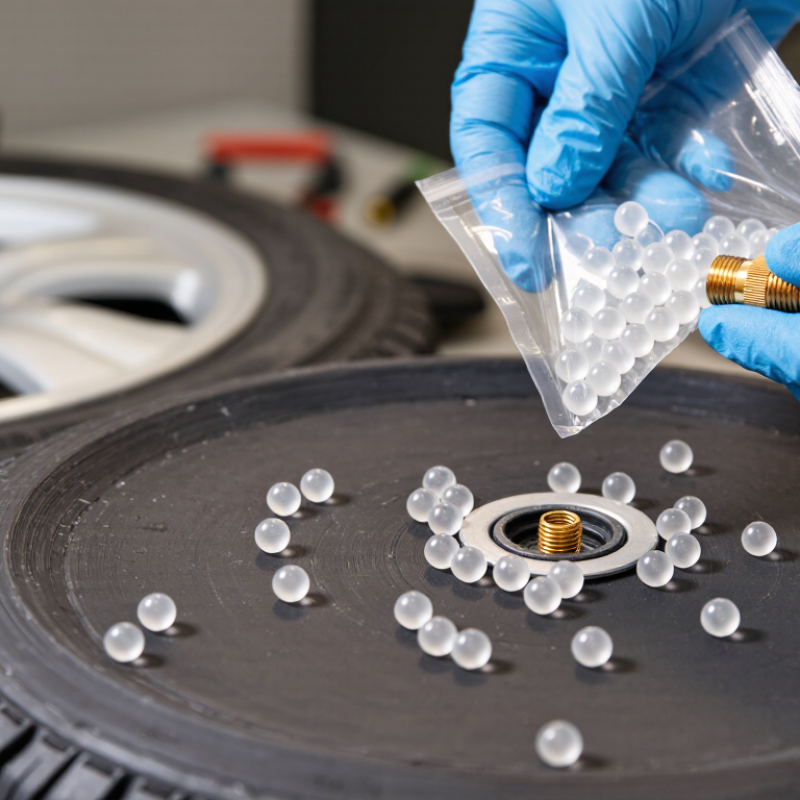
Table of Contents [Hide]
What Tire Balance Beads Are and How They Work
Tire balance beads are small, free-moving particles placed inside a tire, usually during mounting. As the wheel spins, centrifugal force helps the beads move around the inner casing and gather opposite heavier areas. Their shifting mass can counter uneven weight distribution without fixed stick-on weights. The idea is simple. The result depends on the tire and wheel assembly.
Balance is not the same as inflation. The U.S. Department of Energy and EPA’s FuelEconomy.gov guidance says properly inflated tires improve fuel economy by about 0.6% on average, and up to 3% in some cases. That figure concerns tire pressure, not bead performance; it is a useful reminder that several factors affect tire behavior. Beads may be less suitable for some assemblies, and poor installation can cause clumping or uneven distribution. Check the tire and vehicle maker’s guidance, and ask a qualified technician about compatibility. I would not treat beads as a guaranteed cure for vibration. A bent wheel, worn suspension part, or damaged tire can feel similar, and beads cannot repair those faults.
Brands
Proudly Trusted by Top Suppliers Worldwide







Let us know and we will automate, together to fit your industrial needs.
 +91-97254 16844
Clients
Proudly Trusted by Top Companies Worldwide


Do you need Help? Get in touch.
X
Please fill out the form below and we will get back to you as soon as possible.