o p t i m a r o b o t i c s

Blogs

7 Tips for Choosing Line Filters for Global Buyers?

Choosing line filters for global equipment markets is not a simple catalog exercise. A filter that performs well in a clean laboratory may fail beside a variable-frequency drive, motor, or switching power supply. Installation space, rated current, leakage current, impedance, temperature, and regional approvals all matter.

Industry data supports this concern. Grand View Research’s 2024 EMI shielding market report projects continued growth as manufacturers manage denser electronics and stricter electromagnetic compatibility requirements. MarketsandMarkets’ 2024 EMI Shielding Market report also identifies industrial automation, telecommunications, and automotive systems as important demand areas. These reports do not replace testing. They show why filter selection deserves engineering attention.

Henry W. Ott, a widely respected EMC engineer, wrote, “EMI is a system problem, not a component problem.” That principle guides this article’s seven practical tips for global buyers. Start with the real noise source, not only the visible symptom. Check the filter’s insertion-loss curve at the disturbance frequency. Confirm current ratings under actual temperature conditions. A 10-amp label may not mean 10 amps inside a hot enclosure.

Small details matter.

Verify grounding methods, terminal construction, enclosure space, and certification documents before ordering. IEC 60939 requirements can support consistency, but local installation rules and end-product standards still require review. Buyers should request test conditions, not just impressive performance figures.

There is no universal best filter. Sometimes, a cheaper part passes testing. Sometimes, it creates leakage or resonance problems. That uncertainty deserves honest evaluation, careful sampling, and documented validation before global production.
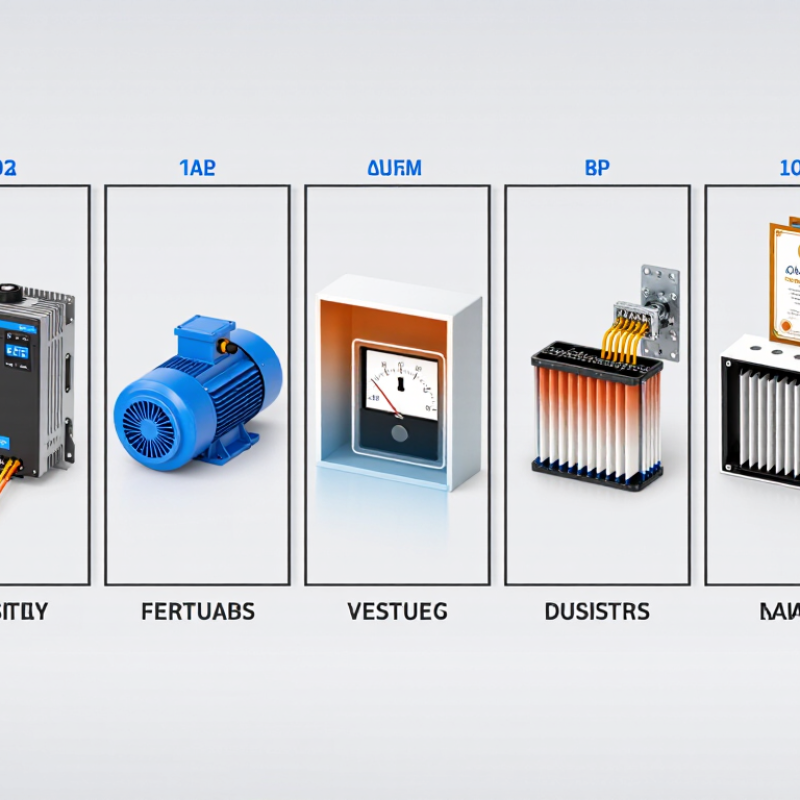
7 Tips for Choosing Line Filters for Global Buyers?

Understanding Line Filter Types and Their Applications

7 Tips for Choosing Line Filters for Global Buyers

Understanding line filter types starts with the noise path. Common-mode filters reduce interference moving along multiple conductors in the same direction. Differential-mode filters control noise traveling between live and neutral lines. Some designs combine both functions. AC filters suit power-entry points, motor cabinets, and switching supplies. DC filters often protect control circuits, sensors, and battery-powered equipment. Signal-line filters require extra care because excessive capacitance can weaken communication quality.

Application details should guide the selection. Check rated voltage, continuous current, temperature range, leakage current, and connector size. A filter rated for 10 amps may overheat when installed in a poorly ventilated enclosure. Fit matters. Also review insertion-loss data at the actual operating frequency, not only the most attractive test point. Noise travels. Cable length, grounding, enclosure material, and load behavior can change results significantly.

Global buyers should request test reports, installation instructions, and applicable safety documentation from qualified suppliers. Regional electrical requirements may differ, so confirm compatibility before ordering large quantities. In practical evaluations, a compact filter can perform poorly when its case lacks a reliable ground connection. Measure twice. A filter that looks perfect on paper may still need adjustment after testing. Engineers sometimes focus too heavily on attenuation and overlook leakage current, maintenance access, or replacement space. That is an easy mistake to make.

Defining Electrical, Environmental, and Performance Requirements

7 Tips for Choosing Line Filters for Global Buyers

Defining electrical requirements starts with the equipment, not the filter catalogue. Record the operating voltage, maximum current, frequency range, and expected load changes. A filter rated for steady current may overheat during motor startup. Measure twice. Check leakage current, dielectric strength, and the required safety approvals for each destination market. Installation space also matters, especially when terminals, shielding, and airflow compete inside a crowded enclosure.

Environmental conditions can quietly reduce filter life. Specify ambient temperature, humidity, altitude, dust, vibration, and possible chemical exposure. A control cabinet near a coastal warehouse needs different protection from one inside a dry laboratory. Review the enclosure’s ingress rating and confirm whether the filter has suitable construction. Details matter. I have seen projects fail because condensation was treated as a minor issue. It was not.

Performance requirements should match the actual interference problem. Define the troublesome frequency range, insertion-loss target, impedance conditions, and acceptable residual noise. Test data should explain measurement methods, not only display impressive curves. Ask for traceable reports, tolerance information, and derating guidance. Compare common-mode and differential-mode performance separately. A filter that looks strong on paper may perform poorly in the final assembly. This is where practical testing earns trust. Leave room for revision; early assumptions are often wrong.

7 Tips for Choosing Line Filters for Global Buyers? - Defining Electrical, Environmental, and Performance Requirements

Tip Requirement to Define Key Data or Selection Range Why It Matters Buyer Action
1 Confirm the electrical system Rated voltage, frequency, current, phase configuration, and wiring arrangement. Common low-voltage single-phase systems operate at 100–240 V AC and 50/60 Hz, but the actual product rating must match the installation. An incorrect voltage or current rating can cause overheating, insulation stress, nuisance tripping, or reduced filter life. List the nominal and maximum operating values, then select a filter with suitable continuous-current and voltage margins.
2 Identify the interference type Conducted differential-mode noise, common-mode noise, or both. Typical unwanted energy may occur from approximately 150 kHz to 30 MHz for conducted-emission assessments, depending on the applicable standard and equipment category. A filter designed for the wrong noise path may provide limited attenuation even if its current rating is sufficient. Use test data, a spectrum analyzer, or an EMC pre-compliance assessment to determine the dominant noise mode and frequency range.
3 Check insertion loss requirements Compare attenuation in dB across the problem-frequency band. Insertion loss is frequency-dependent and is normally measured using a defined source and load impedance, often 50 Ω in laboratory testing. A single maximum dB figure does not describe real-world performance across all frequencies or installation conditions. Request attenuation curves, test conditions, and representative application data instead of relying only on a headline dB value.
4 Evaluate safety and leakage current Verify dielectric withstand, insulation resistance, protective-earth continuity, touch current, and leakage-current limits required by the end product and local regulations. High-capacitance filtering can increase leakage current and may affect residual-current protection or accessible-touch safety. Obtain safety-test reports and confirm that the filter construction, grounding method, and leakage characteristics suit the target market.
5 Match environmental conditions Operating temperature, storage temperature, humidity, altitude, vibration, shock, dust, water exposure, salt mist, and corrosive gases. For general indoor equipment, 0–40 °C is common, while industrial applications may require wider ranges. Temperature, moisture, and contamination can reduce capacitor life, increase corrosion, and change electrical performance. Specify the installation environment and enclosure protection level before comparing filter models.
6 Allow for load and thermal behavior Continuous current, peak or inrush current, load duty cycle, power factor, voltage drop, and filter temperature rise. Derating may be necessary at elevated ambient temperatures or in restricted airflow. Motors, switch-mode power supplies, and converters can produce transient currents that exceed normal operating current. Compare steady-state and transient requirements, and verify the filter's thermal derating curve and permissible voltage drop.
7 Plan installation and global compliance Available space, mounting method, terminal type, cable routing, grounding path, service access, applicable EMC and safety standards, and documentation needed for the destination market. Poor layout or long unfiltered wiring can reduce EMC effectiveness, while missing documentation can delay approval or customs clearance. Review mechanical drawings, wiring instructions, test reports, material information, and regulatory requirements before placing a volume order.
Practical purchasing checklist: Record the electrical rating, noise frequency range, required attenuation, safety limits, environmental conditions, thermal margins, mechanical constraints, and destination-market compliance documents before comparing quotations.

Checking Compatibility, Ratings, and Installation Conditions

Choosing line filters for global equipment starts with compatibility, not appearance.

The IEA Electricity 2024 report forecasts global electricity demand to grow by an average 3.4% annually through 2026. That growth means more mixed networks, converters, and sensitive control systems.

Check the system voltage, frequency, phase arrangement, connector type, and expected load current. A filter rated for 250 V AC may fail in a higher-voltage installation.

Confirm continuous current, leakage current, insertion loss, and operating temperature. Do not trust a broad “universal” label.

Ratings must match the real environment. IEC 61000-4-5 defines surge-immunity test methods, while IEC 61000-4-6 addresses conducted disturbances from 150 kHz to 80 MHz. Use these references when comparing test reports.

Select attenuation data at the interference frequencies measured on site. A filter showing excellent loss at 1 MHz may perform poorly at 30 MHz. Check certification scope, creepage distance, short-circuit withstand, and earthing requirements.

Installation conditions matter just as much. Keep input and output cables separated, bond the enclosure properly, and avoid long unshielded leads. A poorly routed cable can bypass the filter completely.

I have seen this mistake after a clean bench test. It is easy to underestimate vibration, dust, humidity, and cabinet heat. Recheck the design after installation, because laboratory compatibility does not guarantee field reliability.

Comparing Filter Effectiveness, Quality, and Compliance Standards

Choosing line filters for global applications requires more than comparing prices and catalog photos. Effectiveness depends on insertion loss across the actual interference range, not one attractive test point. Measure the real load. Check rated voltage, current, impedance, leakage current, and temperature rise under normal operating conditions. A filter that performs well in a quiet laboratory may behave differently beside motors, converters, or long cables.

Quality is visible through construction details. Inspect terminal strength, sealing, insulation distance, grounding parts, and enclosure materials. Ask for raw test data, batch traceability, and clearly defined inspection criteria. Do not guess. In practical sourcing work, small changes in capacitor values or assembly quality can affect attenuation and service life. A lower-cost filter may create extra testing, replacement, and downtime expenses later.

Compliance must match the destination market and equipment category. Request current declarations, safety test reports, environmental information, and evidence of electromagnetic compatibility testing. Verify that the documents identify the exact model, ratings, test conditions, and applicable standard editions. Requirements can differ for industrial machinery, medical equipment, household devices, and control panels. A familiar certificate is not automatically sufficient everywhere. I have seen technically effective products delayed because paperwork lacked traceability. That detail is easy to overlook. Allow time for document review, sample testing, and local expert confirmation before approving volume purchases.

Evaluating Suppliers, Costs, and Long-Term Support for Global Buyers

7 Tips for Choosing Line Filters for Global Buyers

A reliable line filter starts with a clear electrical requirement. Check voltage, current, frequency, insertion loss, leakage current, and operating temperature. Ask suppliers for measured test data, not only catalog curves. A low quote can look brilliant. It can also hide weaker materials, limited testing, or expensive replacement cycles. Compare the complete landed cost, including samples, tooling, freight, duties, inspection, and warranty handling. Request at least three comparable quotations with identical specifications.

Supplier evaluation should reach beyond sales communication. Review quality certificates, production capacity, inspection procedures, and component traceability. Ask how failed units are isolated and reported. A supplier that answers precisely is usually easier to manage across time zones. Still, paperwork is not proof. Independent sample testing can reveal noise performance changes under heat, load, or vibration. That step costs money, but skipping it may cost more later.

Long-term support deserves a written plan. Confirm technical response times, replacement procedures, engineering change notices, and spare-part availability. Clarify whether the supplier can support different regional power conditions. Local service partners may reduce delays, but their responsibilities must be documented. Forecast sharing can improve supply stability, although inaccurate forecasts may create unnecessary inventory. That is a common weakness in purchasing plans. Review supplier performance quarterly using delivery accuracy, defect rates, response speed, and corrective-action quality. Keep the scorecard simple. A filter is not merely a small component; it can influence equipment uptime, compliance testing, and customer confidence.

7 Tips for Choosing Line Filters for Global Buyers

A practical evaluation model for comparing line-filter suppliers, total cost, technical fit, delivery capability, and long-term support. Each criterion is scored from 1 to 5, where 5 represents the highest procurement priority.

Global buyers should evaluate more than the purchase price. Confirm filtration efficiency, pressure and temperature compatibility, replacement-element availability, certification documents, landed cost, delivery reliability, and technical support before selecting a supplier.

Article Source:

Brands

Proudly Trusted by Top Suppliers Worldwide

Let us know and we will automate, together to fit your industrial needs.

Clients

Proudly Trusted by Top Companies Worldwide

Do you need Help? Get in touch.

X

Please fill out the form below and we will get back to you as soon as possible.

    Subscribe our newsletter & get updates







