o
p
t
i
m
a
r
o
b
o
t
i
c
s

Make a Call


Make a Call
Blogs
What Is an Aluminium Casting Mold and How Does It Work?
An Aluminium Casting Mold is a shaped cavity used to produce metal parts with consistent dimensions and repeatable surface details. It guides molten aluminium into a controlled form, then supports cooling until the part becomes solid. In a working foundry, the mold may resemble a simple block, yet its internal channels demand careful engineering. Gates direct the metal, runners distribute flow, and vents release trapped air. Small design errors can create porosity, incomplete filling, or visible seams.
The mold material depends on production volume, part complexity, and expected temperature exposure. Steel molds suit repeated pressure casting because they resist wear and thermal cycling. Sand molds remain useful for larger components and lower-volume work. Before casting, technicians inspect cavity surfaces, apply suitable release agents, and check alignment. They also monitor melt temperature rather than relying on appearance alone. Aluminium can look ready while still producing inconsistent results.
Experience matters because casting rarely behaves perfectly. Cooling may warp thin sections, and sharp corners can concentrate stress. A reliable process therefore combines simulation, inspection, and practical adjustment. Measurements from calipers, gauges, or three-dimensional scanners help confirm the final part. Still, inspection cannot replace sound mold design. It is easy to overvalue a clean surface while missing internal defects. This article explains how an Aluminium Casting Mold works, where its limitations appear, and which decisions improve safety, accuracy, and service life. The goal is not to present casting as effortless. Good results usually come from controlled variables, skilled observation, and a willingness to revise the process.
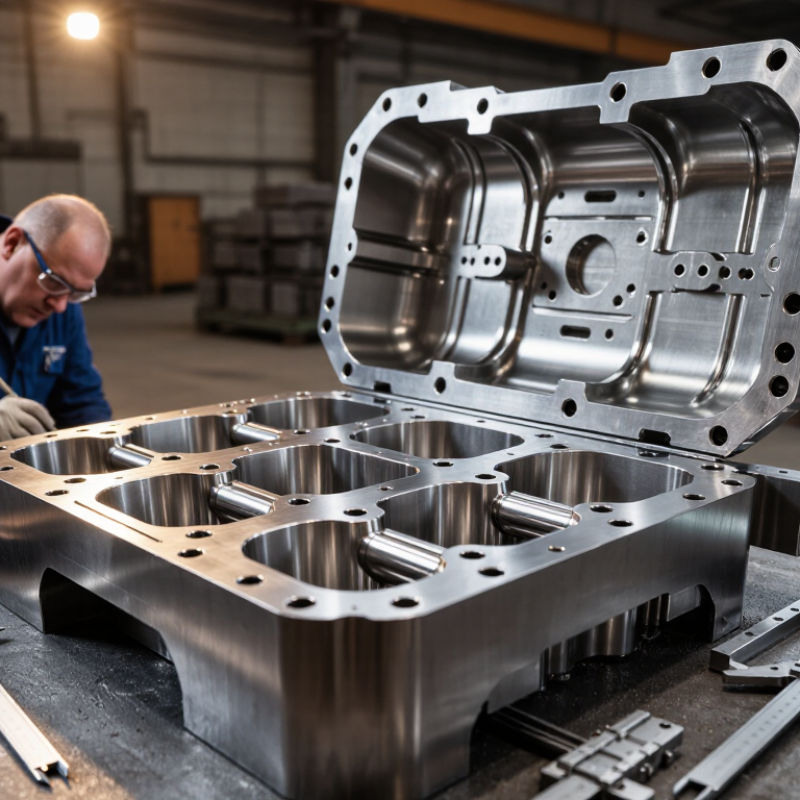
Table of Contents [Hide]
What Is an Aluminium Casting Mold?
An aluminium casting mold is a shaped cavity that forms liquid aluminium into a usable component. It provides the part’s outer profile, internal openings, and essential dimensions. Depending on production needs, molds may use steel, iron, plaster, or bonded sand. Permanent molds support repeated production, while sand molds offer greater design flexibility. The choice affects surface finish, accuracy, cost, and cooling speed.
During casting, heated aluminium enters through a pouring cup, runner, and gate. Vents help trapped air escape. The mold must control metal flow and heat removal. Otherwise, shrinkage, pores, or incomplete filling may appear. After solidification, workers open the mold or remove the sand. They then trim gates and inspect the casting. Small defects can expose weak mold design.
In practical workshops, the difficult part is rarely pouring alone. A tiny vent can influence a large surface. A poor draft angle may damage the part during removal. The U.S. Geological Survey’s Mineral Commodity Summaries 2024 estimated global primary aluminium production at about 70 million metric tons in 2023. This scale increases pressure for efficient, repeatable tooling. The International Aluminium Institute reports that recycled aluminium typically requires about 5% of the energy used for primary production. That statistic supports better mold design, but it does not solve every problem. Reusable molds still need maintenance, temperature control, and honest inspection records.
Brands
Proudly Trusted by Top Suppliers Worldwide







Let us know and we will automate, together to fit your industrial needs.
 +91-97254 16844
Clients
Proudly Trusted by Top Companies Worldwide


Do you need Help? Get in touch.
X
Please fill out the form below and we will get back to you as soon as possible.