o
p
t
i
m
a
r
o
b
o
t
i
c
s

Make a Call


Make a Call
Blogs
Top AOC Fiber Cable Suppliers for Global Buyers
Global buyers often compare AOC fiber cable suppliers by price, reach, and advertised data rates. Yet a product page cannot show how a cable behaves in a crowded rack or during repeated installation. AOC Fiber Cable combines optical transmission with electrical interfaces, making it useful for links where copper can become heavy or restrictive. The right choice still depends on the equipment at both ends.
A careful supplier review starts with practical details. Check supported protocols, connector type, cable length, power requirements, and compatibility with specific switches or servers. Ask for clear datasheets and test documentation, not just broad claims about performance. For example, a buyer connecting two racks across a data center may need a different assembly from one linking devices within a single cabinet. Small details matter.
Global purchasing adds more questions. Can the supplier provide stable production, responsive technical support, traceable specifications, and realistic delivery estimates? Confirm packaging and labeling requirements before placing a large order. Samples can help reveal fit and handling, though one successful sample does not guarantee every production batch will match. That point is easy to overlook.
This guide examines supplier capabilities and selection criteria for international buyers. It does not treat the lowest quote as the best value. Instead, it considers product consistency, application fit, documentation, and after-sales support. Some supplier information may be incomplete or change over time, so verify key claims directly before committing. A little caution is useful.
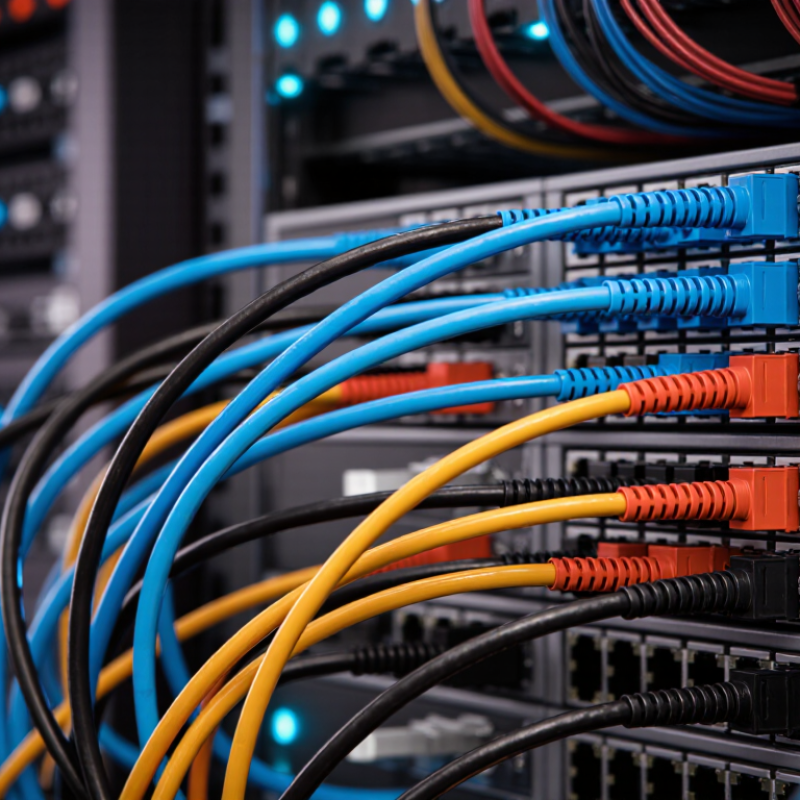
Table of Contents [Hide]
What Are AOC Fiber Cables and How Do They Work?
Top AOC Fiber Cable Suppliers for Global Buyers
An Active Optical Cable (AOC) combines optical fiber with transceiver modules at both ends. It carries data through light, not only electrical signals. Inside each connector, a transmitter converts electrical signals into optical pulses. A receiver then changes those pulses back into electrical data. This process supports high bandwidth over longer distances than many copper cables. AOC assemblies are usually factory-terminated and ready to install. They reduce cable weight, electromagnetic interference, and routing difficulty inside crowded server cabinets. Direction matters, so check the source and destination labels before connecting.
For global buyers, supplier quality involves more than a low quotation. Review test reports, connector compatibility, transmission distance, operating temperature, and firmware requirements. Ask for sample units before placing a large order. In practical installations, cable bend radius and airflow can affect reliability. I have seen neat-looking racks fail because cables were sharply folded behind equipment. AOC products are not universally interchangeable, even when connector shapes appear identical. This point deserves careful verification.
Tips: Confirm port standards and required length first. Request insertion-loss and compliance data. Keep a small spare quantity for urgent replacements. Also, document cable direction during installation. Simple records prevent avoidable mistakes. Supplier response time matters too, although it can be difficult to measure before a real problem occurs.
Brands
Proudly Trusted by Top Suppliers Worldwide






Let us know and we will automate, together to fit your industrial needs.
 +91-97254 16844
Clients
Proudly Trusted by Top Companies Worldwide


Do you need Help? Get in touch.
X
Please fill out the form below and we will get back to you as soon as possible.