Top Benefits of Agricultural Drones for Global Farmers?
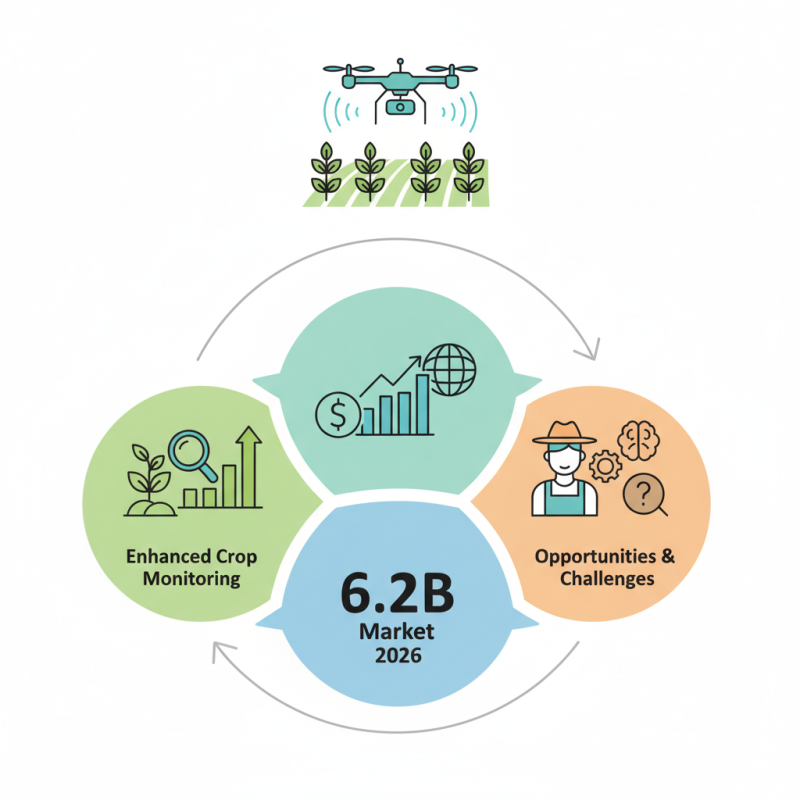
Agricultural Drones are revolutionizing the farming landscape. These advanced tools provide farmers with a powerful edge in crop management. According to a report from MarketsandMarkets, the agricultural drone market is expected to reach $6.2 billion by 2026, highlighting the growing adoption of this technology worldwide.
Enhanced crop monitoring is one of the key benefits of agricultural drones. They enable farmers to collect real-time data, improving decision-making. For instance, drones can identify crop health issues early, allowing for timely interventions. A study from the University of California found that farmers who used drones reported a 15% increase in crop yields compared to traditional methods. This data emphasizes the impact of technology on productivity.
While agricultural drones present immense opportunities, they also demand careful consideration. Farmers must invest both time and resources to train themselves in drone operation and data analysis. Not all farmers have the same access to technology, which can widen the gap between large and small operations. This disparity calls for industry efforts to ensure equitable access to agricultural innovations.
Overview of Agricultural Drones and Their Functionality
Agricultural drones have transformed modern farming with their advanced technology. These devices help farmers monitor crops, assess soil health, and optimize resource use. According to a report from Allied Market Research, the global agricultural drone market is expected to reach $8.9 billion by 2027. This growth highlights the increasing reliance on technology in farming practices.
Drones utilize high-resolution cameras and sensors to gather data from above. This information is crucial for precision agriculture. Farmers can identify pest infestations, water stress, and nutrient deficiencies. By analyzing these parameters, they can make informed decisions to enhance crop yields. A study by MarketsandMarkets found that precision agriculture can lead to increases in yields of 10 to 20%.
Tip: Implement regular drone flights during key growth stages to monitor crop changes. This proactive approach can prevent larger issues down the line.
Despite their benefits, some challenges remain. Not all farmers are familiar with drone technology. Training and understanding data interpretation are vital for effective usage. Additionally, investing in drones can be cost-prohibitive for small-scale farmers.
Tip: Consider joining agricultural cooperatives to share resources. This collaboration can reduce costs and facilitate access to drone technology.
Top Benefits of Agricultural Drones for Global Farmers
Benefit
Description
Impact on Farmers
Precision Agriculture
Drones provide accurate data for soil and crop health.
Improved crop yields and efficient resource use.
Rapid Monitoring
Drones can quickly cover large areas for crop inspections.
Faster identification of issues such as pests or diseases.
Cost Efficiency
Reduction in labor and input costs through automation.
Increased profitability compared to traditional methods.
Data Collection
Drones gather extensive data for analytics.
Informed decision-making based on real-time data.
Field Mapping
Creates detailed maps of fields for better planning.
Enhanced effectiveness of inputs and resource distribution.
Enhanced Crop Monitoring and Management Through Drone Technology
Agricultural drones are transforming crop monitoring and management. With high-resolution cameras and sensors, they capture detailed images of fields. This technology enables farmers to detect issues early. They can spot diseases, pests, and nutrient deficiencies much faster than traditional methods. Real-time data allows for precise interventions, saving both time and resources.
Tips for using drones effectively include planning your flight path carefully. Identify target areas within your fields that require special attention. Regularly monitor environmental conditions to ensure optimal drone performance. Weather can greatly impact the quality of your data. Also, ensure you are trained in drone operation to maintain safety and efficiency.
While drones offer many benefits, they also require investment and training. Some farmers may feel overwhelmed by the technology. Understanding how to analyze the data collected is crucial. It’s essential to reflect on how to integrate these insights into regular farming practices. Balancing technology with traditional methods can enhance overall productivity.
Precision Agriculture: Improving Efficiency with Drones
Agricultural drones are transforming farming practices through precision agriculture. These versatile tools enhance efficiency by providing detailed aerial imagery. Farmers can monitor crop health easily, spotting issues like pest infestations or nutrient deficiencies quickly. This allows for timely interventions, reducing unnecessary inputs.
Data collected by drones enables informed decision-making. They can measure soil moisture levels across vast fields. Analyzing this data helps optimize irrigation practices, conserving water and costs. However, the technology may not suit every farm type. Drones require a learning curve and investment that some farmers might find challenging.
Despite these obstacles, many farmers are embracing drones for their potential. Continuous advancements in drone technology promise better features and lower costs. As more farmers integrate drones, they will shape the future of agriculture. Still, the reliance on technology poses questions about data security and privacy. Addressing these concerns is vital for building trust among all users.
Cost-Effectiveness of Using Drones in Farming Practices
The use of drones in agriculture is transforming farming practices. A recent report by the Association for Unmanned Vehicle Systems International (AUVSI) indicates that farmers can reduce operational costs by up to 15% through drone technology. Drones enable precise monitoring of crop health, which can prevent unnecessary pesticide and fertilizer use. This targeted approach not only lowers input costs but also enhances sustainability.
Additionally, the National Agricultural Statistics Service (NASS) highlights that drone data collection can be completed in a fraction of the time required for traditional methods. It can take several hours to manually survey larger fields. In contrast, drones can cover the same area in minutes. This time-saving translates into financial savings, making drones appealing even for small-scale farmers. However, the initial investment for drones can be a barrier for some.
It's essential to consider the steep learning curve associated with drone technology. Farmers often need training to use drones effectively. While the benefits are significant, the technology may require farmers to adapt their traditional practices. Embracing this change can be challenging, but it’s a path toward increased efficiency and cost-effectiveness.
Top Benefits of Agricultural Drones for Global Farmers
Future Trends: The Role of Drones in Sustainable Agriculture
Drones are making waves in sustainable agriculture. They offer advanced capabilities for crop monitoring, soil analysis, and efficient resource management. Farmers utilize drones to gather real-time data, helping them make informed decisions. This trend is transforming traditional farming techniques into more precise and eco-friendly practices.
Using drones can reveal areas needing attention, such as water stress or pest infestations. This information allows farmers to target specific regions rather than applying treatments across entire fields. However, there are challenges in integrating this technology. Many farmers may not have access to training or reliable internet, limiting data sharing and effectiveness.
The future urges a balance between innovation and accessibility. While drones streamline operations, we must ensure that smaller farms are not left behind. Investment in education and infrastructure is essential. This way, all farmers can benefit from the technology. Embracing these tools is crucial for achieving sustainable agricultural practices in an increasingly demanding world.