o p t i m a r o b o t i c s

Blogs

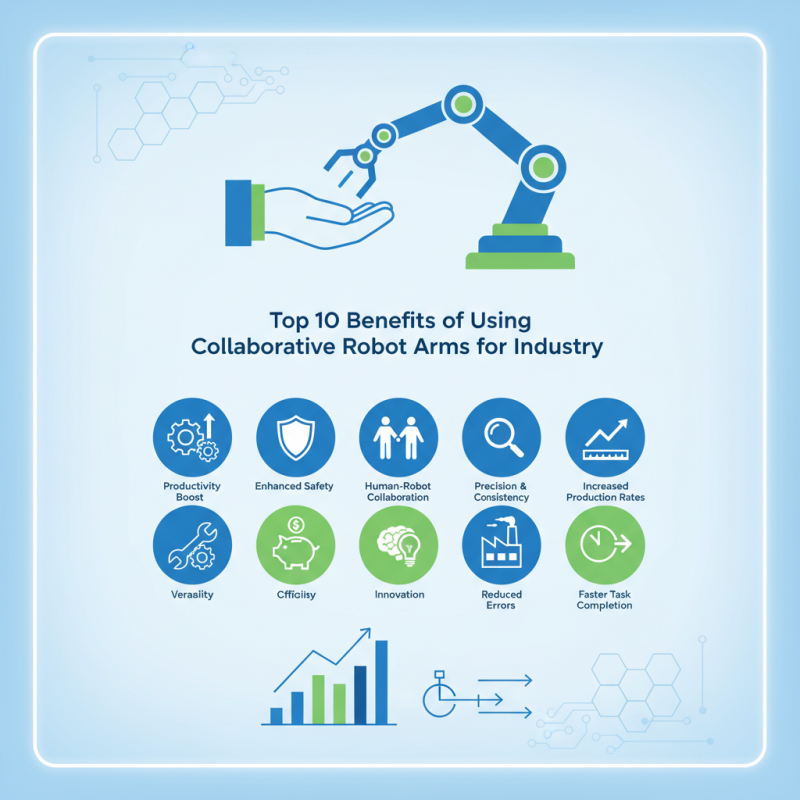
Top 10 Benefits of Using Collaborative Robot Arms for Industry?

The rise of automation in manufacturing has led to significant advancements in technology. Collaborative robot arms, or cobots, are at the forefront of this change. According to a report by the International Federation of Robotics, the installation of collaborative robots is expected to reach 1.4 million units by 2024. This growth reflects a shift towards enhancing productivity and safety in various industrial sectors.

Collaborative robot arms are designed to work alongside humans, increasing efficiency without replacing the human touch. They offer precise and consistent performance, minimizing errors in tasks. A study from McKinsey & Company highlights that integrating cobots can boost production rates by 20-30%. However, businesses should critically assess their specific needs before implementation. Not every task is suitable for cobots, and an improper fit can lead to underwhelming results.

Despite their benefits, companies must consider the initial investment and training required for effective utilization. Collaborative robot arms are not a one-size-fits-all solution. Continuous reflection on their performance is crucial. Overall, the potential of collaborative robots is vast, and understanding their capabilities is essential for leveraging their full advantages in the industry.
Top 10 Benefits of Using Collaborative Robot Arms for Industry?

Benefits of Collaborative Robot Arms in Reducing Operational Costs

Collaborative robot arms, or cobots, are changing the landscape of industry. They are particularly effective in reducing operational costs. These robots work alongside human workers, requiring minimal guarding and space. This allows companies to repurpose valuable floor space for other tasks, maximizing efficiency.

By easing the burden of repetitive tasks, cobots enable human employees to focus on higher-value activities.

The initial investment in cobots may seem daunting. However, the long-term savings are significant. Training costs are lower because they are intuitive to use. Additionally, maintenance costs are often less than traditional robotic systems. Several studies note a decrease in workplace injuries when cobots assist human operators. This reduces downtime and related costs.

Still, the transition requires careful planning and adaptation. Businesses must weigh integration challenges against potential savings.

Implementing cobots also encourages innovation. Companies can experiment with new workflows and production methods. However, not all businesses benefit equally from this technology. Some may struggle with integration or face resistance from staff. It is vital to analyze each situation carefully.

Exploring collaborative robots requires a willingness to learn and adapt. Embracing these changes can lead to substantial operational cost reductions over time.
Enhancing Workplace Safety: How Collaborative Robots Minimize Risks

Collaborative robots, or cobots, are transforming industrial workplaces. By design, these robots work alongside human operators. They bring unique safety features that drastically reduce workplace risks. For instance, cobots are equipped with advanced sensors. These sensors allow them to detect human presence and stop immediately if someone gets too close.

Furthermore, the lightweight design of collaborative arms minimizes potential injuries. Unlike traditional industrial robots, cobots do not require heavy enclosures. This accessibility encourages employee engagement in automated processes. Workers can perform tasks without fearing severe accidents. However, some businesses may overlook the need for proper training. Employees must be educated about the robots' capabilities and limitations. Without this training, the very safety features can become ineffective.

Another critical aspect is the adaptability of cobots. They can switch tasks quickly, reducing the need for lengthy reconfigurations. This flexibility helps manufacturing lines remain productive while maintaining safety. Yet, relying solely on technology can lead to complacency. Regular evaluations of both robot and human interactions are essential. Continuous reflection on the safety protocols ensures that new risks are addressed promptly.

Top 10 Benefits of Using Collaborative Robot Arms for Industry

Increasing Efficiency: Metrics on Improved Productivity with Cobot Integration

Collaborative robots, or cobots, are transforming industrial landscapes. Their integration leads to significant productivity gains. For instance, studies show that companies experience up to a 40% increase in output after adopting cobots. This phenomenon is primarily due to their ability to work alongside human operators, enhancing flexibility and efficiency.

Tips: Observe how your team interacts with cobots. Identify tasks where humans excel, and let cobots handle repetitive actions. This creates a harmonious work environment, fostering creativity and innovation.

Implementing cobots can also streamline workflows. They excel in precision tasks, reducing errors and waste. Some businesses report up to a 30% decrease in operational costs through improved efficiency. Employees can focus on solving complex problems rather than mundane tasks.

Tips: Monitor the metrics regularly. Gather data on performance and worker satisfaction. Adjust the training programs based on this feedback to ensure optimal collaboration. This iterative process enhances both technology and team dynamics. Remember, it's a continuous journey, not a final destination.

Flexibility and Scalability: Adapting to Changing Production Demands

Top 10 Benefits of Using Collaborative Robot Arms for Industry?

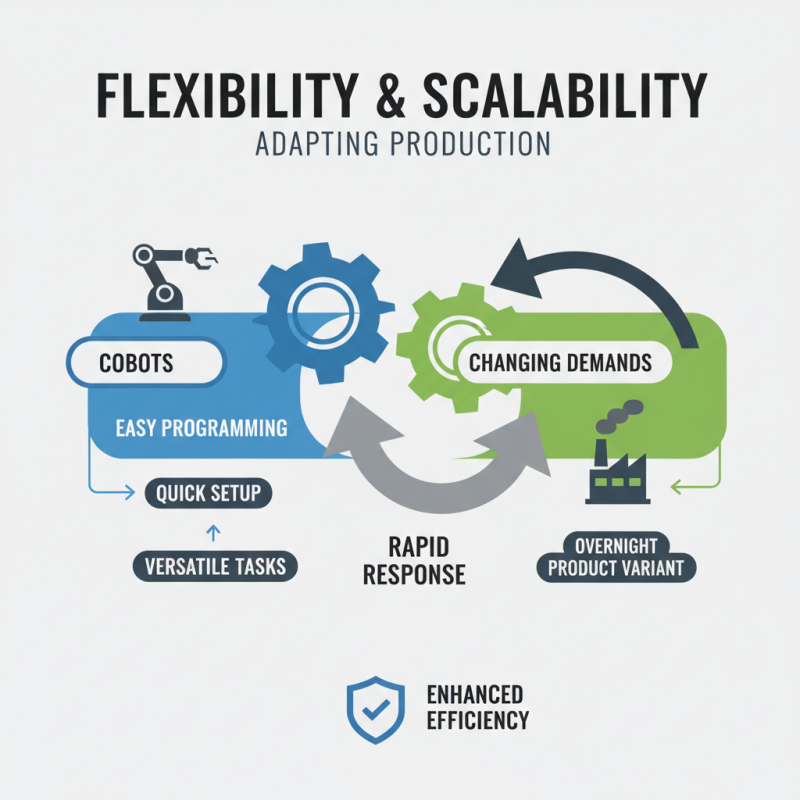
Collaborative robot arms, or cobots, bring significant flexibility to modern manufacturing. These robots can easily adapt to a variety of tasks. Unlike traditional robots, cobots typically require less programming and setup time. This adaptability allows manufacturers to pivot quickly when production demands change. A factory can produce a different product variant overnight. This rapid response capability enhances overall efficiency.

Scalability is another crucial advantage. Businesses can start with a few units and expand as needed. As more automation is required, the addition of cobots can be seamless. This scalability is particularly beneficial for small to medium-sized enterprises facing fluctuating market demands. However, implementing cobots can present challenges. Balancing the human-robot collaboration requires careful planning. Moreover, user training is essential to maximize productivity.

Monitoring performance is vital for long-term success. Regular assessments help identify areas needing improvement. Some initial setups may not deliver expected results. Reflecting on these aspects can guide better integration strategies. The flexibility and scalability of collaborative robot arms offer exciting possibilities, yet they demand continuous evaluation and adaptation.

Streamlining Workforce Collaboration through Human-Robot Partnerships

Top 10 Benefits of Using Collaborative Robot Arms for Industry?

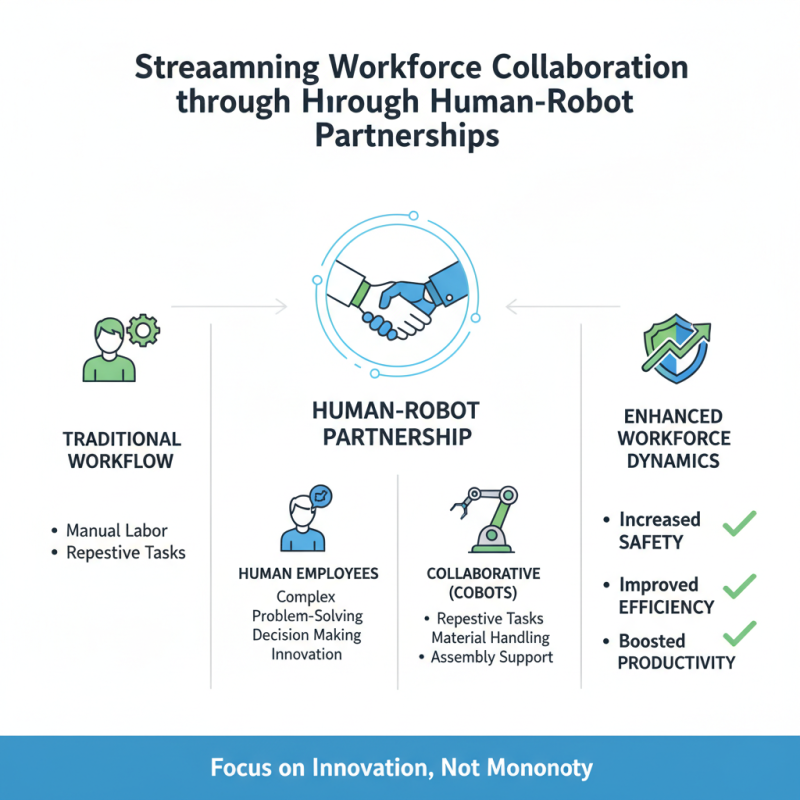
As industries evolve, the integration of collaborative robot arms (cobots) enhances workforce dynamics. These robots work alongside human employees, increasing safety and efficiency. This partnership allows workers to focus on complex tasks while cobots handle repetitive ones. This division of labor boosts productivity.

Incorporating cobots can reshape job roles. Workers may need to adapt and learn new skills. This could create uncertainty, but it also opens pathways for growth. Workers who embrace collaboration with robots may find their productivity increases significantly.

Tips: Focus on continuous training. Upskill workers to maximize the benefits of cobots. Start with simple tasks to build confidence. Remember, a positive mindset towards technology makes transitions smoother. Embracing change is vital in today's fast-paced environment. It's a learning curve, so patience is key. Balancing human intuition with robotic precision creates an innovative workspace.

Brands

Proudly Trusted by Top Suppliers Worldwide

Let us know and we will automate, together to fit your industrial needs.

Clients

Proudly Trusted by Top Companies Worldwide

Do you need Help? Get in touch.

X

Please fill out the form below and we will get back to you as soon as possible.

    Subscribe our newsletter & get updates