o
p
t
i
m
a
r
o
b
o
t
i
c
s

Make a Call


Make a Call
Blogs
What Is the Best Automatic Labeling Machine from China?
Choosing the best Automatic Labeling Machine from China is not simply a price comparison. It is a production decision involving accuracy, uptime, materials, service, and future growth. A machine may look impressive in a showroom, yet struggle with dusty bottles, uneven cartons, or labels stored in humid conditions. Small details matter. Very much.
David Luttenberger, Global Packaging Director at Mintel, has emphasized, “Packaging is a powerful tool for brands to communicate with consumers.” That principle also applies to industrial labeling. A crooked label can weaken shelf presentation, slow inspection, and create avoidable waste. The machine must therefore match the product, container shape, label material, adhesive, and line speed.
Chinese manufacturers offer many practical options. Some provide compact tabletop units for small workshops. Others build servo-driven systems for high-speed beverage, food, pharmaceutical, and cosmetic lines. The best choice depends on tested performance, not attractive specifications. Ask for sample labeling with your actual containers. Measure placement tolerance. Watch how operators adjust the sensor, reel, and conveyor.
A reliable supplier should explain maintenance clearly. It should provide wiring diagrams, spare-part lists, training, and responsive technical support. This is where buyers sometimes become too optimistic. The cheapest quotation may hide installation delays or difficult communication. My own concern is simple: no machine remains “automatic” when operators cannot troubleshoot it.
This guide examines Chinese Automatic Labeling Machine suppliers through a practical lens. It considers accuracy, construction, customization, compliance, service, and total ownership cost. The final answer may not be the most expensive machine. It should be the one that performs consistently on your real production floor.
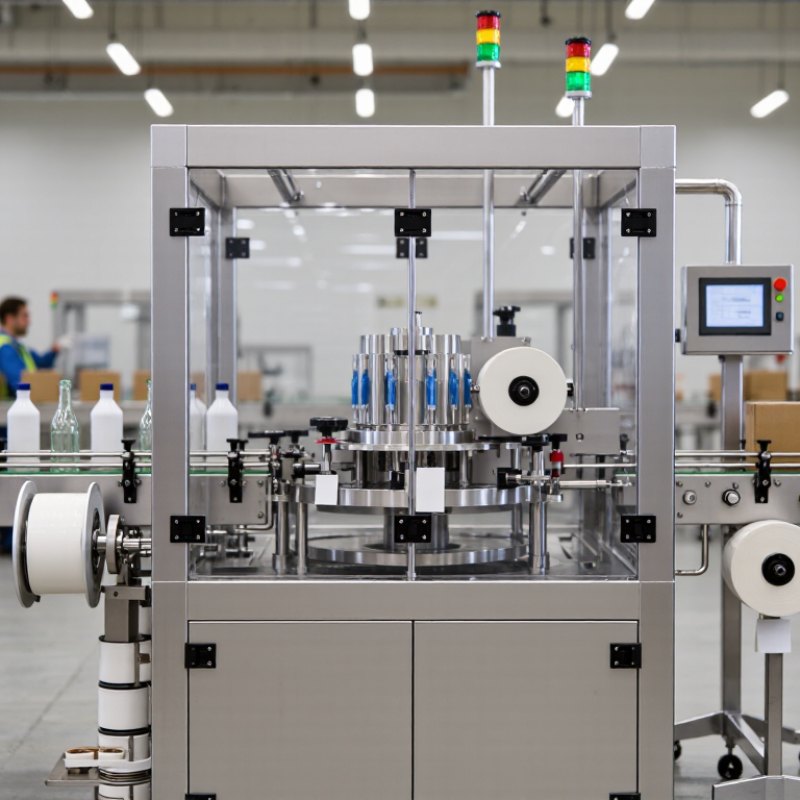
Table of Contents [Hide]
What Is an Automatic Labeling Machine and How Does It Work?
What Is the Best Automatic Labeling Machine from China?
An automatic labeling machine applies adhesive labels to bottles, cartons, pouches, or other products without manual placement. A conveyor moves each item forward at a controlled speed. A sensor detects its position. The control system then releases one label at the correct moment. A pressure roller or brush smooths the label onto the surface.
The process is simple, but accuracy depends on several details. Label length, product spacing, conveyor speed, and surface material must match. Many machines use a PLC, photoelectric sensors, and servo motors for stable control. Some models also include label-break detection and missing-label alarms. MarketsandMarkets reported that the global labeling equipment market could grow from about USD 3.3 billion in 2023 to USD 4.5 billion by 2028. This growth reflects wider demand for faster and more traceable packaging operations.
Choosing equipment from China requires more than comparing prices. Request test videos using your actual containers and labels. Check application accuracy, changeover time, spare-part access, and operator training. In factory trials, transparent bottles and dusty surfaces often expose weaknesses. That part is easy to underestimate. A machine may perform well at 60 products per minute but struggle at 100. PMMI industry research also highlights automation, flexibility, and labor efficiency as major packaging priorities. These findings support a careful approach: verify performance under real conditions, not only on a specification sheet.
Brands
Proudly Trusted by Top Suppliers Worldwide



Let us know and we will automate, together to fit your industrial needs.
 +91-97254 16844
Clients
Proudly Trusted by Top Companies Worldwide


Do you need Help? Get in touch.
X
Please fill out the form below and we will get back to you as soon as possible.