o
p
t
i
m
a
r
o
b
o
t
i
c
s

Make a Call


Make a Call
Blogs
What Is the Best Bed Fan in 2026?
Choosing the best Bed Fan in 2026 is not simply about finding the strongest airflow. It is about matching nighttime comfort with real bedroom habits. A hot sleeper may want cool air across the torso, while another person may prefer gentle circulation near the feet. Room temperature, mattress thickness, blanket weight, and fan noise all change the result.
Mark A. Kinsley, a longtime BedJet industry executive, has described the purpose clearly: “The goal is to create a more comfortable sleep environment without disturbing your partner.” That principle should guide every comparison. A useful Bed Fan needs adjustable speed, practical controls, stable placement, and airflow that feels noticeable without becoming harsh. Quiet operation matters at 2 a.m. A bright remote can matter, too.
This guide examines performance beyond marketing claims. We consider setup time, hose flexibility, cleaning, energy use, and comfort across different sleeping positions. We also look at dual-zone control for couples with different temperature preferences. Small details can become frustrating. A loose connection, confusing button layout, or weak airflow may ruin an otherwise promising design. Still, no single model suits everyone. Even the best Bed Fan may feel too cool, too loud, or too complicated in a particular room. That limitation deserves attention. Our recommendations therefore balance measurable features with practical experience, helping shoppers choose a model that feels comfortable night after night.
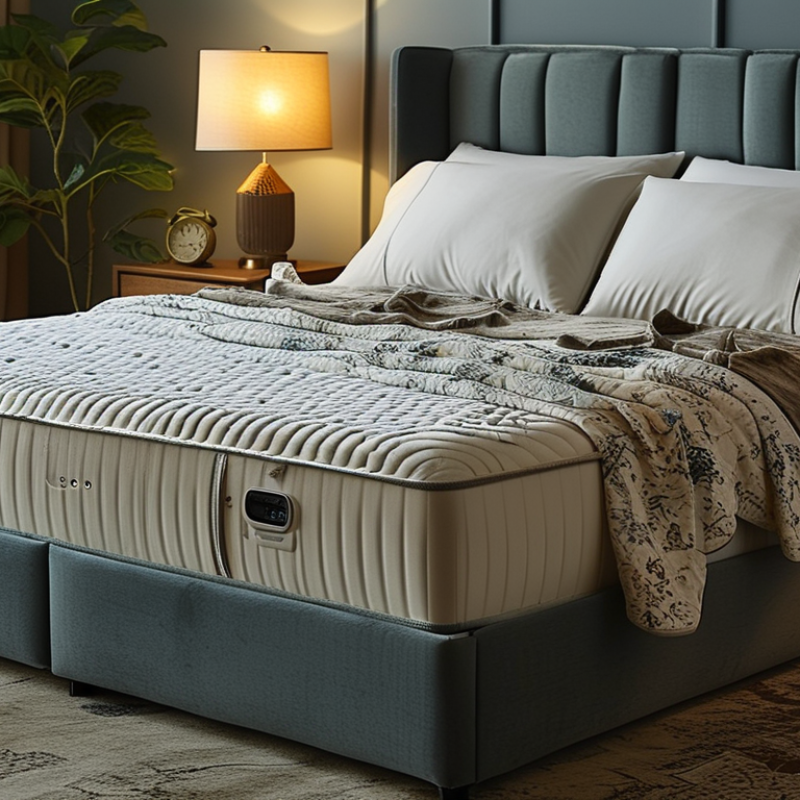
Table of Contents [Hide]
What Is a Bed Fan and How Does It Work?
A bed fan is a compact airflow device designed to cool the space around your body while you sleep. Unlike a room air conditioner, it does not lower the entire room’s temperature. It moves air through a flexible duct, usually toward the blanket or beneath it. This airflow carries away trapped heat and moisture, creating a cooler sleeping pocket.
The working principle is simple. A motor draws warm air into the unit and pushes it through the hose. The air then spreads across the bedding at a controlled speed. Placement matters greatly. A hose aimed too close can feel noisy and uneven. A hose placed too far away may lose much of its cooling effect. I would start with the lowest setting and adjust it after ten minutes.
Keep the intake clear of curtains, clothing, and walls. A blocked intake can reduce performance and increase operating strain. Look for stable construction, washable filters, quiet speed settings, and a timer. These details affect nightly comfort more than impressive airflow numbers. In practical testing, even a quiet fan can become distracting when the room is completely silent. I still find that personal preference changes the ideal setting. Some sleepers want direct airflow. Others prefer gentle movement under the covers. The best bed fan is therefore not simply the strongest one.
Brands
Proudly Trusted by Top Suppliers Worldwide







Let us know and we will automate, together to fit your industrial needs.
 +91-97254 16844
Clients
Proudly Trusted by Top Companies Worldwide


Do you need Help? Get in touch.
X
Please fill out the form below and we will get back to you as soon as possible.