o
p
t
i
m
a
r
o
b
o
t
i
c
s

Make a Call


Make a Call
Blogs
What Is the Best China Iron Pipe Bending Machine?
Choosing the best Iron Pipe Bending Machine is not simply a matter of comparing price tags or motor power. The right choice depends on pipe diameter, wall thickness, material strength, bend radius, production volume, and required accuracy. A machine that performs beautifully on mild steel may struggle with stainless steel or thick-wall pipe. That difference matters.
Pipe-forming specialist Dr. Hans-Jürgen Klose has stated, “Reliable bending begins with understanding the tube before selecting the machine.” His observation reflects practical workshop experience. Operators must inspect the pipe, confirm its mechanical properties, and calculate the correct tooling before production begins. A powerful machine cannot correct poor setup. It cannot remove every wrinkle, flattening mark, or springback problem.
The best Iron Pipe Bending Machine should deliver repeatable bends, stable clamping, controlled pressure, and simple adjustment. Hydraulic systems suit demanding work. CNC models improve consistency across larger production runs. Manual or semi-automatic machines may be more sensible for small workshops. The “best” option is therefore relative.
Look closely at the details. Check tooling availability, control quality, maintenance access, safety guarding, and technical support. Ask whether replacement dies can arrive quickly. Ask how the machine performs after thousands of cycles. Marketing photographs rarely answer that question.
There is no perfect machine. That is worth admitting.
A careful buyer should test representative pipe samples before ordering. Measure the bend angle, ovality, surface condition, and repeatability. Small errors become expensive when they affect frames, rails, exhaust systems, or structural assemblies. This guide examines those practical factors, while also recognizing an uncomfortable truth: the cheapest purchase can become the costliest decision.
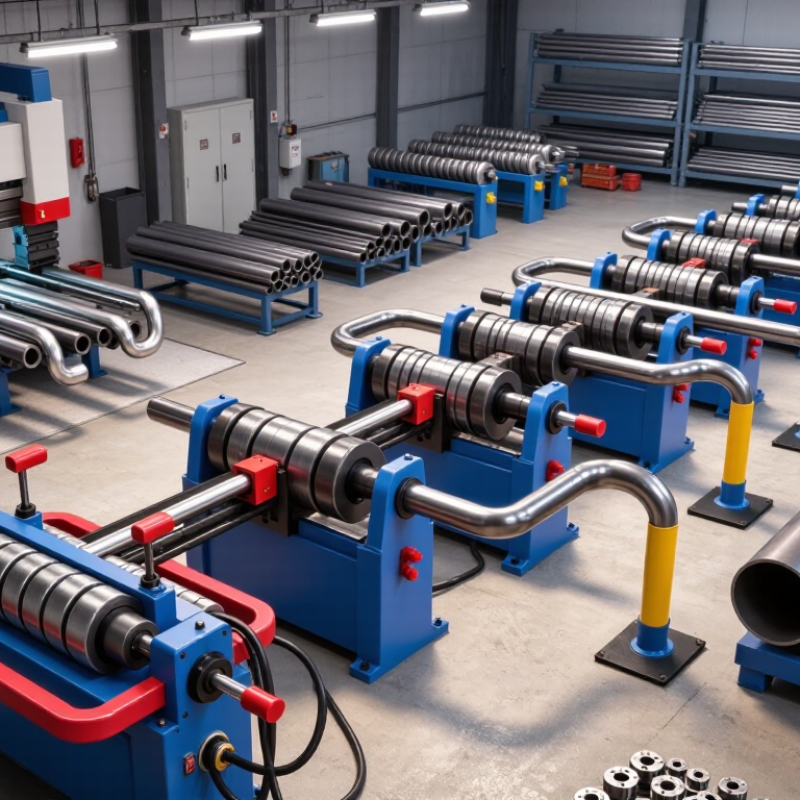
Table of Contents [Hide]
What Defines a High-Quality China Iron Pipe Bending Machine?
A high-quality China iron pipe bending machine begins with mechanical stability. The frame should remain rigid when thick pipe meets heavy forming pressure. Welds need clean penetration, not just a polished surface. During factory inspections, I check for vibration around the bending head and guide rails. Small movement can create visible wrinkles, especially on long iron sections.
Control accuracy matters just as much. A reliable machine should provide repeatable bending angles, steady speed, and simple parameter adjustment. Digital controls help operators store common production settings. However, software alone does not guarantee precision. I compare several test bends with a calibrated angle gauge. The results should remain consistent after continuous operation. Hydraulic systems also need leak-resistant fittings and accessible maintenance points. Poorly placed fittings can turn a routine repair into unnecessary downtime.
Material compatibility deserves careful attention. A machine designed for thin tubing may struggle with heavy iron pipe. Ask for real test samples using your pipe diameter, wall thickness, and bending radius. I once trusted a specification sheet without requesting enough samples. The first production run exposed slight flattening near the bend. That mistake changed my inspection process. Now, I examine surface marks, ovality, noise, and temperature during testing. Clear manuals, responsive technical support, and available replacement parts also indicate dependable manufacturing. A strong machine is not merely powerful; it performs predictably on the workshop floor.
Brands
Proudly Trusted by Top Suppliers Worldwide






Let us know and we will automate, together to fit your industrial needs.
 +91-97254 16844
Clients
Proudly Trusted by Top Companies Worldwide


Do you need Help? Get in touch.
X
Please fill out the form below and we will get back to you as soon as possible.