10 Best Delivery Robots Transforming the Future of Shipping and Logistics?
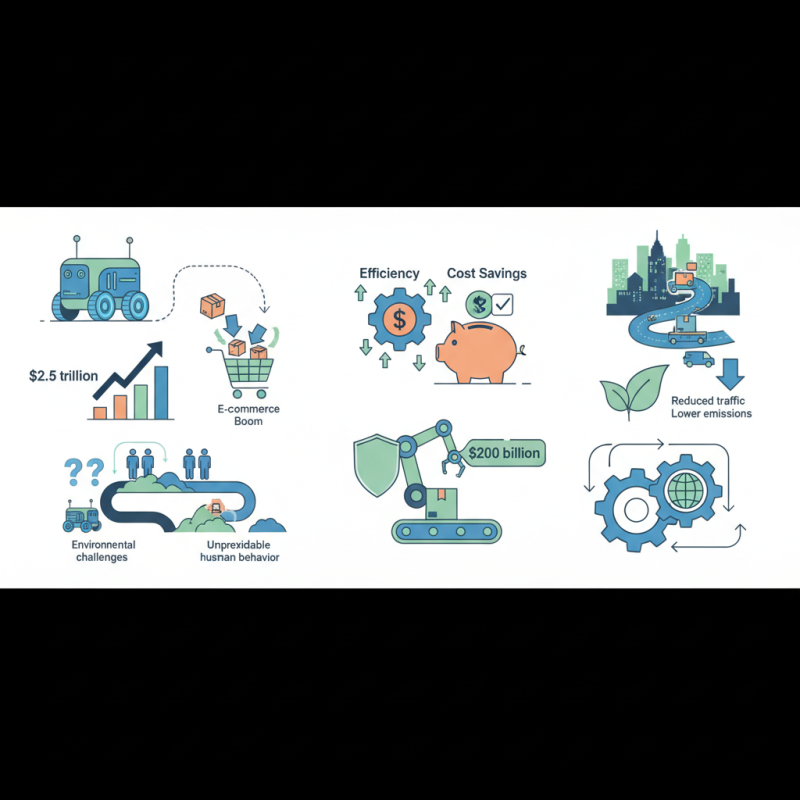
The logistics and shipping landscapes are witnessing a profound transformation, primarily driven by the rise of delivery robots. According to a report by McKinsey, the logistics sector is projected to grow by $2.5 trillion by 2025. With e-commerce booming, the demand for efficient delivery systems has never been higher. Delivery robots are stepping in to address this urgent need for speed and reliability.
These inventive machines are not just about convenience; they can enhance operational efficiency and cut costs. For instance, a study from Goldman Sachs estimates that automation, including delivery robots, could save the industry up to $200 billion annually. Some cities have already embraced these robots, showcasing their potential to reduce traffic congestion and lower emissions. However, challenges remain in terms of regulation and safety, which require further examination.
While the future of delivery robots appears promising, it also invites scrutiny. Can these machines operate effectively in all environments? How will they handle unpredictable human behavior? Addressing these questions is crucial as the industry moves forward. The evolution of delivery robots is ongoing, revealing both opportunities and complexities that must be navigated for successful integration into everyday logistics.
Overview of Delivery Robots in the Shipping Industry
The shipping industry is rapidly evolving with the introduction of delivery robots. These machines are designed to streamline logistics and provide efficient services. Many companies are exploring this technology to enhance their distribution networks. Robots can operate in diverse environments, from urban streets to quiet neighborhoods. They are equipped with sensors and cameras to navigate safely.
Efficiency is a notable benefit. Delivery robots can reduce delivery times and lower operational costs. Many companies are employing these robots to serve small packages within limited ranges. They offer a reliable option for last-mile delivery. However, limitations exist. Robots may struggle in adverse weather conditions and crowded settings.
Tips: When considering delivery robots, assess the environment they will operate in. Proper planning ensures smooth integration into existing logistics systems. It's also key to train staff on working alongside these technologies. Tracking their performance is essential for future improvements. Additionally, customer feedback can provide insights into their effectiveness.
10 Best Delivery Robots Transforming the Future of Shipping and Logistics
Robot Model
Load Capacity (kg)
Max Speed (km/h)
Operating Range (km)
Battery Life (hours)
Model A
50
6
25
12
Model B
30
5
20
10
Model C
40
7
30
15
Model D
45
8
28
14
Model E
35
4
15
9
Key Technologies Driving the Evolution of Delivery Robots
Delivery robots are rapidly changing the landscape of shipping and logistics. Sophisticated technologies drive their evolution, enhancing efficiency and accuracy in last-mile deliveries. These robots rely heavily on artificial intelligence and machine learning. These technologies enable them to navigate complex urban environments. They can analyze real-time data, adapting to obstacles and traffic conditions.
Sensors play a critical role in the design of delivery robots. High-definition cameras, LIDAR, and ultrasonic sensors help them detect their surroundings. However, reliance on these technologies can pose challenges. For instance, weather conditions can impact sensor performance. A slight drizzle might interfere with camera visibility, affecting navigation.
Automation and robotics are key components of the logistics revolution. Developers are continuously working to improve their robots' capabilities. Yet, ethical considerations also need attention. The implementation of robots raises questions about job displacement. As automation increases, there's a pressing need to contemplate its effects on the human workforce. Balancing innovation with social responsibility remains a significant concern.
Top 10 Delivery Robots Revolutionizing Logistics Today
The rise of delivery robots marks a significant shift in the logistics sector. These autonomous machines are designed to handle various tasks, from delivering groceries to transporting medical supplies. Their efficiency reduces human error and enhances delivery speed. However, the technology is not perfect. Many robots struggle with complex environments like crowded streets or bad weather.
Tips for successful implementation involve careful planning. Ensure your delivery robot has a clear path to follow. Regular maintenance is crucial. Robots need updates to navigate changing terrains. Observing user interactions can provide valuable insights for improvement. Collect feedback to adapt the service to community needs.
Another important consideration is the social aspect. Some people may feel uncomfortable with robots in their neighborhoods. Engaging with the community can help ease concerns. Demonstrating the benefits, such as reduced traffic congestion, can foster acceptance. Balancing technological advancements with community engagement is essential for growth.
Comparative Analysis of Leading Delivery Robot Companies
The rise of delivery robots is reshaping the logistics landscape. According to a recent report from ResearchAndMarkets, the global delivery robot market is projected to grow at a compound annual growth rate (CAGR) of over 23% by 2027. This rapid growth underlines the demand for efficient, contactless delivery solutions. A comparative analysis reveals that various companies are innovating in design and technology to enhance runtime efficiency.
Some models prioritize speed, while others focus on payload capacity. For instance, robots designed for urban environments typically weigh less and are more maneuverable. However, they may have limited carrying capacity. In contrast, heavier-duty robots might excel in rural areas but struggle with navigation in crowded streets. This inconsistency highlights an ongoing challenge in the sector: balancing speed with efficiency and delivery quality.
Despite the advancements, there are concerns about robot reliability. Faulty sensors or software glitches can lead to failed deliveries. A McKinsey report mentions that consumer acceptance largely hinges on the robots' reliability. As companies strive to improve technologies, these issues must be addressed to gain consumer trust. The future of delivery robots presents exciting potential, yet it requires ongoing evaluation to ensure they meet evolving consumer expectations.
Future Trends in Robotics for Shipping and Delivery Solutions
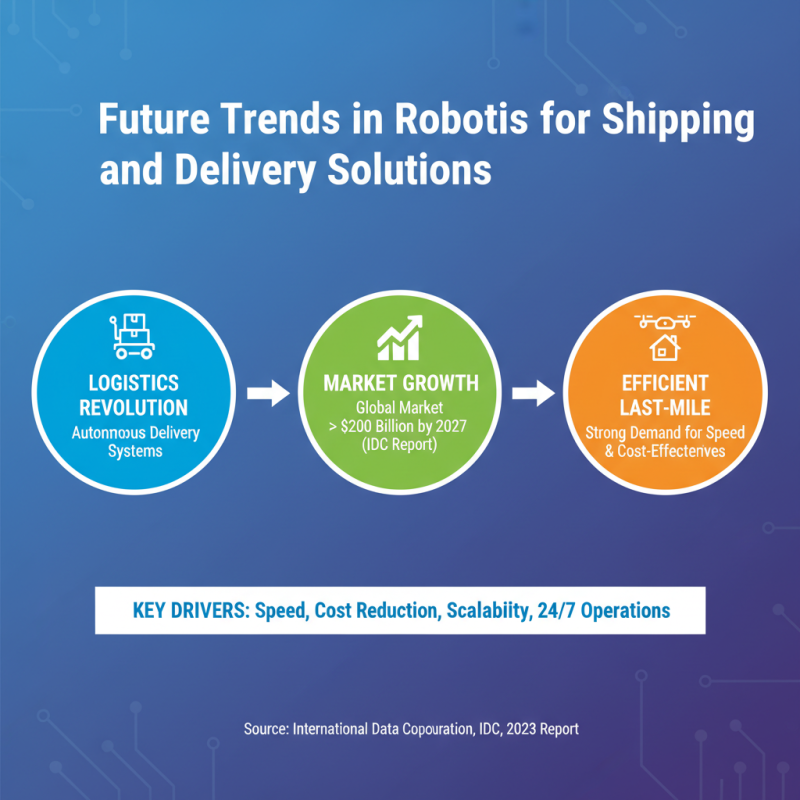
The logistics sector is experiencing a revolution with the rise of delivery robots. These autonomous systems are not just futuristic concepts; they're transforming everyday operations. According to a recent report from the International Data Corporation, the global market for delivery robots is expected to grow significantly, reaching over $200 billion by 2027. This rapid adoption indicates a strong demand for efficient last-mile solutions.
Robotic technology is enhancing delivery operations but isn't without challenges. Many companies face obstacles like urban logistics complexities and regulatory hurdles. The advancement in artificial intelligence and machine learning has significantly improved navigation and obstacle avoidance. However, integrating these robots into existing logistics frameworks requires careful planning. A McKinsey study highlights that 79% of logistics firms view automation as a critical trend, yet only 30% are implementing these technologies effectively.
Consumer expectations are shifting towards faster deliveries. A 2022 survey found that 63% of customers prefer same-day delivery options. This trend pressurizes logistics providers to adopt innovative solutions. Robots, equipped with advanced sensors and GPS, promise to meet these demands. However, reliability and safety remain concerns. Companies must continue evaluating the balance between automation and the human touch in logistics to truly succeed.