o
p
t
i
m
a
r
o
b
o
t
i
c
s

Make a Call


Make a Call
Blogs
Best Electric Stacker Lift Manufacturer in China?
Choosing the best Electric Stacker Lift manufacturer in China takes more than comparing prices or catalog photos. A unit may look suitable online, yet struggle with a narrow aisle, uneven floor, or frequent pallet changes. Buyers should verify rated capacity, lift height, mast dimensions, battery options, and braking performance against actual warehouse conditions. Small details matter.
Industry investment trends make this evaluation more relevant. MHI’s 2024 Annual Industry Report found that 55% of surveyed supply-chain professionals planned to increase investment in supply-chain innovation. The report does not measure stacker purchases specifically, but it signals growing attention to operational technology. For a buyer, that means checking whether a manufacturer can explain equipment specifications clearly and support them with test records, documented quality processes, and responsive after-sales service.
This guide compares Chinese manufacturers through practical criteria: product range, customization, component traceability, production capability, warranty terms, and export support. Ask for a detailed quotation and confirm what it includes, such as the battery, charger, and spare parts. Request references or inspection evidence where possible. A low initial price can conceal service gaps or a poor fit for your site. No shortlist is perfect. Even published specifications need confirmation against real operating conditions. The strongest choice is the supplier that can match the machine to your workload and substantiate its claims—not simply promise the highest capacity.
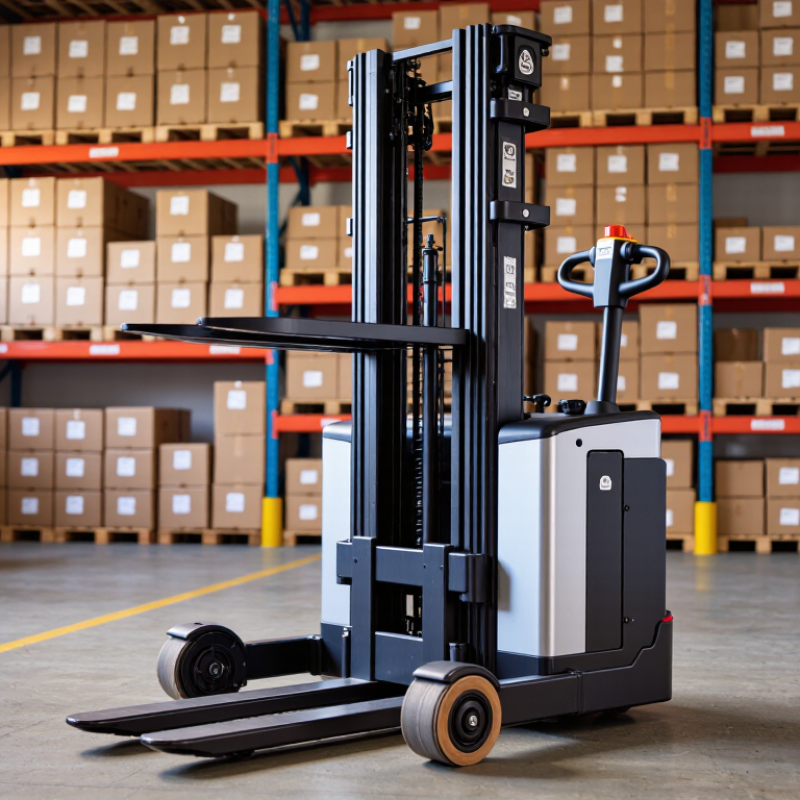
Table of Contents [Hide]
What Is an Electric Stacker Lift?
An electric stacker lift is a powered material-handling machine that raises and moves palletized loads over short distances. Its forks slide beneath a pallet, while an electric motor lifts the load along a vertical mast. Many models are walk-behind units; some include a platform for the operator. Simple in appearance. Useful in the right space.
In a warehouse, an operator might use one to lift a pallet from floor level and place it on a low or mid-height rack. The battery powers both travel and lifting, reducing the physical effort required for repeated handling. Actual performance depends on rated capacity, lift height, pallet dimensions, aisle width, and floor condition. Check the load rating carefully. A tall load can behave differently from a compact one, even at the same weight.
An electric stacker lift is not automatically a substitute for every forklift. It is generally suited to lighter, shorter-distance stacking tasks, but operating needs vary by site. Measure rack openings and turning areas before choosing equipment. Also consider charging access and how often the machine will be used. These details are easy to overlook; I would verify them on the actual work floor, not just from a product sheet.
Brands
Proudly Trusted by Top Suppliers Worldwide







Let us know and we will automate, together to fit your industrial needs.
 +91-97254 16844
Clients
Proudly Trusted by Top Companies Worldwide


Do you need Help? Get in touch.
X
Please fill out the form below and we will get back to you as soon as possible.