o
p
t
i
m
a
r
o
b
o
t
i
c
s

Make a Call


Make a Call
Blogs
What Are the 2026 Best Exhaust Fan Types?
Choosing the best exhaust fan in 2026 is less about buying the most powerful model. It is about matching airflow, noise, energy use, and installation conditions.
A compact axial fan may suit a bathroom with a short wall path. A centrifugal fan can handle longer ducts and stronger resistance. Inline mixed-flow models often serve kitchens, workshops, and multi-room systems. Heat-recovery ventilation may be wiser for tightly sealed homes, where removing stale air also removes valuable heat.
The details matter.
Dr. Joseph Allen, an indoor-air-quality researcher at Harvard University, has emphasized, “Ventilation is not a silver bullet, but it is one of the most important tools we have.” That principle remains useful when comparing every Exhaust Fan Exhaust Fan design. A fan should move air reliably, not merely advertise a high cubic-feet-per-minute number.
This guide examines the 2026 best exhaust fan types through practical conditions. It considers duct length, room size, humidity, grease, sound levels, controls, and maintenance access. It also separates bathroom comfort from heavy-duty commercial performance. A quiet ceiling fan may fail in a greasy cooking space. A powerful industrial unit may feel wasteful in a small washroom.
There is no perfect choice.
Even experienced installers can misjudge airflow when bends, grilles, and dampers are ignored. That is why real-world testing deserves attention alongside manufacturer specifications. The strongest answer may be less exciting: the correctly sized Exhaust Fan Exhaust Fan, installed with a clear discharge path, and cleaned before performance declines.
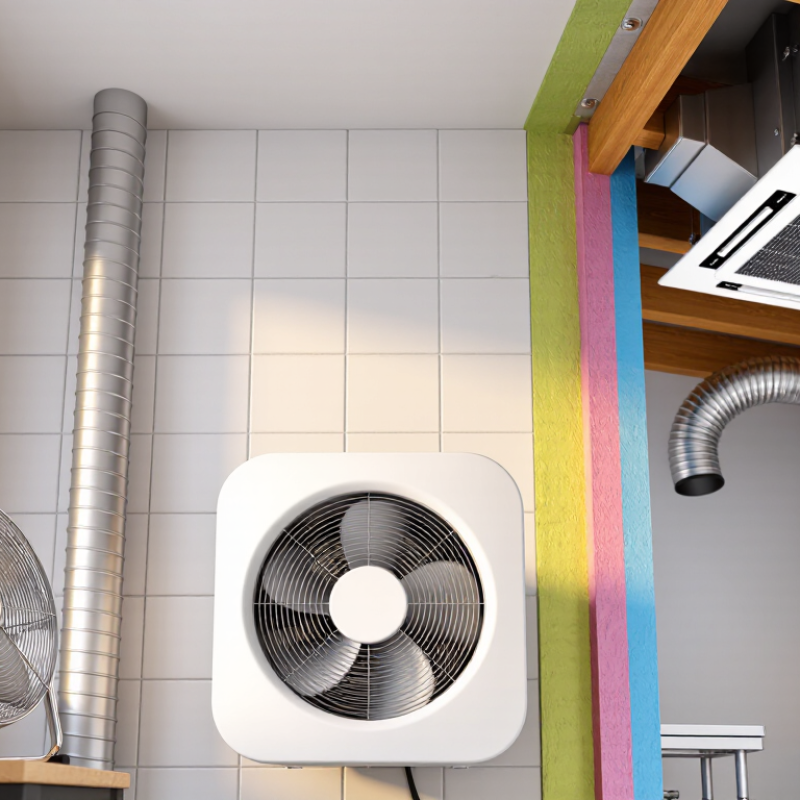
Table of Contents [Hide]
What Makes an Exhaust Fan Effective in 2026?
In 2026, an effective exhaust fan does more than move air quickly. It removes moisture, odors, and fine particles without creating disruptive noise. The best type depends on the room, duct length, and daily use. A compact ceiling fan may suit a bathroom, while an inline mixed-flow fan handles longer duct runs. That distinction matters. Airflow ratings can look impressive on packaging. Yet bends, grilles, and narrow ducts reduce real performance.
I judge effectiveness at the grille, not only through laboratory data. A reliable model should maintain steady airflow against static pressure. Its motor should start smoothly and operate efficiently for long periods. Humidity sensors can trigger ventilation after a shower, while timers prevent unnecessary running. Presence sensors are useful, but they need sensible calibration. Too sensitive, and the fan becomes annoying. Too weak, and damp air remains on mirrors and walls. Quiet operation also matters because people use quiet fans more consistently.
Good installation is part of the fan type. A short, straight, insulated duct usually performs better than a powerful fan on a tangled route. Backdraft protection helps stop cold air and outdoor smells from returning. Filters and grilles need accessible cleaning. I have seen neglected grilles collect dust quickly. That detail is easy to miss. Smart controls are not automatically better. They add failure points and may confuse occupants. I still verify the mirror after installation; numbers alone cannot reveal that result.
Brands
Proudly Trusted by Top Suppliers Worldwide







Let us know and we will automate, together to fit your industrial needs.
 +91-97254 16844
Clients
Proudly Trusted by Top Companies Worldwide


Do you need Help? Get in touch.
X
Please fill out the form below and we will get back to you as soon as possible.