o
p
t
i
m
a
r
o
b
o
t
i
c
s

Make a Call


Make a Call
Blogs
What Is the Best Glass Chamfering Machine in 2026?
Choosing the best Glass Chamfering Machine in 2026 requires more than comparing catalog prices. A machine may look impressive online, yet perform poorly beside a real production line. Glass thickness, edge shape, daily workload, and workshop space all influence the decision. A quiet motor matters when operators work eight-hour shifts. Consistent cooling matters when tiny edge chips can ruin an expensive panel.
This guide examines machines through practical experience, technical specifications, and dependable manufacturer evidence. It considers spindle accuracy, diamond wheel quality, water circulation, automation, safety controls, and maintenance access. Operators should inspect finished edges under bright light, not trust polished product photographs alone. A clean chamfer should feel smooth and appear even from corner to corner. Small variations often reveal weak alignment or unstable feeding.
There is no universal winner. A compact machine may suit a custom glass studio, while a high-output model fits architectural production. My initial preference might favor automation, but operator feedback can challenge that assumption. More features do not always mean better value. Some systems are difficult to calibrate, and replacement parts may take weeks to arrive. Reliable purchasing requires verified test results, clear warranty terms, responsive technical support, and realistic production trials. This article helps readers compare those factors honestly before investing in a Glass Chamfering Machine for 2026 and beyond.
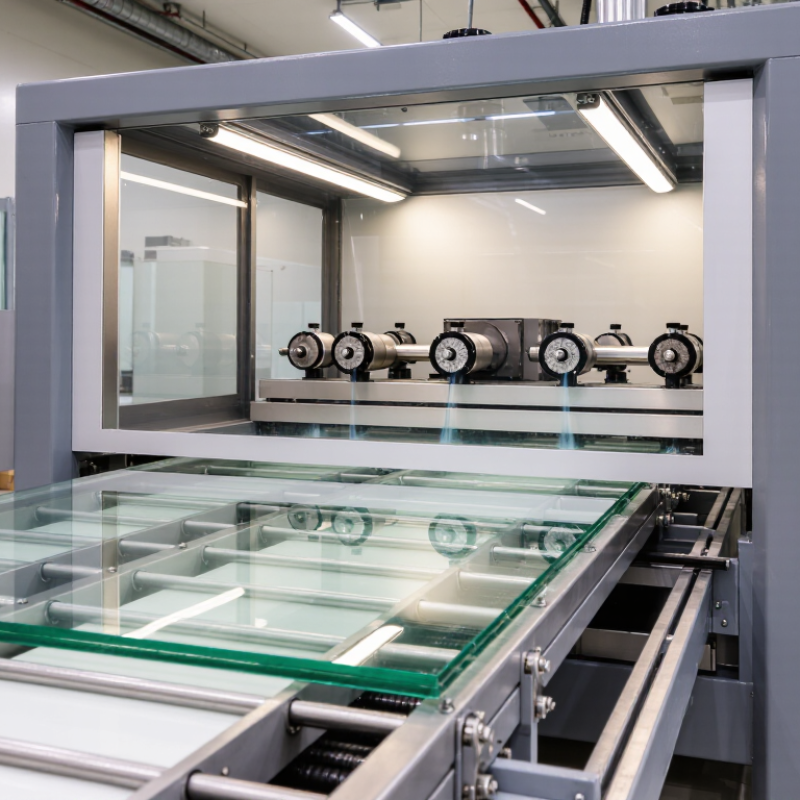
Table of Contents [Hide]
What Is a Glass Chamfering Machine?
A glass chamfering machine is equipment that removes and polishes the sharp edge of cut glass. It creates a sloped border, called a chamfer, along one or more sides. This process improves handling safety and gives the panel a cleaner appearance. The machine usually combines glass support, edge-guiding systems, abrasive wheels, coolant, and polishing tools.
During operation, an operator places the glass on a stable conveyor or worktable. The machine then guides the panel past diamond grinding wheels. Coarser wheels shape the angle, while finer wheels smooth the surface. Water reduces heat and carries away glass dust. A well-adjusted machine should produce an even edge without chips, burn marks, or visible waves.
Small details matter. The glass thickness, chamfer width, angle, and feed speed must match the wheel settings. Poor alignment can leave one corner wider than another. That defect may look minor, but it becomes obvious under strong lighting. Maintenance also affects results. Worn wheels, dirty coolant, or loose guides can reduce accuracy quickly. Not every machine suits every workshop. A compact unit may fit limited production, while a heavier system handles thicker panels more consistently. The “best” choice in 2026 still depends on actual glass sizes, daily workload, operator skill, and required finish quality. Some specifications look impressive on paper. They may not solve practical problems.
Brands
Proudly Trusted by Top Suppliers Worldwide







Let us know and we will automate, together to fit your industrial needs.
 +91-97254 16844
Clients
Proudly Trusted by Top Companies Worldwide


Do you need Help? Get in touch.
X
Please fill out the form below and we will get back to you as soon as possible.