o
p
t
i
m
a
r
o
b
o
t
i
c
s

Make a Call


Make a Call
Blogs
What Type of Hole Saw Is Best for Metal?
Choosing the right Hole Saw For Metal depends on the material, its thickness, and how often you will make the cut. A hole saw that works well on thin steel may struggle with stainless plate. The difference shows up quickly: rough edges, a smoking pilot bit, or teeth that dull before the job is done. Not ideal.
For occasional holes in mild steel, a quality bi-metal saw is often a practical choice. Its hardened teeth can handle many workshop tasks without the cost of a specialist cutter. Carbide-tipped hole saws may be better for repeated cuts or tougher metals, but they need careful setup and a compatible drill. Check the manufacturer’s guidance before choosing a tooth style or operating speed. Slower speeds, steady pressure, and cutting fluid can help control heat, especially in stainless steel. The exact speed depends on the saw’s diameter and the metal, so avoid guessing from appearance alone.
Details matter. Secure the workpiece, use eye protection, and clear metal chips with the drill stopped. A pilot bit helps keep the saw centered, while a firm grip reduces the chance of sudden twisting. I’d be wary of any claim that one saw is best for every metal; even a good cutter can disappoint when matched to the wrong material. This guide compares common hole saw types, explains what to check before buying, and helps you choose a suitable option for your project.
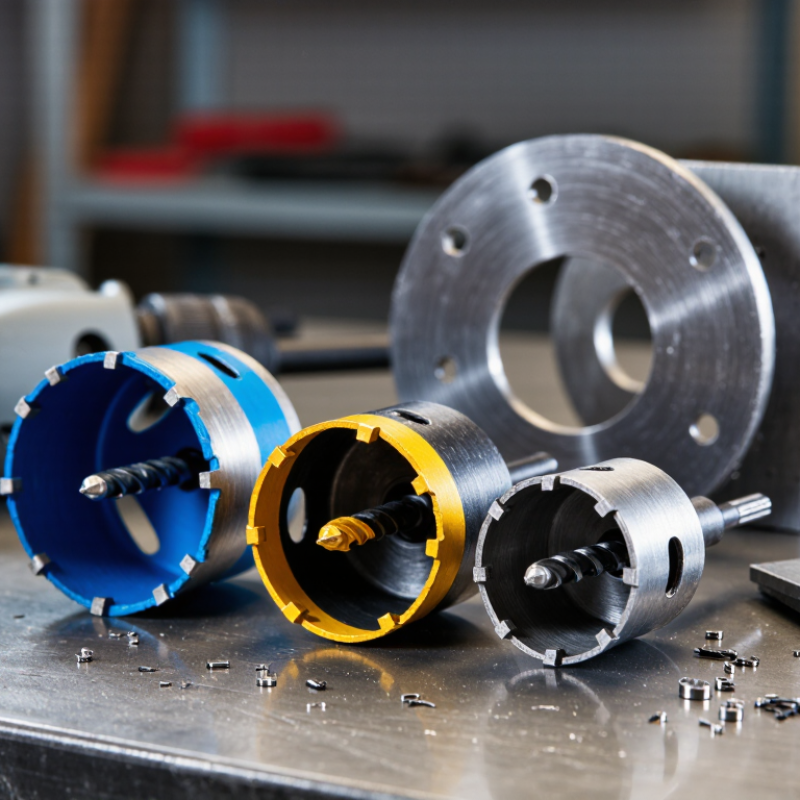
Table of Contents [Hide]
Types of Hole Saws Designed for Cutting Metal
For general metalwork, a bi-metal hole saw is a dependable choice for thin sheet, mild steel, and pipe. Its high-speed-steel teeth are joined to a tougher steel body, helping the cutter flex without breaking easily. Variable tooth pitch can reduce chatter and leave a cleaner edge. For stainless steel or repeated cuts through thicker stock, a carbide-tipped hole saw usually lasts longer and cuts more aggressively. It also needs steady pressure; forcing it can chip the teeth. It is easy to overestimate toughness.
Tooth choice matters because metal can hold heat at the cutting edge. ASM International’s materials-property data put 304 stainless steel’s thermal conductivity at roughly 15 W/m·K near room temperature, so heat does not disperse quickly. This supports using a slower speed, cutting fluid, and pauses to clear chips. A pilot drill helps keep the saw centered, especially on curved pipe. Match the saw’s recommended speed to the metal thickness and diameter, rather than treating every cut alike.
Tips: Clamp the work securely, mark the center, and start gently. Keep the saw square as the teeth engage. If chips turn blue or the cut squeals, stop and check speed, lubrication, and tooth condition. A small test cut is worthwhile; real materials can behave less neatly than a spec sheet suggests.
Brands
Proudly Trusted by Top Suppliers Worldwide







Let us know and we will automate, together to fit your industrial needs.
 +91-97254 16844
Clients
Proudly Trusted by Top Companies Worldwide


Do you need Help? Get in touch.
X
Please fill out the form below and we will get back to you as soon as possible.