o
p
t
i
m
a
r
o
b
o
t
i
c
s

Make a Call


Make a Call
Blogs
What Is the Best Pick and Place Machine in China?
Choosing the best Pick Place Machine in China requires more than comparing placement speed or advertising claims. A reliable decision begins with your actual production needs. Board size, component range, feeder stability, placement accuracy, and expected monthly volume all matter. A machine designed for smartphone boards may not suit automotive controllers or small-batch prototypes.
Michael Ford, an electronics manufacturing strategist, offers a practical view: “The best machine is not always the fastest; it is the one that delivers stable, repeatable results.” This principle is especially relevant in China’s competitive equipment market. A high-speed machine can appear impressive under showroom lighting, yet performance may change with difficult components, uneven feeders, or poorly maintained nozzles. Real production is less perfect.
Look beyond the headline specification. Examine placement accuracy under continuous operation, software usability, spare-part availability, and local technical support. Ask whether the supplier can provide sample-board testing and clear maintenance records. Watch how the machine handles tiny 0201 components, large connectors, and mixed component heights. These details reveal more than a polished brochure.
Cost also needs a wider view. A cheaper Pick Place Machine may create hidden expenses through downtime, rejected boards, training delays, or limited upgrades. An expensive model may still be unsuitable for a factory with unstable power or inexperienced operators. That possibility deserves honest consideration. The best choice is usually the machine that matches your process, people, and growth plan—not simply the model with the largest number.
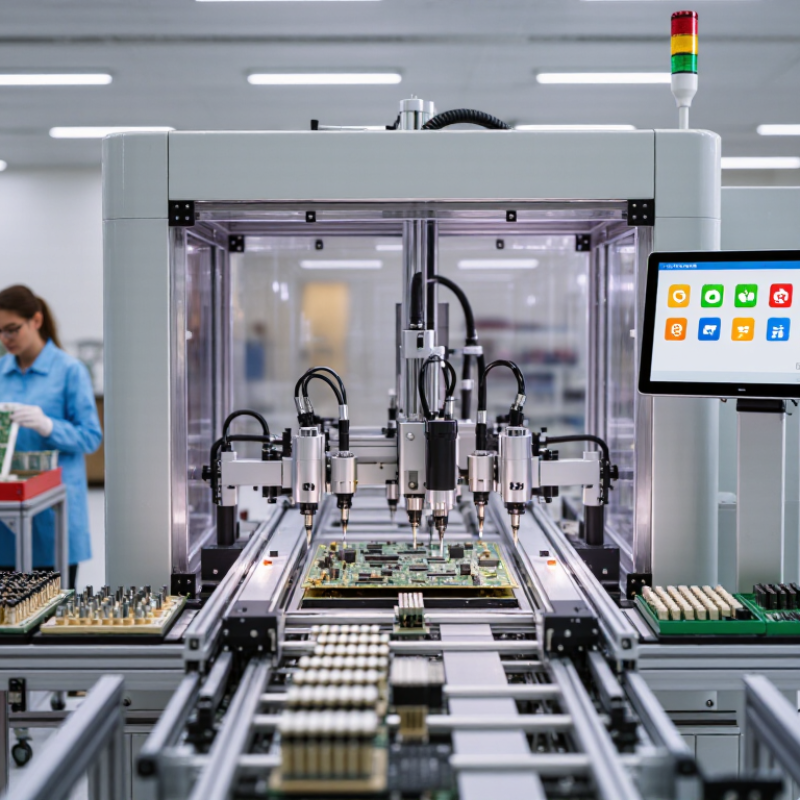
Table of Contents [Hide]
Chinese Pick-and-Place Machine Types and Core SMT Performance Metrics
What Is the Best Pick and Place Machine in China?
Chinese pick-and-place machines serve different production needs. Manual machines suit prototypes, repairs, and low-volume workshops. Semi-automatic models improve consistency without requiring a large technical team. High-speed modular machines support mass production with multiple placement heads. Odd-form machines handle connectors, relays, and larger components. The best choice depends on board complexity, output targets, and changeover frequency.
Core SMT performance metrics reveal real capability. Placement speed is usually measured in components per hour, or CPH. Advertised speed can differ from practical output. Placement accuracy matters when boards use fine-pitch packages or small passive components. Repeatability and Cpk values show whether accuracy remains stable across long runs. Feeder capacity affects downtime during material replacement. Vision-system recognition should handle rotated, reflective, and poorly marked components. Check actual uptime, setup time, and first-pass yield. These figures are more useful than speed alone.
Tips: Ask for a sample-board trial before purchasing. Measure output with your components, feeders, and operators. Inspect nozzle wear after extended testing. A machine may look impressive on paper, yet struggle with frequent product changes. I have found that maintenance access is often underestimated. Easy cleaning, software diagnostics, and available spare parts can protect production more effectively than a higher headline speed. No machine is perfect. Leave room for learning.
Brands
Proudly Trusted by Top Suppliers Worldwide







Let us know and we will automate, together to fit your industrial needs.
 +91-97254 16844
Clients
Proudly Trusted by Top Companies Worldwide


Do you need Help? Get in touch.
X
Please fill out the form below and we will get back to you as soon as possible.