o
p
t
i
m
a
r
o
b
o
t
i
c
s

Make a Call


Make a Call
Blogs
7 Best Power Rail Insulators for Global Buyers
Power rail insulators may look like small components, but each one helps maintain electrical separation along an exposed, vibration-prone route. A cracked housing, loose fixing, or poorly matched creepage distance can turn a routine inspection into a costly interruption. Small parts matter.
The International Energy Agency’s 2019 report, The Future of Rail, describes rail as a comparatively energy-efficient mode of transport. Its 2023 report, Electricity Grids and Secure Energy Transitions, says annual grid investment needs to rise above $600 billion by 2030. That figure concerns electricity networks broadly, not rail insulators specifically. Still, it signals the scale of infrastructure upgrades that can shape procurement choices. IEA Executive Director Fatih Birol has emphasized that grids are the backbone of secure, sustainable energy systems. Applied to rail procurement, that is a useful reminder: reliable infrastructure depends on dependable components.
This guide compares seven Power Rail Insulator options for global buyers, focusing on material, voltage suitability, mechanical strength, environmental resistance, and supplier documentation. Look closely at sheds, mounting points, and surface finish. Fit matters. But a product list cannot replace engineering review against the route’s actual conditions, operating voltage, and maintenance plan. Buyers should verify test records and clarify specifications with manufacturers before ordering. A neat catalog page is not proof of field performance.
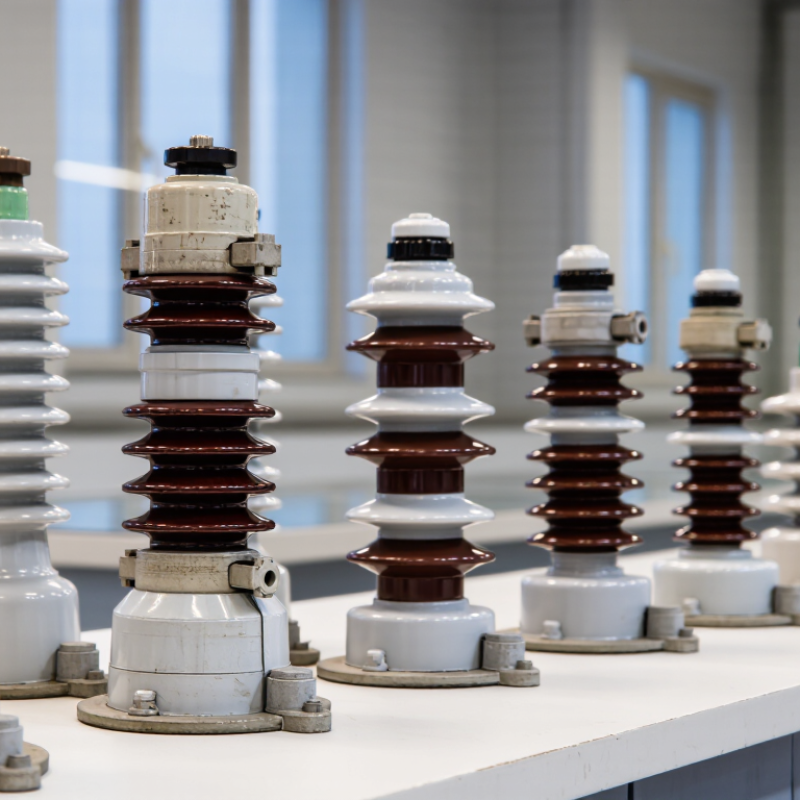
Table of Contents [Hide]
What Power Rail Insulators Do and Where They Are Used
Power rail insulators support energized conductors while keeping them electrically separated from frames, mounting rails, and nearby components. They also help resist movement caused by vibration, switching forces, or the weight of cables and busbars. In practice, a sound insulator is easy to overlook. A cracked surface or loose mounting point is not.
These components appear in substations, switchgear, industrial control panels, and some electrified transport systems. Their form depends on the installation: compact supports may hold copper busbars inside a cabinet, while larger assemblies separate conductors in outdoor equipment. Materials such as porcelain and engineered polymers are selected for electrical strength, mechanical load, temperature range, and exposure to moisture or dust. Conditions matter.
Choosing one by voltage rating alone can miss important details. Engineers also check clearances, creepage paths, mounting dimensions, pollution levels, and expected mechanical stress. A rail that looks straight during installation may shift slightly as equipment heats and cools. That detail deserves a second look. Regular inspection can reveal tracking marks, loosened hardware, or surface damage before these issues compromise insulation. The right choice is specific to the site, not just the catalogue.
Brands
Proudly Trusted by Top Suppliers Worldwide







Let us know and we will automate, together to fit your industrial needs.
 +91-97254 16844
Clients
Proudly Trusted by Top Companies Worldwide


Do you need Help? Get in touch.
X
Please fill out the form below and we will get back to you as soon as possible.