o
p
t
i
m
a
r
o
b
o
t
i
c
s

Make a Call


Make a Call
Blogs
What Is a Can Body Making Machine and How Does It Work?
A Can Body Making Machine is the production center behind many metal beverage and food containers. It transforms a flat metal sheet, or a drawn cup, into a precise cylindrical body. The process looks simple from a distance. It is not.
Modern lines combine cupping, drawing, ironing, trimming, washing, inspection, and conveying. A metal blank enters a high-speed press. Punches shape it into a shallow cup. Ironing rings then stretch the walls while reducing their thickness. The machine must control pressure, lubrication, alignment, and temperature within narrow limits. One small wrinkle can stop an entire line. That detail is easy to underestimate.
The International Aluminium Institute reports that recycling aluminium can save about 95% of the energy required for primary production. The Can Manufacturers Institute reported a United States aluminium beverage-can recycling rate of approximately 43% in 2023. These figures show the value of efficient canmaking, but they also reveal an uncomfortable gap. Production technology may advance faster than collection systems.
Robert Budway, President and CEO of the Can Manufacturers Institute, has described the aluminium beverage can as “the most recycled beverage container in the world.” His statement highlights the package’s circular potential. However, recyclability does not guarantee actual recovery. Material quality, machine accuracy, and responsible plant operation still matter.
This guide explains how a Can Body Making Machine works, from sheet feeding to final inspection. It also examines key components, production speeds, common defects, and maintenance decisions. Some manufacturers focus heavily on output. That can be a mistake. Stable quality usually matters more than impressive speed.
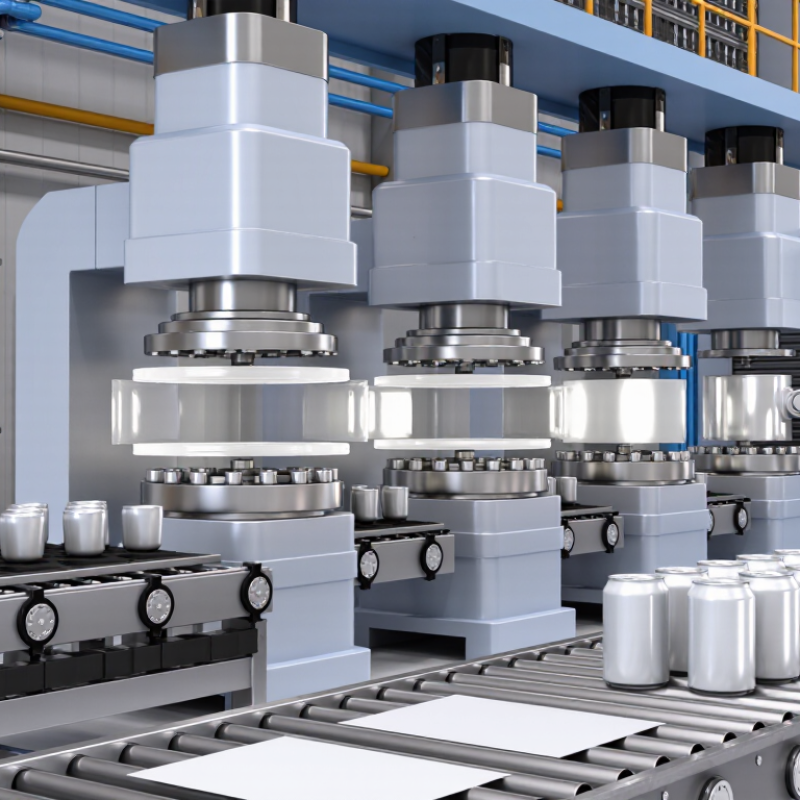
Table of Contents [Hide]
Definition and Purpose of a Can Body Making Machine
A can body making machine is industrial equipment that forms a metal can body from flat sheet or a drawn cup. In two-piece production, it draws and irons the cup through precision dies. This creates a longer body with a controlled wall thickness. Cutting, trimming, washing, and inspection follow in connected stages. For three-piece cans, body-making usually includes sheet slitting, rolling, welding, and flanging. The definition changes with the can format. That distinction matters.
Its main purpose is consistent production at high speed. It controls diameter, height, seam preparation, and material use. Grand View Research valued the global metal cans market at about USD 55.38 billion in 2022. The same report projected a 4.6% compound annual growth rate from 2023 to 2030. Smithers also identifies lightweighting and efficient forming as major directions in metal packaging. However, output numbers can hide practical problems. Minor tooling wear may increase scrap, noise, or wall variation. A machine can meet its speed target and still need better process control. Factory experience remains essential.
Tips: Check die alignment, lubrication, and body thickness regularly. Record defects by shift, not only by day. Use the manufacturer’s technical limits, but question settings that repeatedly cause waste. A “standard” setting may still need adjustment.
Brands
Proudly Trusted by Top Suppliers Worldwide







Let us know and we will automate, together to fit your industrial needs.
 +91-97254 16844
Clients
Proudly Trusted by Top Companies Worldwide


Do you need Help? Get in touch.
X
Please fill out the form below and we will get back to you as soon as possible.