o
p
t
i
m
a
r
o
b
o
t
i
c
s

Make a Call


Make a Call
Blogs
China Best ODM O Ring Manufacturer for Global Buyers
Choosing a dependable China-based supplier requires more than comparing unit prices. Global buyers need evidence of material control, tooling accuracy, testing discipline, and production experience. This guide introduces how an ODM O Rubber Ring Manufacturer can support product development from the first drawing to stable mass production.
Dr. Robert Flitney, author of the Seals and Sealing Handbook, stated, “Sealing performance depends on the right material, design, and operating conditions.” That principle remains highly relevant. A rubber ring may look simple, yet a small change in groove depth can cause leakage, compression damage, or early failure. Practical evaluation should include compound selection, hardness testing, dimensional inspection, compression-set testing, and traceable batch records.
Details matter.
Experienced Chinese manufacturers can develop custom O-rings for valves, pumps, hydraulic equipment, medical devices, and industrial assemblies. They may also recommend silicone, EPDM, NBR, FKM, or other elastomers according to temperature, pressure, chemicals, and movement. However, buyers should not accept technical promises without samples, test reports, and clear inspection standards. A supplier’s factory photos are useful, but they prove little alone.
This article examines China’s capabilities as a sourcing destination for custom sealing products. It also considers communication, mold ownership, packaging, lead times, and quality consistency. Not every low-cost offer is efficient. Sometimes, the cheapest quotation creates expensive redesign work later. Careful comparison is slower, but usually safer for long-term cooperation.
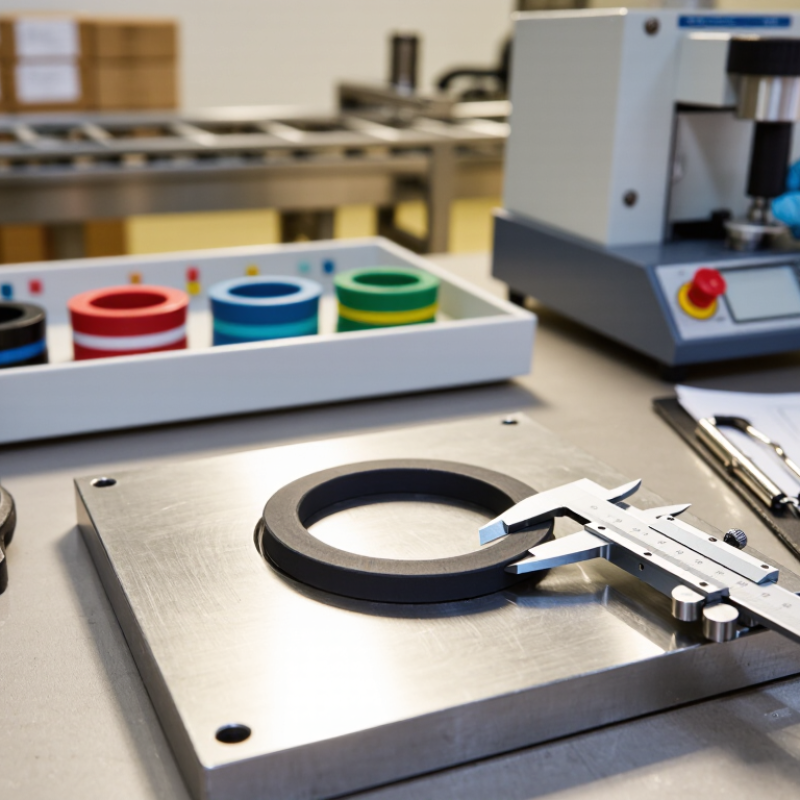
Table of Contents [Hide]
What Is an ODM O-Ring Manufacturer?
China Best ODM O-Ring Manufacturer for Global Buyers
An ODM O-ring manufacturer does more than produce rubber rings from a buyer’s drawing. It helps develop the design, select the compound, build tooling, and validate performance. The manufacturer may also manage sampling, inspection, and batch production under the buyer’s specifications. This model suits global buyers needing customized sizes, hardness, colors, or sealing conditions. It differs from OEM production, where the buyer usually owns the design. In practice, the boundary can become unclear. That is why the contract must define design ownership, testing duties, and change approval.
A 2024 O-Ring Seals Market Analysis estimated the global market at more than USD 3 billion, with steady growth expected through the decade. This demand reflects wider use in hydraulic, pneumatic, automotive, and industrial equipment. Reliable ODM work should follow ISO 3601 dimensional requirements and use ASTM D2000 classifications for elastomer performance. These references improve communication, but they cannot replace real testing. Temperature cycling, compression set, media resistance, and leakage checks still matter. Small details matter.
Tips: Ask for compound traceability, inspection records, and a first-article report. Confirm whether test results represent your actual fluid and operating temperature. A polished sample can still fail after long compression. I have seen buyers focus on unit price and overlook tooling control. That mistake becomes expensive later. Require clear tolerances, packaging conditions, and written approval for material changes.
Brands
Proudly Trusted by Top Suppliers Worldwide






Let us know and we will automate, together to fit your industrial needs.
 +91-97254 16844
Clients
Proudly Trusted by Top Companies Worldwide


Do you need Help? Get in touch.
X
Please fill out the form below and we will get back to you as soon as possible.