o
p
t
i
m
a
r
o
b
o
t
i
c
s

Make a Call


Make a Call
Blogs
What Are China Top Fresh Fruit Export Packaging Solutions?
China’s fresh fruit trade depends on packaging that protects quality from orchard to overseas retailer. FAO’s The State of Food and Agriculture 2019 estimates that 14% of food is lost between harvest and wholesale. Fresh fruit is especially vulnerable to bruising, moisture loss, mold, and temperature changes. These risks make Fresh Fruit Export Packaging Solutions a logistics decision, not merely a design choice.
China’s leading options include ventilated corrugated cartons, molded-pulp trays, reusable plastic crates, and fiber-based cushioning. Each format serves a different fruit and route. Cartons can be printed for traceability and stacked efficiently. Molded pulp separates delicate peaches, pears, and table grapes. Reusable crates suit controlled, repeated distribution networks. Perforations must match cooling needs. Too few openings trap heat. Too many weaken protection.
Cold-chain evidence matters. The FAO and WHO identify temperature control as essential for maintaining food quality and safety. The Global Cold Chain Alliance also emphasizes pre-cooling, airflow, and uninterrupted refrigerated handling. Packaging cannot repair poor refrigeration. It only supports it. China’s export teams should test compression strength, drop resistance, ventilation, humidity tolerance, and pallet stability before shipment. ASTM and ISO testing methods can improve consistency, though laboratory results may not fully reflect rough port handling. That gap deserves attention. A package that performs well in a warehouse may fail after condensation, vibration, and repeated loading. The most reliable approach combines fruit-specific design, verified materials, practical trials, and documented cold-chain procedures. Cost matters, but a cheaper box can create larger losses through bruising and rejected cargo.
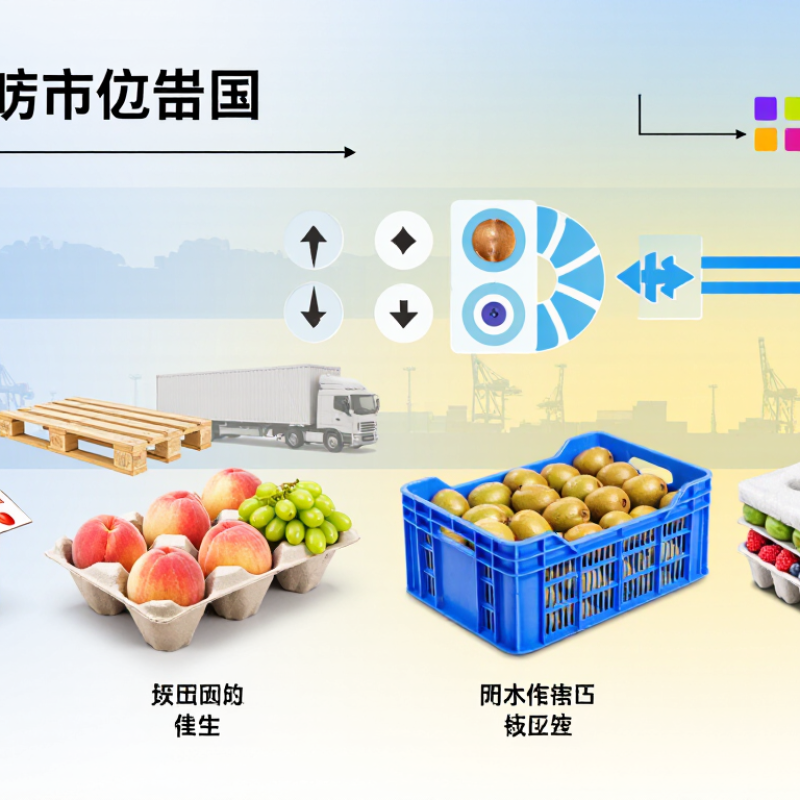
Table of Contents [Hide]
Key Requirements for Fresh Fruit Export Packaging in China
Fresh fruit export packaging in China must protect quality from the orchard to overseas cold storage. Temperature control is essential. Packaging should resist compression, moisture, vibration, and sudden handling changes. Ventilation holes help remove field heat and reduce condensation. However, oversized openings can weaken cartons and expose fruit to bruising. Each fruit type needs testing. Firm apples and soft berries cannot share one design. Exporters should confirm carton strength, pallet stability, and inner cushioning under real transport conditions. A package may look strong in a warehouse. It may fail after several days at sea.
Cleanliness and traceability also matter. Use food-contact-safe materials with consistent quality and low odor. Labels should remain readable after refrigeration and humidity exposure. They should show product details, origin, pack date, lot information, and handling instructions where required. Moisture-resistant labels help inspectors and warehouse teams work accurately. Packaging dimensions should fit standard pallets, while weight must support safe manual and mechanical handling. Do not rely only on supplier claims. Request test records, inspect samples, and repeat trials during seasonal changes. A small design flaw can spread across thousands of boxes.
Tips: Pre-cool fruit before loading, but avoid sealing warm produce inside cartons. Leave airflow channels between cartons and keep pallet wrap from blocking vents. Use corner protection for long routes. Check temperature loggers at arrival. Photos help. Review damaged fruit by location, layer, and handling stage. This turns complaints into evidence. Packaging decisions are rarely perfect; field feedback should change the next shipment.
Brands
Proudly Trusted by Top Suppliers Worldwide







Let us know and we will automate, together to fit your industrial needs.
 +91-97254 16844
Clients
Proudly Trusted by Top Companies Worldwide


Do you need Help? Get in touch.
X
Please fill out the form below and we will get back to you as soon as possible.