o
p
t
i
m
a
r
o
b
o
t
i
c
s

Make a Call


Make a Call
Blogs
China Top 10 Thread Rod Manufacturers for Global Buyers
Selecting reliable Thread Rod suppliers in China requires more than comparing catalogue prices. Global buyers must examine steel grades, thread accuracy, surface treatment, production capacity, and export experience. A polished website proves little. Factory evidence matters more.
This guide introduces ten China-based Thread Rod manufacturers for international purchasing teams. It focuses on practical buying factors, including material certificates, dimensional inspection, packaging quality, and response speed. Sample testing remains essential. A supplier should provide clear drawings, tolerances, coating details, and traceable inspection records. Buyers should also confirm whether production matches standards such as ASTM, DIN, or ISO requirements.
Details matter. Clean threads reduce installation problems. Strong cartons protect rods from bending during ocean transport. Clear labeling supports faster warehouse checks. Experienced manufacturers often explain these points before receiving a purchase order. That is a useful signal.
However, no ranking stays perfect. Product quality can change between batches, and factory capabilities may vary by order size. Some companies use trading partners, while others control production directly. This difference deserves careful verification. Buyers should request recent samples, audit reports, and references from similar markets. Independent inspection can add confidence before shipment.
The selected manufacturers are discussed from a global buyer’s perspective. Their strengths, limitations, production focus, and communication practices receive equal attention. Price is included, but it is not treated as the final answer. A dependable Thread Rod partner should deliver consistent performance, honest documentation, and practical support after the sale. That standard is demanding. It should be.
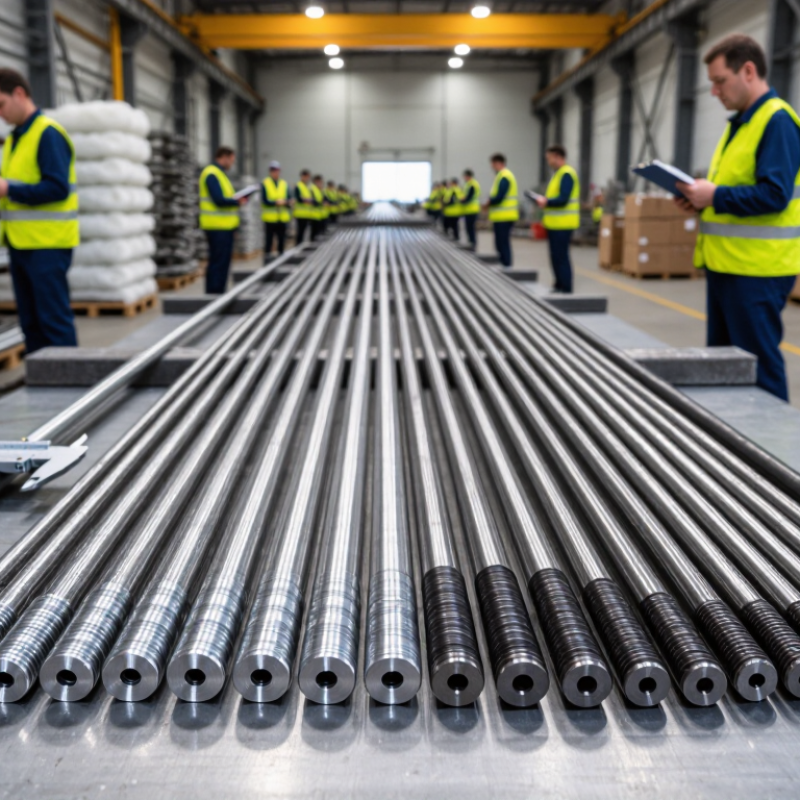
Table of Contents [Hide]
Thread Rod Manufacturing in China: Industry Scope and Product Types
China’s thread rod manufacturing sector sits inside the wider steel fastener industry. The World Steel Association reported 1,019.1 million tonnes of Chinese crude steel production in 2023. That represented roughly 54% of global output. This raw-material depth supports large production capacity and flexible export supply.
However, steel volume does not automatically prove thread rod quality.
Manufacturers commonly produce fully threaded rods, double-end studs, and cut-length threaded bars. Carbon steel suits general construction and equipment assembly. Stainless steel performs better in humid, coastal, or chemically exposed environments. Alloy steel supports higher-temperature and higher-load applications.
Common specifications include metric and imperial diameters, coarse or fine threads, and grades aligned with ISO, ASTM, or DIN requirements. Thread pitch matters. Small errors can stop installation.
Production usually includes wire drawing, straightening, thread rolling or cutting, heat treatment, surface finishing, and final inspection. Thread rolling can improve surface strength and production speed, while cutting remains useful for special sizes. Inspection should cover diameter, pitch, straightness, hardness, coating thickness, and tensile performance.
The China Fastener Industry Association has repeatedly emphasized quality upgrading and standardization in industry discussions. Public market reports often group thread rods with broader fastener categories, so their revenue figures require careful interpretation.
That limitation deserves attention. A supplier with impressive output may still need closer checks on batch traceability, packaging, and test documentation.
Brands
Proudly Trusted by Top Suppliers Worldwide







Let us know and we will automate, together to fit your industrial needs.
 +91-97254 16844
Clients
Proudly Trusted by Top Companies Worldwide


Do you need Help? Get in touch.
X
Please fill out the form below and we will get back to you as soon as possible.