o
p
t
i
m
a
r
o
b
o
t
i
c
s

Make a Call


Make a Call
Blogs
What Is a China Stamping Press and How Does It Work?
A China Stamping Press is an industrial machine that shapes sheet metal through controlled force. It works with a matched die and punch. The press may blank, bend, pierce, or draw metal into a precise form. Each operation begins with a material choice, die design, and suitable press capacity.
Professor Taylan Altan, a widely cited metal-forming authority, has said, “The die is the heart of the stamping process.” This observation remains practical on a busy factory floor. A strong frame cannot correct a poorly designed die. The machine must also match the sheet thickness, part geometry, stroke length, and production speed. Mechanical presses offer fast, repeatable strokes. Hydraulic models provide adjustable force and deeper drawing control. Servo presses can vary motion and reduce unnecessary energy use.
Inside a typical China Stamping Press, a motor drives a flywheel or hydraulic system. The slide then moves the punch toward the die. The metal is held, formed, and released within a measured cycle. Sensors monitor position, pressure, lubrication, and feeding accuracy. Operators inspect edges, wrinkles, cracks, and dimensional changes.
Small differences matter. Tool wear can change a clean edge into a rough one. Excessive force may damage both the sheet and the die. A perfect production cycle is not guaranteed. Engineers must review trial results and improve settings carefully. This article explains the machine, its working sequence, major components, and practical selection considerations. It also examines why safe operation and disciplined maintenance determine long-term performance.
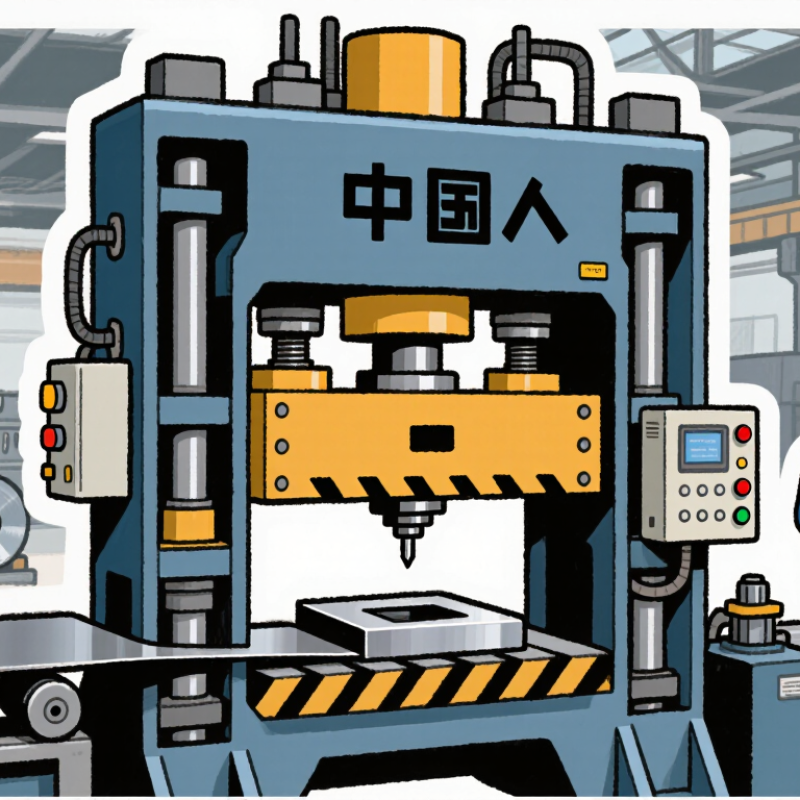
Table of Contents [Hide]
Definition and Core Purpose of a China Stamping Press
What Is a China Stamping Press and How Does It Work?
A China stamping press is a metal-forming machine manufactured in China. Its core purpose is to shape sheet metal through controlled pressure. The machine itself is not defined by origin alone. Its frame, drive system, controls, and tooling determine its performance.
A press usually includes a motor, flywheel, slide, die, and worktable. The slide moves the upper die toward the lower die. Metal sits between both sections and changes shape during the stroke. Depending on the tooling, the operation may blank, bend, pierce, or draw the material. Press capacity, stroke length, and shut height must match the material and die design. A wrong match can cause rough edges, unstable feeding, or premature tool wear. In practice, production is less tidy than a diagram suggests.
Tips: Check the rated tonnage before selecting a press. Inspect the die alignment and sheet position each shift. Keep hands away from the closing area. Use documented maintenance records and verify emergency controls regularly. These habits support safer, more consistent operation, although they cannot replace trained supervision.
Brands
Proudly Trusted by Top Suppliers Worldwide







Let us know and we will automate, together to fit your industrial needs.
 +91-97254 16844
Clients
Proudly Trusted by Top Companies Worldwide


Do you need Help? Get in touch.
X
Please fill out the form below and we will get back to you as soon as possible.