o
p
t
i
m
a
r
o
b
o
t
i
c
s

Make a Call


Make a Call
Blogs
China Top Welding Leather Cape Manufacturers and Suppliers?
Choosing a reliable supplier for a Welding Leather Cape takes more than comparing prices. The right cape should cover the shoulders and upper chest, sit comfortably over workwear, and allow enough movement for practical welding tasks. Leather thickness, seam construction, closures, and edge finishing all affect how a cape performs over time. Small details matter.
China has a broad range of manufacturers and suppliers, from specialized protective-clothing producers to larger workwear factories. Their product photos may look similar, but materials, sizing, and quality checks can differ. A catalog photo is not proof. Buyers should review clear specifications, request close-up images of seams and fasteners, and ask how products are inspected between production runs. Samples can reveal stiffness, fit, and finishing issues that a product sheet may not show.
This guide looks at ways to compare Chinese suppliers, assess product information, and ask useful questions before placing an order. It also considers communication, customization, lead times, and after-sales support. Ask for relevant test documentation where available, and confirm what it covers rather than relying on broad safety claims. These checks do not remove every risk. Supplier information can be incomplete, and even a well-made cape may not suit every task or wearer. Use the details here as a starting point, then verify the facts directly with each manufacturer.
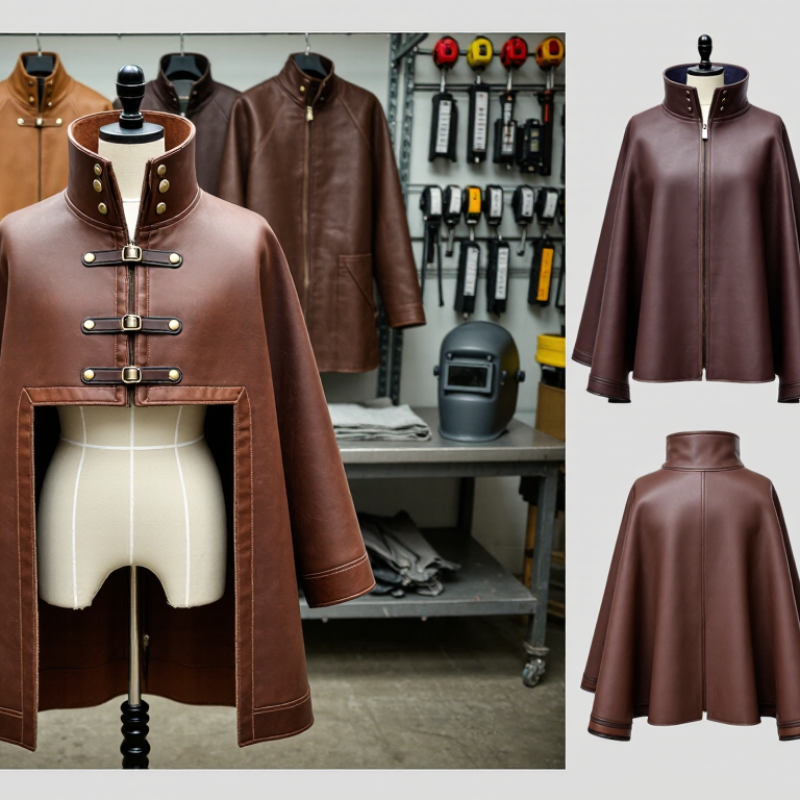
Table of Contents [Hide]
What Is a Welding Leather Cape and How Is It Used?
A welding leather cape is a protective shoulder-and-chest covering, usually made from heat-resistant leather. It helps shield areas that a standard jacket may leave exposed, especially during overhead welding. Sparks can land on the shoulders, collar, or upper arms. The cape forms a durable barrier against hot spatter and brief contact with sparks. It is not fireproof. Its protection depends on sound seams, adequate coverage, and correct use.
Wear the cape over suitable protective clothing, with its front closed and collar positioned to cover the neck. Check for cracks, thin spots, loose stitching, or burns before each shift. A damaged cape can expose skin, even if the defect looks small. Match it with gloves, eye protection, and other gear suited to the task.
Keep the leather dry and away from oils or flammable materials. Fit matters. If the cape catches on a fixture or restricts movement, adjust it before welding. A cape does not replace a complete protective setup, and it may feel cumbersome in warm workshops. That trade-off is easy to underestimate.
After use, let it cool and inspect it again; leather can hide damage beneath soot.
Brands
Proudly Trusted by Top Suppliers Worldwide







Let us know and we will automate, together to fit your industrial needs.
 +91-97254 16844
Clients
Proudly Trusted by Top Companies Worldwide


Do you need Help? Get in touch.
X
Please fill out the form below and we will get back to you as soon as possible.