How to Choose the Right Automation System for Your Business Needs
Choosing the right automation system for your business needs is a critical decision that can significantly influence your operational efficiency and overall success. As companies increasingly turn to technology to streamline processes, enhance productivity, and reduce costs, understanding the various types of automation systems available becomes paramount. The right choice not only aligns with your current objectives but also positions your business for future growth and adaptability in an ever-evolving market.
In this guide, we will explore the essential factors that should be considered when selecting an automation system. From assessing the specific automation challenges your organization faces to evaluating the scalability and compatibility of different solutions, making an informed decision involves thorough research and strategic planning. Whether you are a small startup or a large enterprise, the right automation system can provide invaluable support by optimizing your workflows, improving accuracy, and freeing up valuable human resources for more strategic tasks.
By delving into the core components of effective automation and understanding your unique business requirements, you can navigate the options available and make a choice that empowers your organization to thrive. This exploration will equip you with the insights needed to harness the full potential of automation, driving competency and innovation in your operations.

Understanding Your Business Requirements for Automation
When selecting an automation system tailored to your business needs, understanding your specific requirements is paramount. According to a recent report by McKinsey, businesses that effectively integrate automation can enhance productivity by up to 30%, making clarity in objectives essential for achieving desired outcomes. Start by assessing your current workflows and identifying repetitive tasks that consume significant time and resources. This will not only help in determining the areas that need automation but also aid in setting clear benchmarks for success.
Furthermore, consider the scalability of the automation solutions you are reviewing. A study by Forrester highlights that 70% of companies expect their automation capabilities to expand as business grows. Therefore, it's crucial to choose a system that not only meets your immediate needs but also adapts to future challenges and opportunities. Engaging with stakeholders across your organization can provide deeper insights into various departmental needs, ensuring the chosen system aligns with the overall strategic vision of the company. By aligning your automation strategy with the unique demands of your business, you can unlock significant efficiency gains and drive sustainable growth.
Business Automation System Evaluation
Evaluating Different Types of Automation Systems
When evaluating different types of automation systems for your business needs, it’s essential to consider the specific functions and scalability of each option. A recent report from McKinsey indicates that businesses that implement automation can increase efficiency by up to 40%, which highlights the potential benefits of investing in the right technology. Key areas for evaluation include the system’s adaptability to your current processes, ease of integration with existing software, and the level of support offered by the provider.
Another critical factor is the type of automation system that best fits your operational needs. For instance, robotic process automation (RPA) can streamline repetitive tasks, while artificial intelligence (AI) systems are excellent for data analysis and predictive analytics. According to a study conducted by Gartner, 70% of organizations plan to increase their automation investments in the coming years, which indicates a growing recognition of its necessity in maintaining competitive advantage. By aligning the chosen automation system with specific business objectives, organizations can maximize their return on investment and drive innovation across their operations.
Assessing Integration Capabilities with Existing Tools
When selecting an automation system for your business, one of the crucial factors to consider is the
integration capabilities with your existing tools. According to a report by
McKinsey & Company, businesses that effectively integrate automation solutions with their current software ecosystems can witness
a productivity increase of up to 25%. Therefore, it's essential to assess how well the new
automation system can interact with your existing platforms, such as CRM, ERP, and other workflow management tools.
This will not only streamline processes but also minimize disruption during implementation.
Furthermore, research from Gartner indicates that nearly 70% of
organizations report challenges with integrating new automation technologies into their existing frameworks. These
obstacles often stem from a lack of compatibility or insufficient support for
data transfer between systems. To avoid these pitfalls, businesses should prioritize automation solutions designed with
open APIs and compatibility features in mind. By ensuring that your chosen automation
system can seamlessly connect with existing tools, you can enhance data accuracy, reduce redundancy, and enable a more
efficient and cohesive operational environment.
Determining Budget and Cost Considerations for Automation
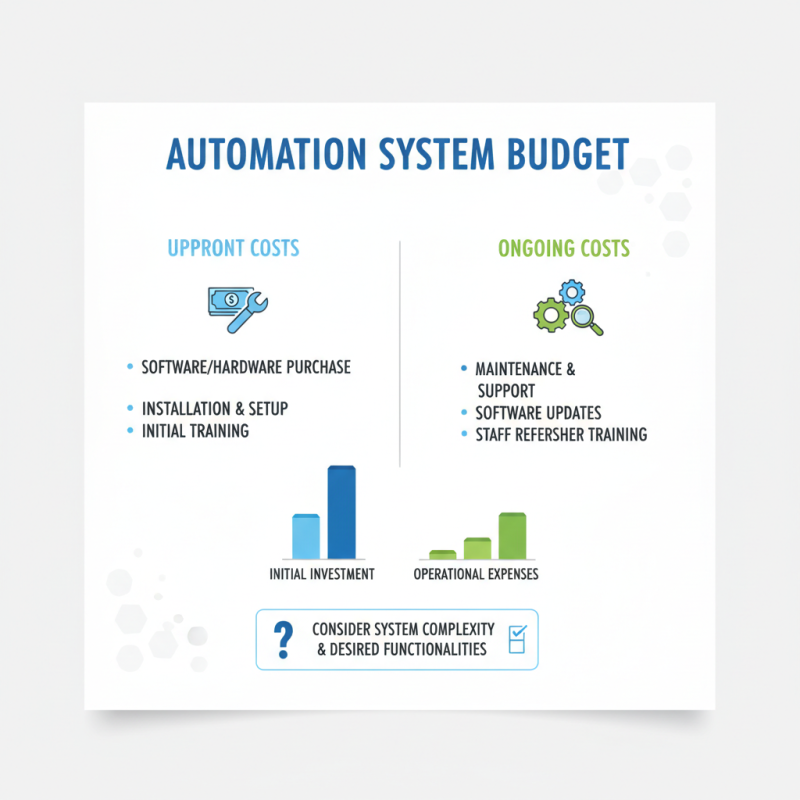
When determining the budget for an automation system, it is crucial to consider both upfront and ongoing costs. Upfront costs typically include the purchase of software or hardware, installation, and any initial setup fees. These costs can vary significantly based on the complexity of the system and the specific needs of the business. A thorough assessment of the desired functionalities will help in creating a more accurate budget projection. Additionally, it’s important to factor in potential costs for training staff on the new system, which can also influence the total investment.
Ongoing costs should not be overlooked as they can significantly impact the overall budget. These may include maintenance fees, subscription charges for software updates, and potential costs for additional features as the business scales. A well-planned budget should also consider potential savings and return on investment (ROI) that an automation system may provide, such as increased efficiency and reduced labor costs. By carefully evaluating both the initial and ongoing expenses, businesses can make informed decisions that align with their financial constraints while still meeting operational needs.
Identifying Vendor Support and Maintenance Options
When selecting an automation system for your business, one critical aspect to consider is the level of vendor support and maintenance options available. A robust support system ensures that you have access to timely assistance should any issues arise. Look for vendors that offer multiple channels for support, such as phone, email, and chat. Additionally, evaluate their response times and the expertise of their support staff. A vendor with a proven track record of responsiveness can significantly reduce downtime and minimize disruptions to your operations.
Maintenance options are equally important, as they can greatly affect the long-term performance and reliability of the automation system. Investigate what maintenance plans the vendor offers, including routine updates and patches, as well as how they handle system upgrades. Some vendors may provide comprehensive packages that include proactive monitoring and regular check-ins, while others may only offer reactive support when problems occur. Understanding these options will help you gauge the potential longevity of your investment and ensure that your automation system can adapt to evolving business needs over time.