o
p
t
i
m
a
r
o
b
o
t
i
c
s

Make a Call


Make a Call
Blogs
How to Choose the Best Zeolite Rotor for Your Needs?
Choosing the right Zeolite Rotor requires more than comparing catalog prices or adsorption capacity. The best option depends on your air volume, contaminant profile, operating temperature, humidity, and required outlet concentration. A rotor designed for solvent vapors may perform poorly when moisture levels rise sharply. That detail matters.
In real facilities, conditions rarely remain stable. One production line may release warm, concentrated VOCs during coating, then produce cooler, diluted exhaust during cleaning. These changes influence rotor size, zeolite formulation, rotation speed, and desorption energy. A practical selection should begin with measured airflow and contaminant data, not estimates alone. Record temperature, relative humidity, pressure, and concentration at different operating times. Small data gaps can create large equipment problems.
Experienced engineers also examine pressure drop, sealing performance, regeneration requirements, and maintenance access. Ask suppliers for test conditions, performance curves, material compatibility, and documented field experience. Independent verification is valuable when emissions vary or energy costs are significant. A neat selection table can still mislead. Laboratory results may not represent dusty, humid, or fluctuating plant air.
There is no universal best rotor. The suitable choice balances removal efficiency, energy use, durability, installation space, and total ownership cost. It should also fit the existing fan, ductwork, controls, and safety systems. Review these factors with qualified professionals before purchase. A careful decision may take longer. That is often cheaper than replacing an undersized rotor later.
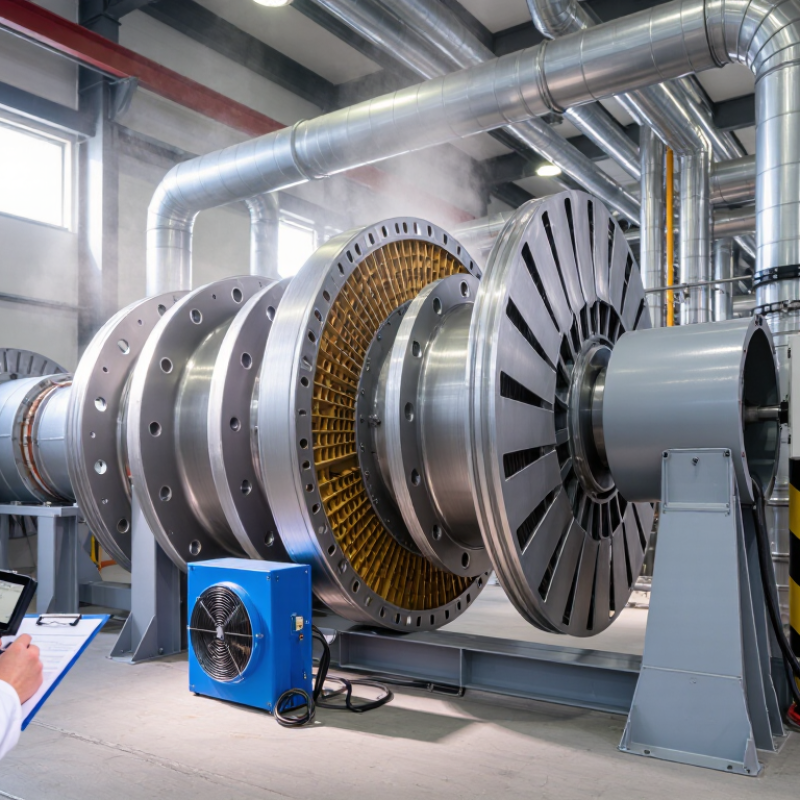
Table of Contents [Hide]
Zeolite Rotor Basics and Its Role in VOC Control
How to Choose the Best Zeolite Rotor for Your Needs?
A zeolite rotor continuously adsorbs VOC molecules from contaminated air. Its honeycomb structure offers a large contact area with limited pressure drop. The rotor turns slowly through adsorption, desorption, and cooling zones. Heated air then removes concentrated VOCs for further treatment.
Selection starts with real operating data, not a catalogue chart. Measure airflow, VOC concentration, humidity, temperature, and solvent composition across production shifts. The U.S. EPA Air Pollution Control Cost Manual identifies adsorption and concentration as practical options for dilute, high-volume exhaust. Many industrial designs reduce airflow to downstream oxidation equipment by roughly 10 to 20 times. This can lower fuel demand significantly. However, that ratio is not universal.
Rotor performance depends heavily on moisture and competing compounds. High humidity can occupy adsorption sites and reduce working capacity. A suitable rotor must match the VOC polarity, inlet temperature, and required removal efficiency. The European Commission’s 2022 Waste Gas Management BREF emphasizes site-specific assessment for adsorption systems. It also stresses monitoring pressure drop, temperature, and breakthrough behavior.
A clean spreadsheet can still mislead.
In field applications, a small sampling error may produce an oversized rotor or unstable operation. Check the lower explosive limit, especially during concentration peaks. Review desorption air temperature and residence time carefully. Pilot testing is often wiser than relying only on average emissions. The best rotor is the one that remains stable during bad days, not merely the one that performs well under laboratory conditions.
| Selection Dimension | Typical Data or Range | Why It Matters in VOC Control | Practical Selection Guidance |
|---|---|---|---|
| Rotor Function | Continuous adsorption, rotation, desorption, and regeneration | A zeolite rotor transfers VOCs from a large, dilute process-air stream into a smaller, concentrated desorption stream. | Choose a rotor system when continuous operation and lower downstream treatment airflow are more important than using a single-pass adsorber. |
| Adsorbent Type | Hydrophobic, high-silica zeolite is commonly used for VOC service | Hydrophobic zeolite maintains adsorption performance better than moisture-sensitive adsorbents when relative humidity is elevated. | Use a moisture-resistant zeolite for humid exhaust. Confirm compatibility with the target VOCs, humidity, temperature, and contaminants. |
| Target VOC Concentration | Often suitable for dilute VOC streams of approximately 50–1,000 mg/m³, subject to design verification | Rotor systems are most effective when they can concentrate a relatively large airflow into a smaller, richer stream for oxidation or recovery. | For very high VOC concentrations, evaluate heat release, adsorption capacity, explosion protection, and whether pre-treatment is required. |
| VOC Removal Efficiency | Common design targets are approximately 90–99%, depending on VOC properties and operating conditions | Removal depends on adsorption equilibrium, contact time, humidity, temperature, rotor speed, and the presence of competing compounds. | Use measured inlet and outlet concentrations rather than relying on a generic efficiency value. Specify the required compliance limit in the design basis. |
| Concentration Factor | Commonly about 5:1 to 20:1; the actual value is application-dependent | A higher concentration factor reduces the airflow sent to the downstream oxidizer, potentially lowering equipment size and energy demand. | Balance concentration factor against VOC loading, desorption temperature, rotor size, safety limits, and the allowable outlet concentration. |
| Airflow Capacity | Typically selected by process airflow, rotor diameter, rotor depth, and allowable face velocity | Insufficient rotor area can increase pressure drop and reduce mass-transfer performance, while excessive area may raise capital cost. | Size the rotor using actual minimum, normal, and maximum airflow conditions rather than only the average airflow. |
| Face Velocity | A representative design range is approximately 1.5–4.0 m/s | Face velocity affects contact time, pressure drop, adsorption efficiency, and the amount of rotor area required. | Use a lower velocity for difficult-to-adsorb VOCs, high removal targets, or high humidity. Confirm the value through the rotor supplier’s performance data. |
| Rotor Depth | Common industrial rotor depths are approximately 200–500 mm | Greater depth generally provides more adsorbent volume and contact time, but may increase pressure drop and equipment size. | Select depth according to VOC type, inlet concentration, required removal efficiency, airflow, and acceptable fan energy. |
| Rotor Rotation Speed | Often approximately 2–20 revolutions per hour, depending on rotor design and process conditions | Rotation speed controls the time each rotor section spends in adsorption and regeneration zones. | Use slower rotation for higher adsorption loading or difficult VOC removal, and faster rotation when rapid regeneration or lower loading is required. |
| Desorption Temperature | Frequently about 150–220°C for thermal regeneration, subject to VOC and zeolite characteristics | Higher temperature generally improves VOC desorption but increases energy use and may create thermal degradation or safety concerns for sensitive compounds. | Set the regeneration temperature high enough for reliable desorption but below the degradation, polymerization, or ignition risk limits of the VOC mixture. |
| Desorption Airflow | Often approximately 5–20% of the treated process-airflow, depending on concentration-factor requirements | A smaller desorption stream produces a higher VOC concentration but may require stronger heating and careful temperature control. | Define the downstream oxidizer or recovery-unit capacity first, then select the desorption airflow and concentration factor accordingly. |
| Pressure Drop | A representative clean-system range is approximately 500–1,500 Pa, depending on rotor geometry and face velocity | Pressure drop affects fan power, operating cost, and the ability of the existing exhaust system to maintain stable airflow. | Include filter loading, ductwork, dampers, and downstream equipment in the total system pressure-drop calculation. |
| Relative Humidity | Performance is application-specific; high humidity can reduce VOC adsorption even with hydrophobic zeolite | Water vapor competes for adsorption sites and may reduce working capacity for some VOCs. | Measure seasonal humidity conditions. Consider cooling, dehumidification, drainage, or a rotor selected and tested for the actual moisture level. |
| VOC Boiling Point and Polarity | Adsorption behavior varies by molecular size, polarity, vapor pressure, and boiling point | Less volatile and moderately non-polar VOCs are often easier to capture than highly volatile, strongly polar, or water-miscible compounds. | Evaluate each major VOC component and the combined mixture. Do not select a rotor using total VOC concentration alone. |
| Particulate and Oil Protection | Pre-filtration is commonly required before the rotor | Dust, oil mist, aerosols, and sticky condensable compounds can block pores, foul the rotor, increase pressure drop, and reduce capacity. | Install suitable particulate and mist removal upstream, and verify the required filter efficiency and maintenance interval. |
| Inlet Temperature | Usually kept below the temperature at which adsorption capacity declines significantly; many systems operate near ambient or moderately elevated temperatures | Adsorption is generally favored by lower temperatures, while high inlet temperature can reduce VOC loading on the rotor. | Cool hot exhaust when practical, but prevent condensation. Confirm the rotor’s maximum continuous operating temperature. |
| Downstream Treatment | Common options include regenerative thermal oxidation, catalytic oxidation, or VOC recovery | The rotor concentrates VOCs but does not normally destroy them; the concentrated stream requires a suitable final treatment step. | Match the concentrated VOC flow, concentration, oxygen content, and temperature to the selected downstream process. |
| Energy Considerations | Main energy loads include regeneration heating, process fans, rotor drive, and optional cooling or dehumidification | Energy performance depends on VOC loading, concentration factor, heat recovery, airflow, and operating schedule. | Compare specific energy consumption under normal and worst-case conditions, including start-up, low-load, and bypass operation. |
| Safety Requirements | Consider flammability, lower explosive limit, hot surfaces, static electricity, and exothermic adsorption | VOC concentration increases in the desorption stream, so fire and explosion risks must be assessed for the complete system. | Provide monitoring, interlocks, temperature control, grounding, ventilation, and protection measures consistent with applicable regulations and the site hazard assessment. |
| Maintenance Factors | Routine checks include filters, seals, bearings, drive components, pressure drop, temperature, and VOC outlet concentration | Stable sealing and clean airflow are necessary to prevent cross-contamination between adsorption and regeneration zones. | Choose a design with accessible inspection points, replaceable pre-filters, reliable seals, and clear performance-monitoring requirements. |
Note: The ranges shown are general engineering reference values, not guaranteed performance limits. Final rotor selection should be based on measured airflow, VOC composition, concentration, temperature, humidity, particulate loading, required emission limit, and validated process calculations or pilot testing.
Brands
Proudly Trusted by Top Suppliers Worldwide







Let us know and we will automate, together to fit your industrial needs.
 +91-97254 16844
Clients
Proudly Trusted by Top Companies Worldwide


Do you need Help? Get in touch.
X
Please fill out the form below and we will get back to you as soon as possible.