o
p
t
i
m
a
r
o
b
o
t
i
c
s

Make a Call


Make a Call
Blogs
How to Choose a Modular Desk Office in 2026?
Choosing a Modular Desk Office in 2026 requires more than matching colors with a workplace. The right system should support focused work, changing team sizes, and practical technology needs. A desk that looks elegant in a showroom may feel cramped after six hours of daily use. Measure the room, chair clearance, monitor depth, and walking paths before comparing designs.
Look for adjustable modules, stable frames, durable surfaces, and accessible cable management. Check the manufacturer’s load ratings, material information, warranty terms, and replacement-part policy. These details reveal more than polished product images. A height-adjustable section can support different users, while lockable storage may protect documents in shared spaces. Consider recycled materials, repairable components, and packaging waste as part of the purchasing decision.
Do not trust flexibility blindly.
Some modular systems require special tools or costly accessories. Others offer many configurations but lack structural stability. Independent reviews, workplace feedback, and hands-on testing can expose these weaknesses. An experienced buyer should test keyboard height, screen distance, drawer movement, and surface vibration. Even small issues become frustrating when repeated every workday. The best Modular Desk Office is not necessarily the largest or most advanced. It is the system that fits real behavior, available space, budget limits, and future changes. A careful decision may still involve compromise, and that is worth acknowledging. Beautiful design cannot replace comfort, reliability, or honest specifications.
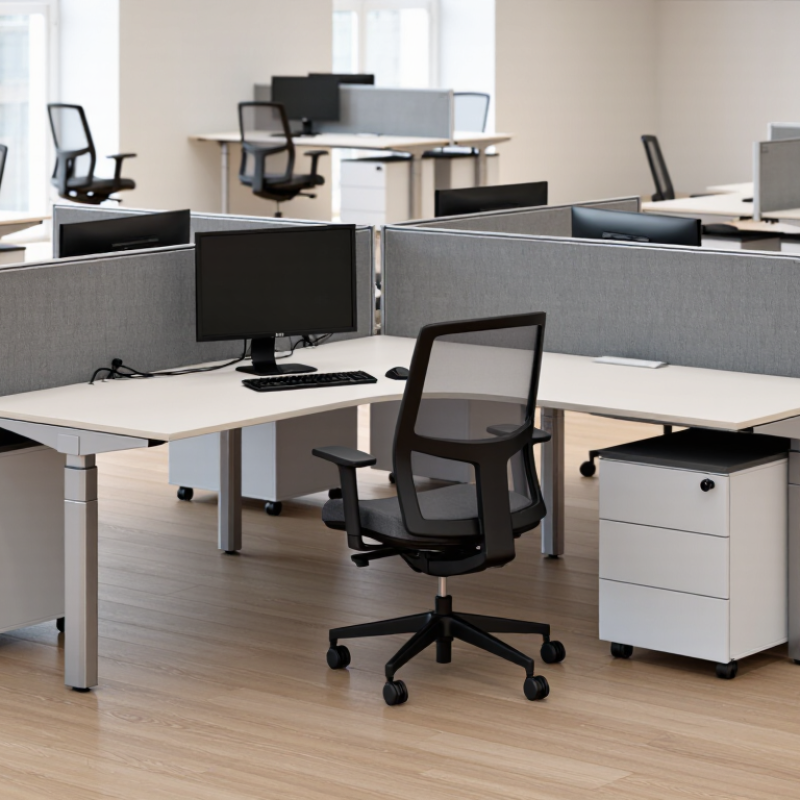
Table of Contents [Hide]
Define Your Space, Work Habits, and Modular Desk Requirements
How to Choose a Modular Desk Office in 2026?
Define Your Space, Work Habits, and Modular Desk Requirements
Choosing a modular desk office in 2026 starts with an honest reading of your space. Measure wall length, window clearance, walking paths, and outlet positions before browsing layouts. A narrow room may need a 120-centimeter desk, vertical storage, and a shallow return. Leave enough knee space to move comfortably. I once planned around a beautiful corner, then discovered the chair blocked a cabinet. Measure twice.
Your work habits matter more than a clever configuration. If video calls fill your mornings, position the desk near soft natural light and control background clutter. If you handle paper documents, include a surface for sorting, not only a large monitor shelf. Frequent switching between a laptop and display calls for cable channels and adjustable monitor height. People who stand intermittently need a stable sit-stand section, with room for feet and a safe cable loop. Test the reach before installation. It is easy to overestimate.
Define requirements as must-haves, useful extras, and questionable wants. Prioritize load capacity, durable joints, rounded edges, easy reconfiguration, and replacement hardware. Ask how panels connect and whether one damaged part can be changed without replacing the whole desk. Check stated dimensions against your doorway and elevator. A modular system should adapt when your team, equipment, or routine changes. Still, flexibility can encourage endless rearranging. Set a simple layout first, live with it for a week, and record what feels awkward. Your notes may challenge the original plan.
Brands
Proudly Trusted by Top Suppliers Worldwide







Let us know and we will automate, together to fit your industrial needs.
 +91-97254 16844
Clients
Proudly Trusted by Top Companies Worldwide


Do you need Help? Get in touch.
X
Please fill out the form below and we will get back to you as soon as possible.