o
p
t
i
m
a
r
o
b
o
t
i
c
s

Make a Call


Make a Call
Blogs
How to Choose a Reliable Galvanized Wire Manufacturer
Choosing a reliable Galvanized Wire Manufacturer starts with understanding the work the wire must perform. Fencing, construction, and agricultural applications place different demands on wire diameter, tensile strength, and corrosion resistance. A supplier should explain these options clearly, rather than offering one grade for every project. Ask how the zinc coating is measured and how production consistency is checked. Specific answers matter.
Samples reveal details a brochure may miss. Inspect the surface under good light for bare spots, uneven coating, or excessive buildup. Look closely. Check whether the wire unwinds smoothly and arrives in secure, clearly labeled coils. These small observations can flag handling or quality concerns before a large order is placed. Request product specifications and relevant inspection records, then compare them with your requirements. If a supplier cannot explain a measurement or document, ask again. That hesitation is useful information.
Reliable manufacturers also communicate practical limits, including available diameters, tolerances, lead times, and packaging choices. Clear records for batches can make later questions easier to resolve. Certifications may help, but their scope and relevance should be verified; a logo alone proves little. Compare sample quality, technical support, consistency, and total delivered cost, not price in isolation. No checklist removes every risk. Supplier selection still involves judgment, and one good sample cannot guarantee every future shipment. A careful review, backed by specific questions and written requirements, gives buyers a stronger basis for choosing a dependable manufacturing partner.
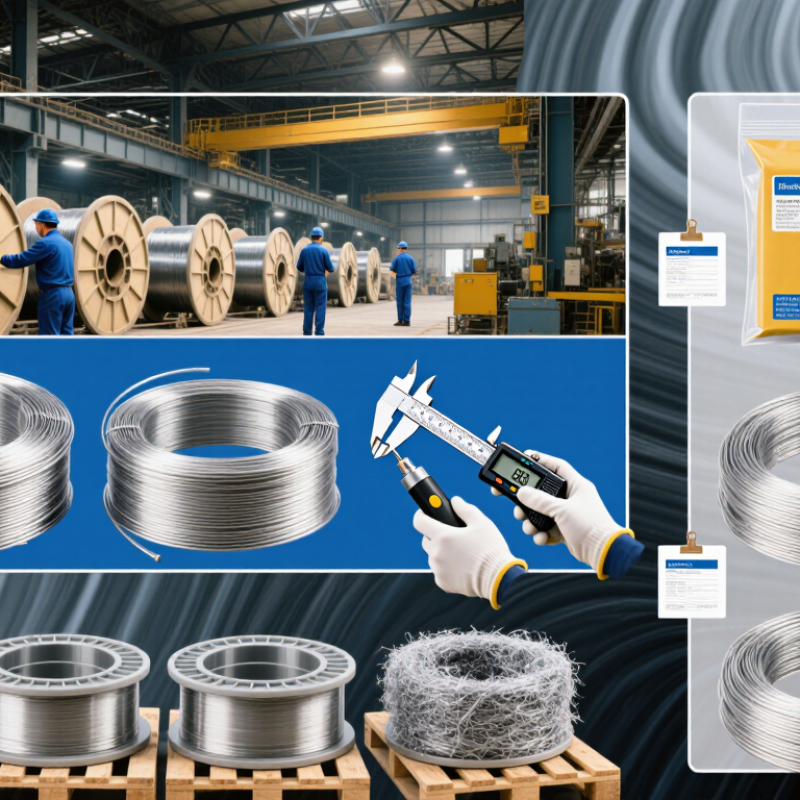
Table of Contents [Hide]
Define Wire Diameter, Tensile Strength, and Zinc-Coating Requirements
Before requesting quotations, define the wire diameter and its tolerance in millimeters. A nominal size alone can hide meaningful variation. For mesh, fencing, or binding work, even a small diameter difference may affect fit and handling. Ask how the manufacturer measures diameter, and whether measurements are taken at several points along the coil. Small differences matter. Specify tensile strength in MPa and state the range your application requires. Wire that is too soft may deform during installation; wire that is too strong can be difficult to bend or form. The right value depends on the finished product, not just the purchase price.
Zinc coating needs the same precision. State the required coating mass, commonly expressed in grams per square meter, and clarify whether it applies to the wire surface or a defined test sample. Ask for the test method and a report linked to the production batch. A bright surface is not proof of an even coating. Check how the supplier handles sampling, because one reading may miss thin spots along a coil. In real procurement, specifications sometimes need revision after a trial run. That is worth admitting early. A short production sample can reveal whether the wire feeds smoothly, holds its shape, and suits the actual equipment.
Brands
Proudly Trusted by Top Suppliers Worldwide







Let us know and we will automate, together to fit your industrial needs.
 +91-97254 16844
Clients
Proudly Trusted by Top Companies Worldwide


Do you need Help? Get in touch.
X
Please fill out the form below and we will get back to you as soon as possible.