o
p
t
i
m
a
r
o
b
o
t
i
c
s

Make a Call


Make a Call
Blogs
China Top NBR Seal Kit Manufacturer How to Choose?
Choosing a China Nbr Seal Kit manufacturer requires more than comparing online prices. The right supplier should understand hydraulic, pneumatic, automotive, and industrial sealing requirements. Material selection matters. NBR performs well against mineral oils, fuels, and moderate temperatures, but it is not suitable for every chemical or operating condition. A professional manufacturer should explain these limits clearly.
Look for evidence of real production experience. Review mold capability, compound formulation, dimensional control, and batch traceability. Ask whether the factory can provide material certificates, inspection records, and practical test data. Compression set, hardness, tensile strength, and resistance testing can reveal quality differences that photographs cannot show. Clear drawings and samples should come before large orders.
Small details often prevent expensive failures. Check the kit’s part numbers, seal profiles, packaging, and labeling. Confirm whether the manufacturer supports OEM dimensions and consistent replacement supply. Communication also matters, especially when drawings change or field feedback appears. A reliable supplier should answer technical questions without vague promises. No supplier is perfect. I would not rely on price alone. Some low-cost kits may use unstable compounds or inconsistent sizes, while expensive offers may lack meaningful verification. Compare evidence, not claims. A careful audit, sample evaluation, and trial order can reduce risk. The best choice is a manufacturer that combines suitable NBR materials, controlled production, honest documentation, and responsive technical support.
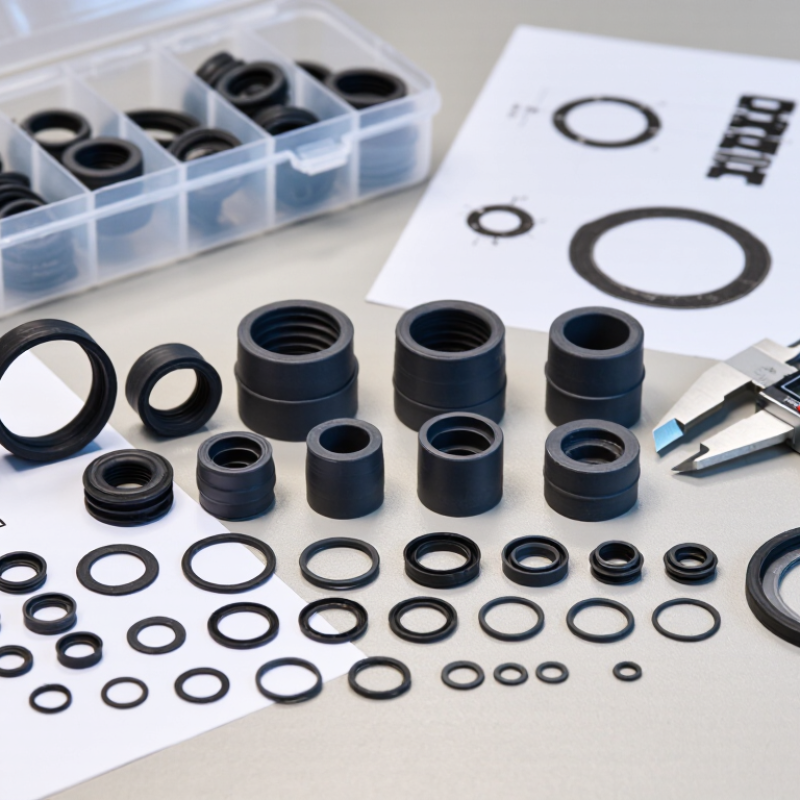
Table of Contents [Hide]
What Is an NBR Seal Kit and Where Is It Used?
An NBR seal kit contains replacement O-rings, hydraulic seals, backup rings, scrapers, and sometimes guide rings. NBR means nitrile butadiene rubber. It resists mineral oils, diesel, grease, and many hydraulic fluids. Common working temperatures range from about -30°C to 100°C, depending on the compound and pressure. It performs poorly against ozone, sunlight, and some aggressive chemicals.
Small details matter. These kits are used in excavator cylinders, agricultural machinery, pneumatic valves, pumps, compressors, and automotive systems. A damaged seal can leave a thin oil trail on a piston rod, followed by pressure loss and slower movement. The U.S. Department of Energy’s Compressed Air Sourcebook reports that system leaks can waste 20–30% of compressor output. Correct sealing therefore affects energy use, not only maintenance cost. Field inspections also show a recurring mistake: technicians replace the visible O-ring but ignore a hardened backup ring.
When choosing a China-based NBR seal kit manufacturer, request compound data, hardness results, dimensional inspection records, and batch traceability. ISO 3601 dimensional compliance is useful for standard O-rings, but custom hydraulic profiles need separate testing. Ask for compatibility testing with your actual fluid, pressure, speed, and temperature. A capable supplier should explain limitations clearly, even when the answer delays an order. I would also compare compression set, tensile strength, and aging results from independent or controlled laboratory tests. The cheapest kit may fit today and fail after a few operating cycles. That is an uncomfortable cost.
Brands
Proudly Trusted by Top Suppliers Worldwide







Let us know and we will automate, together to fit your industrial needs.
 +91-97254 16844
Clients
Proudly Trusted by Top Companies Worldwide


Do you need Help? Get in touch.
X
Please fill out the form below and we will get back to you as soon as possible.