o
p
t
i
m
a
r
o
b
o
t
i
c
s

Make a Call
Make a Call
Blogs
How to Choose a Water Oxygen Meter for Global Sourcing?
Choosing a Water Oxygen Meter for global sourcing is not a simple price comparison. The right instrument must perform reliably in rivers, aquaculture tanks, wastewater channels, laboratories, or storage facilities. Each environment creates different demands.
Dr. Robert G. Wetzel, a respected freshwater scientist, stated, “Dissolved oxygen is one of the most important variables in aquatic ecosystems.” That principle still guides purchasing decisions. A meter should provide stable readings, fast response, and dependable calibration under changing temperatures. It should also support the measurement range required by the application.
Buyers need to examine sensor technology carefully. Optical sensors often reduce maintenance and avoid frequent membrane replacement. Electrochemical probes may offer strong field performance when maintained correctly. Neither option is perfect. That matters.
A practical evaluation should include accuracy, repeatability, temperature compensation, battery life, waterproof protection, data storage, and software compatibility. Certification and factory calibration records can improve confidence, but they do not replace real-world testing. A supplier may present impressive specifications. Field results can tell a different story.
Global sourcing adds further risks. Replacement probes, calibration solutions, technical support, and delivery times should be verified before purchase. A low initial price may become expensive when consumables are unavailable. Language, training, and regional service coverage also deserve attention.
This guide explains how to compare a Water Oxygen Meter by application, sensor design, measurement performance, ownership cost, and supplier reliability. It also questions common buying assumptions, because the “best” instrument is rarely the most expensive or the most advertised.
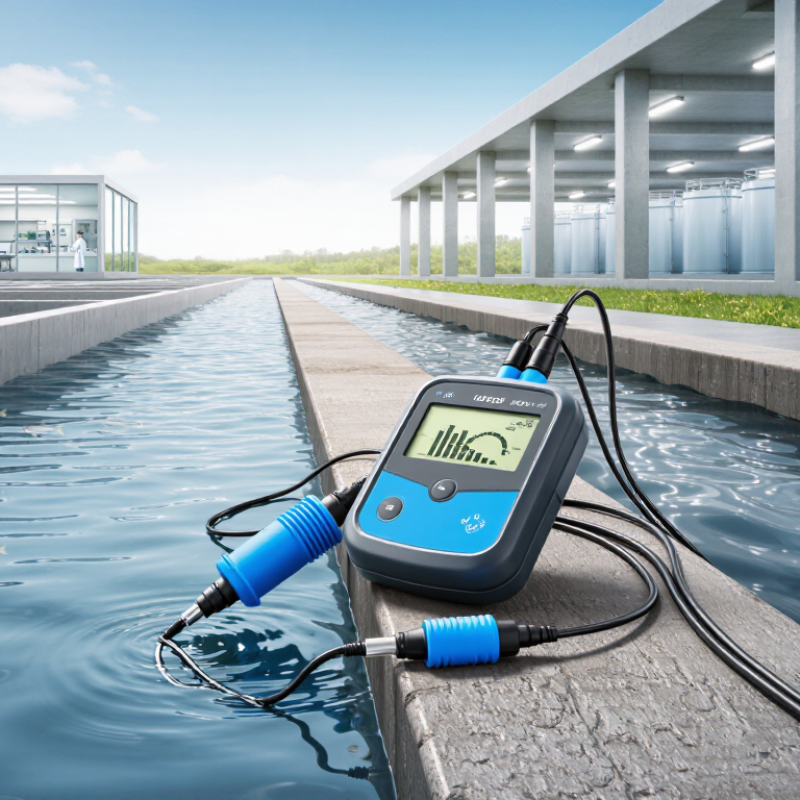
Table of Contents [Hide]
Define the Measurement Needs for Your Water Oxygen Meter
When sourcing a water oxygen meter, define the measurement need before comparing specifications. Identify the water first: drinking water, wastewater, aquaculture tanks, rivers, or process lines. Each setting demands a different range, probe design, and cleaning routine. A tank operator may need stable readings near 5–8 mg/L. A field technician may need GPS records and rapid response.
Know the risk level.
The U.S. Environmental Protection Agency commonly references 5 mg/L as a useful dissolved oxygen benchmark for aquatic life, although local criteria vary. NOAA describes water below 2 mg/L as hypoxic, where many organisms struggle to survive. These figures show why a narrow-range meter can create serious blind spots. Ask whether the instrument measures dissolved oxygen in mg/L, percentage saturation, or both. Temperature, salinity, and pressure compensation also matter. Without them, a reading may look precise but remain misleading.
The USGS National Field Manual emphasizes careful calibration, sample handling, and sensor maintenance during field measurements. Therefore, specify calibration frequency, stabilization time, replaceable parts, and data logging needs. Consider a cold river with a wet glove, or a warm tank with foam on the surface. Real work is rarely clean. A specification sheet can still be wrong for the operator. Require documented accuracy across the intended range, not only an attractive headline figure.
Sources: U.S. EPA, Dissolved Oxygen and Water Quality; NOAA Ocean Service, Hypoxia; USGS, National Field Manual for the Collection of Water-Quality Data.
Brands
Proudly Trusted by Top Suppliers Worldwide



Let us know and we will automate, together to fit your industrial needs.
 +91-97254 16844
Clients
Proudly Trusted by Top Companies Worldwide


Do you need Help? Get in touch.
X
Please fill out the form below and we will get back to you as soon as possible.