How to Choose the Best Smart Home Panel for Your Needs?
Choosing the right Smart Home Panel is essential for enhancing your living experience. With so many options available, it can feel overwhelming. Smart Home Panels serve as the control hub for a connected home. They manage devices like lights, thermostats, and security systems, making everyday tasks easier.
When selecting a Smart Home Panel, consider functionality. Some panels offer more customizable features than others. You should also think about compatibility with your existing devices. An ideal panel will support multiple platforms and brands. Reliability is key; a poorly designed panel can lead to frustration.
Don't overlook design and usability. A complex interface can make it hard to navigate. It’s important to choose a Smart Home Panel that fits your aesthetic and is user-friendly. Lastly, always check user reviews and expert recommendations. These insights can guide your choice. Balancing personal preferences and technical needs is vital for a satisfying smart home experience.
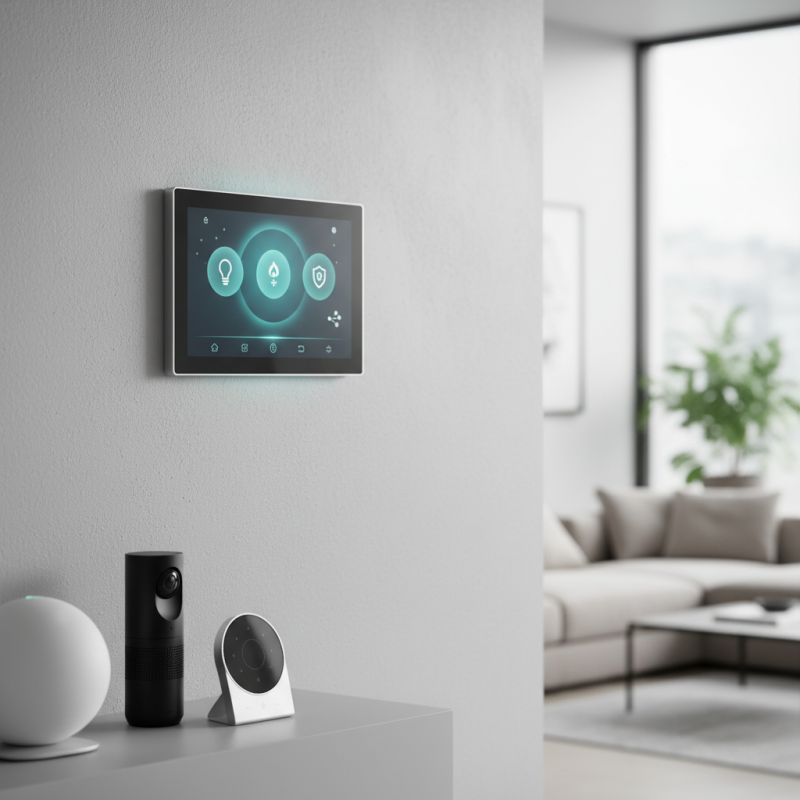
Understanding Smart Home Panels: Key Features to Consider
Understanding smart home panels requires evaluating key features. These panels are central to home automation. A study by Statista shows that 38% of consumers prioritize ease of use. Intuitive interfaces can enhance user experience significantly. If a panel is complex, it may deter users from utilizing all functions.
Connectivity options are another vital aspect. Most panels support Wi-Fi, Bluetooth, and Zigbee. In fact, a report from MarketsandMarkets indicates that 73% of smart home devices use these protocols. This flexibility ensures compatibility with various devices. However, potential buyers must scrutinize which devices they plan to integrate.
Security features are essential for protecting data. Many panels offer two-factor authentication and encryption. A survey from Gartner states that 32% of consumers remain concerned about privacy in smart home systems. Reflecting on this aspect is crucial; ensuring robust security can build user trust. While panels evolve, constant updates might be necessary to maintain security. Choosing a panel that offers regular updates can be beneficial.
Evaluating Compatibility with Existing Smart Home Devices
When selecting a smart home panel, evaluating compatibility with existing devices is crucial. Start by listing the devices you currently use. This includes smart lights, thermostats, and security cameras. Not all panels support every device type or brand. Check specifications carefully. You may find that some panels favor certain ecosystems over others.
Consider the communication protocols involved. Most smart home devices use Wi-Fi, Zigbee, or Z-Wave. A smart panel that doesn't support your devices’ protocols can limit functionality. Also, think about integration capabilities with voice assistants. A panel that works seamlessly with a voice assistant can enhance usability.
Remember that choosing the right panel may not be a straightforward task. Some users experience connectivity issues or delayed responses. Others find the interfaces confusing or unintuitive. Pay attention to user reviews and forums. They often provide insights that can guide your decision-making process. It’s essential to do thorough research and weigh all factors.
Assessing User Interface and Ease of Use
When selecting a smart home panel, the user interface is critical. An intuitive interface enhances user satisfaction and boosts engagement. According to a report by the Consumer Technology Association, 72% of users prefer interfaces that are easy to navigate. A clean layout with clear icons can make all the difference.
Touchscreen options often provide a more engaging experience, but not all touchscreens are created equal. Some panels respond slowly or have small buttons that frustrate users. A 2022 survey revealed that 38% of users find small touchscreen elements annoying. This dissatisfaction can lead to decreased usage or even abandonment of the device. It’s essential to prioritize panels that feature responsiveness and a straightforward design.
Assessing ease of use also involves evaluating setup processes. Many consumers report challenges during initial installations. A survey by Statista found that 45% of smart home users struggled with configuration. Panels that offer step-by-step guidance or visual cues may help alleviate these issues. The right panel should not only look good but should also be functional and user-friendly. Inadequate setup experiences reflect gaps in usability, which can put off potential users.
Exploring Security Features and Data Privacy Considerations
When selecting a smart home panel, security features are paramount. A recent study by the Cybersecurity and Infrastructure Security Agency (CISA) indicates that 62% of homeowners worry about smart device vulnerabilities. These concerns are valid, especially as connected devices often collect sensitive data. A robust security system ensures that this information remains confidential.
Data encryption is crucial. Panels that utilize strong encryption protocols safeguard your data from potential breaches. Look for tools that offer end-to-end encryption, as this adds an extra layer of protection. Additionally, consider systems that provide regular software updates. According to a report from the Internet of Things Security Foundation, 40% of security breaches occur due to outdated software. Ensuring your smart panel updates minimize risks.
Transparency in data handling is important. Users should clearly understand what data is collected and how it’s used. Ideally, you want a smart panel that clearly outlines its data privacy policies. A study by the Pew Research Center found that 81% of consumers feel they have little control over their personal data. This statistic highlights the need for clarity and user control in these technologies. Thoughtful design can empower users while enhancing overall trust in smart home systems.
Analyzing Budget and Value for Money Options in Smart Home Panels
When exploring smart home panels, understanding budget and value for money is crucial. Many options exist, but not all deliver the same quality or functionality. Prices can vary widely, often reflecting features. A basic panel might suffice for minimal needs, while a more feature-rich one enhances overall home automation.
Consider what you genuinely need. Some panels offer advanced integrations, like voice control. Others focus on essential functions. It’s easy to be drawn to the latest features, but think about their actual utility for your home. Over time, an expensive option may not prove its worth if you rarely use its capabilities.
Conduct thorough research. User reviews and expert opinions provide insight into performance and reliability. Look for panels that prioritize software updates and customer support. The ideal smart home panel balances cost with features, aligning closely with your goals. Aim to make an informed decision that enhances your daily life.