o
p
t
i
m
a
r
o
b
o
t
i
c
s

Make a Call


Make a Call
Blogs
How to Choose the Best 3D Printer Filament
Choosing the best 3D printer Filament starts with the part you need, not the most impressive label on a spool. A decorative model, a phone stand, and a bracket near a warm motor place very different demands on a material. Consider strength, flexibility, heat resistance, surface finish, and the conditions around the finished print. Small details matter. A sunny windowsill can soften some plastics, while a damp storage area may affect certain filaments before printing even begins.
Your printer matters just as much. Check its recommended nozzle and bed temperatures, build surface, and ability to handle materials that need an enclosure. PLA is often a forgiving choice for beginners and prototypes; PETG can offer a useful balance of toughness and easier handling, while ABS and ASA typically need more temperature control and ventilation. These are starting points, not promises. Results depend on the printer, settings, part design, and filament quality. Even a trusted material can string, warp, or fail when it is wet or poorly tuned.
This guide compares common filament types, practical trade-offs, and basic storage and setup choices. It also explains why price alone can mislead: a low-cost spool is not a bargain if inconsistent diameter causes repeated clogs or wasted prints. Test carefully. Keep notes. There is no perfect material for every job, and even experienced makers sometimes choose incorrectly. A measured first print can save time, material, and frustration.
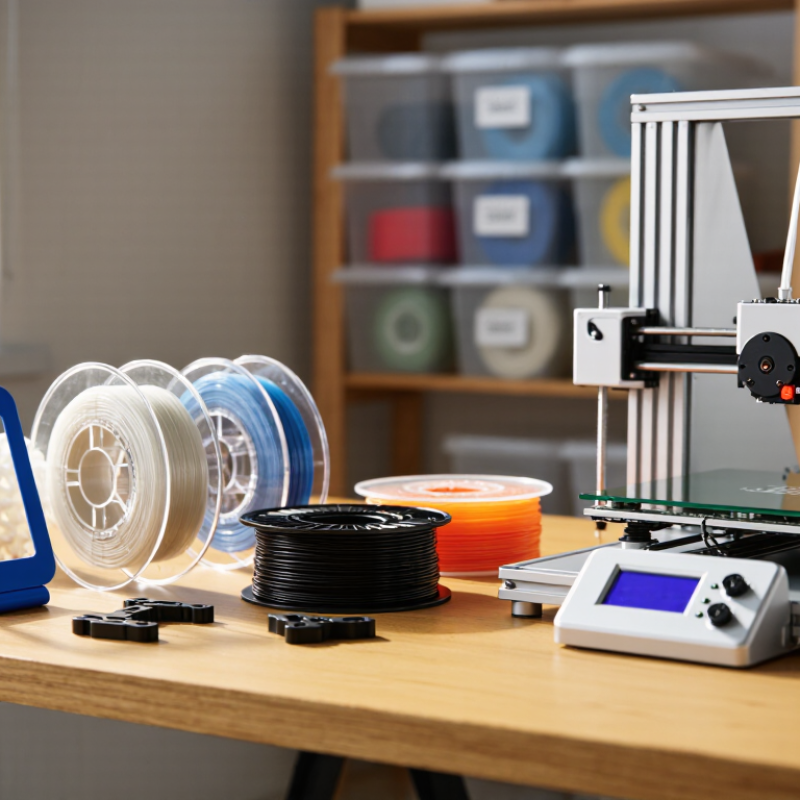
Table of Contents [Hide]
Check Printer Compatibility and Filament Requirements
Before choosing a filament, check your printer’s manual for supported materials and temperature limits. Compare the filament’s recommended nozzle and bed temperatures with your printer’s specifications. A mismatch can cause weak layers, poor adhesion, or excessive strain on the hotend. Small details matter. Check the filament diameter, too; even a slight difference may affect feeding and print quality.
Consider the whole feed path, not just the nozzle. Measure the spool width and confirm it fits the holder without rubbing. A tight bend in the filament path can also cause feeding problems, especially with stiff materials. Some filaments need an enclosed printer or stronger bed adhesion, while others work well in an open setup. Requirements vary by material and printer model, so verify both before buying. I may be cautious, but a test print can reveal issues that a specification sheet misses.
Tips: Store moisture-sensitive filament in a sealed bag with desiccant. Start with the recommended temperatures, then adjust in small steps. Watch the first layers closely: lifting corners or uneven lines can signal a setup problem.
Brands
Proudly Trusted by Top Suppliers Worldwide







Let us know and we will automate, together to fit your industrial needs.
 +91-97254 16844
Clients
Proudly Trusted by Top Companies Worldwide


Do you need Help? Get in touch.
X
Please fill out the form below and we will get back to you as soon as possible.