o
p
t
i
m
a
r
o
b
o
t
i
c
s

Make a Call


Make a Call
Blogs
How to Choose the Best Desktop Robot in 2026?
Choosing the best Desktop Robot in 2026 requires more than comparing attractive designs or impressive demonstrations. Buyers must examine reliability, software support, safety features, maintenance needs, and genuine workplace value. A robot that waves, speaks, or follows commands may still provide limited daily benefit.
Industry data shows why this category deserves careful attention. The International Federation of Robotics, in its World Robotics 2024 service-robot report, recorded more than 200,000 professional service robots sold globally in 2023. The report also identified strong demand for transportation, logistics, cleaning, and hospitality applications. These figures do not measure Desktop Robot sales directly, but they reveal a broader shift toward practical automation. Meanwhile, Stanford University’s AI Index Report 2025 documented continued improvements in AI performance and sharply lower inference costs. Better models are becoming more accessible, yet capability does not guarantee dependable behavior.
The right choice begins with the user’s real environment. Consider a small desk, a noisy office, weak Wi-Fi, or limited technical support. Check whether the robot processes data locally, clearly explains permissions, and receives security updates. NIST’s AI Risk Management Framework also supports evaluating validity, reliability, transparency, privacy, and accountability. These principles matter even for a compact device.
There is no perfect model.
Some product specifications remain difficult to compare across brands. Battery claims may use laboratory conditions, while voice-recognition results can change in ordinary rooms. This guide therefore focuses on evidence, hands-on practicality, and total ownership cost. The most advanced Desktop Robot may not be the best choice. The most dependable one often is.
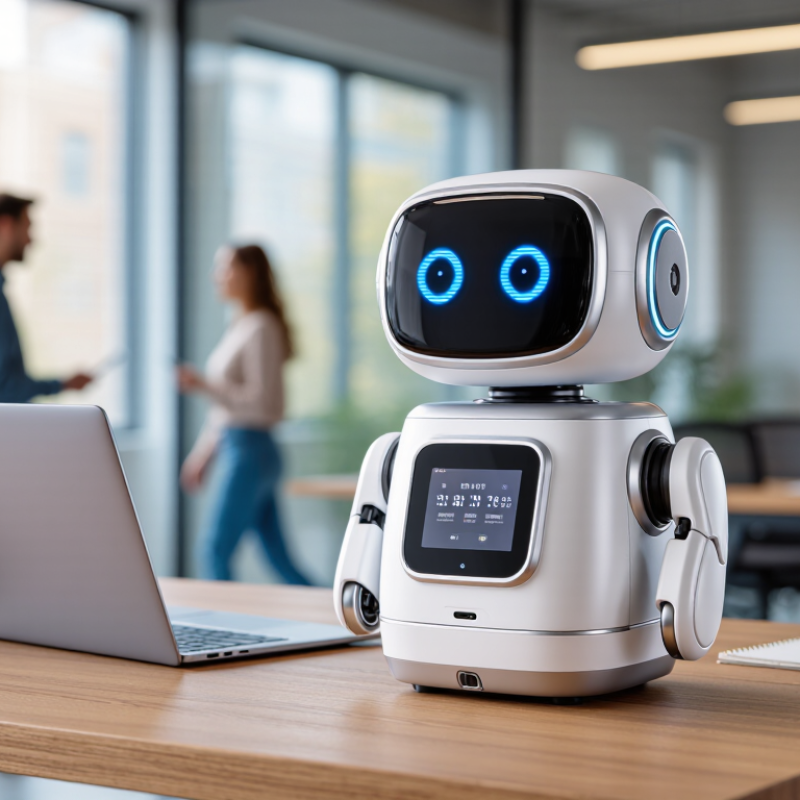
Table of Contents [Hide]
What Is a Desktop Robot and What Can It Do?
A desktop robot is a compact interactive machine designed to sit on a desk, shelf, or worktable. It may use cameras, microphones, sensors, wheels, a small arm, or a screen. These parts help it respond to voice commands, recognize objects, display information, and perform simple movements. Some models also connect with calendars, smart-home devices, or educational software.
Its value depends on the task. At home, it might remind you about medication schedules, guide a child through a coding exercise, or show a timer beside a recipe. In a small office, it could monitor a work area, answer basic questions, or provide remote visual communication. However, it should not replace professional care, security systems, or expert judgment. A friendly voice can still misunderstand a request.
Choosing one requires practical testing. Check whether the robot works without constant cloud access, and read its data-storage policy carefully. Test microphone accuracy from three meters away, especially with background noise. Confirm that software updates, repair options, and safety instructions are clearly provided. A stable mobile app matters too. My first assumption was that more sensors meant better performance. That was not always true. A simpler robot may respond faster and be easier to maintain. Watch its movement around cups, cables, and table edges. Small failures reveal more than polished demonstrations.
Brands
Proudly Trusted by Top Suppliers Worldwide







Let us know and we will automate, together to fit your industrial needs.
 +91-97254 16844
Clients
Proudly Trusted by Top Companies Worldwide


Do you need Help? Get in touch.
X
Please fill out the form below and we will get back to you as soon as possible.