o
p
t
i
m
a
r
o
b
o
t
i
c
s

Make a Call


Make a Call
Blogs
How to Choose the Best Rice Harvesting Equipment
Rice harvesting leaves little room for guesswork. A machine must cut, thresh, and clean grain efficiently while working through changing field conditions. The scale is substantial: FAOSTAT recorded about 776 million tonnes of paddy rice production worldwide in 2022. USDA’s Production, Supply and Distribution database also tracks global rice output, trade, and stocks. These reports show why harvest decisions matter, but they cannot tell a farmer which machine will perform best in a specific field.
Choosing Rice Harvesting Equipment starts with practical conditions: field size, soil firmness, crop height, lodging, and expected moisture at harvest. A small plot with narrow bunds may favor a compact walk-behind harvester; larger, flatter fields can justify a combine with greater capacity. Check header width, grain-loss performance, fuel use, service access, and the availability of replacement parts. Ask dealers for field demonstrations and measurable loss checks, not only brochure figures. Small details matter.
Total ownership cost deserves equal attention. Include transport, operator training, maintenance, downtime, and resale value alongside the purchase price. Local mechanics can often identify weak service networks before a breakdown does. There is no universal winner. A high-capacity machine may look efficient on paper yet struggle in soft, irregular paddies. That trade-off deserves reflection. This guide compares the factors that help match equipment to crop, land, and budget—without assuming that the newest or largest machine is automatically the best choice.
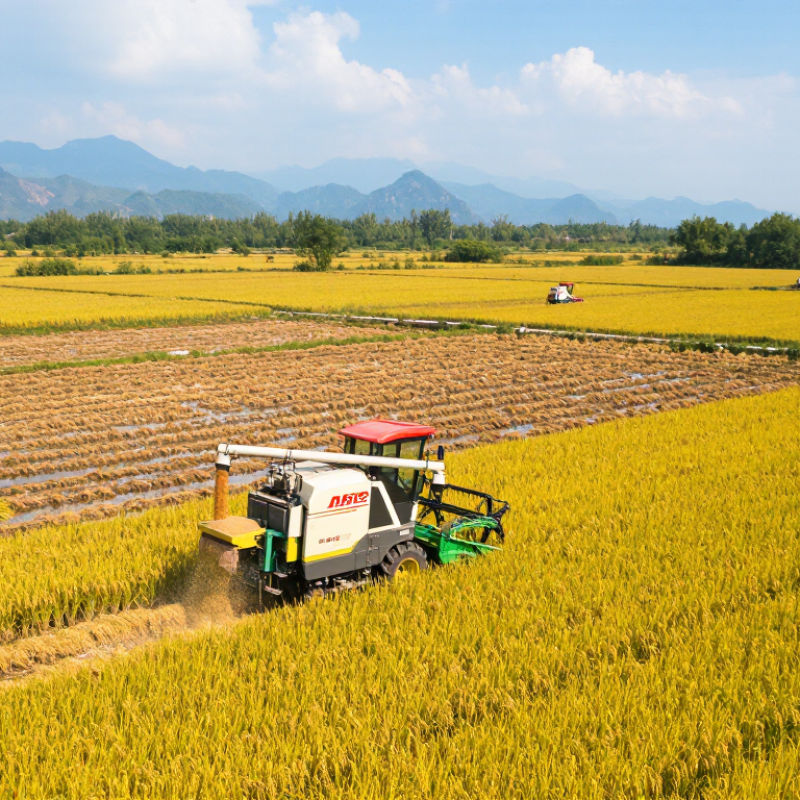
Table of Contents [Hide]
Assess harvest readiness using IRRI’s 20–25% grain-moisture guideline
Choosing rice harvesting equipment starts with checking whether the crop is ready, not simply counting acres. IRRI’s 20–25% grain-moisture guideline offers a useful harvest window for many rice crops. Measure grain from several parts of the field; moisture can vary between sunny edges and damp, shaded patches. Check several spots. Use a moisture meter suited to grain and follow its instructions, since a single sample can mislead.
At moisture levels near this range, compare equipment by field access, crop lodging, and how gently it handles the panicles. Grain harvested too wet may need more drying and careful handling, while delaying harvest as grain dries can increase shattering and breakage risks. Conditions vary with variety and weather, so the guideline is not a switch that makes every field ready at once. A handful of panicles may look dry while the lower crop remains damp. That is easy to miss. Recheck readings as harvest approaches, and leave room for imperfect measurements when planning machine capacity and drying time.
Brands
Proudly Trusted by Top Suppliers Worldwide







Let us know and we will automate, together to fit your industrial needs.
 +91-97254 16844
Clients
Proudly Trusted by Top Companies Worldwide


Do you need Help? Get in touch.
X
Please fill out the form below and we will get back to you as soon as possible.