o
p
t
i
m
a
r
o
b
o
t
i
c
s

Make a Call


Make a Call
Blogs
How to Choose the Best Rough Terrain Pallet Truck
Choosing the right Rough Terrain Pallet Truck starts with the ground beneath your wheels. Gravel, mud, ramps, and uneven warehouse yards can expose weaknesses quickly. A model that performs smoothly on concrete may struggle beside a loading dock after heavy rain. This guide explains how to compare capacity, ground clearance, fork dimensions, wheel design, braking control, and handle comfort before purchasing.
Real working conditions matter more than attractive specifications. Measure your pallet sizes, aisle widths, ramp angles, and typical load weights. Then check whether the truck’s rated capacity matches those conditions, not merely the advertised maximum. Large pneumatic or rugged polyurethane wheels may improve stability, but they can also increase rolling resistance. Small details matter.
Think beyond the first delivery.
Experienced operators often notice problems that product brochures overlook. Test the steering response with a representative load, if possible. Inspect weld quality, fork alignment, frame clearance, and access to replacement parts. Ask the supplier about maintenance intervals, operator guidance, warranty coverage, and service availability. These questions support safer and more dependable purchasing decisions.
There is no universally perfect truck. A heavier frame may offer durability but reduce maneuverability in tight spaces. A lower-cost model may appear practical, yet downtime can become expensive. Even experienced buyers can misjudge seasonal ground conditions. Review your assumptions carefully. The best choice balances terrain, workload, operator needs, maintenance resources, and long-term operating costs. Practical evidence should guide the final decision.
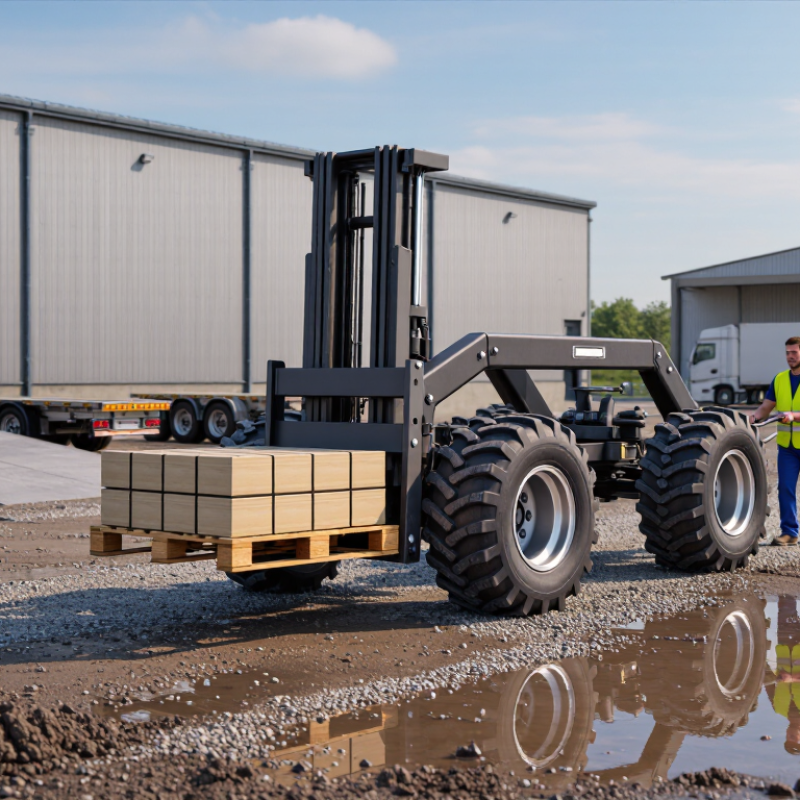
Table of Contents [Hide]
Define the Load and Terrain Requirements
Choosing a rough terrain pallet truck starts with facts, not a sales brochure. Define the load before comparing equipment. Record the pallet’s total weight, length, width, and center of gravity. Include packaging, moisture, and uneven weight distribution. A 1,000-kilogram load may behave differently when half its weight sits near one edge. Measure it honestly. Do not rely on a rounded estimate.
Terrain needs equal attention. Walk the actual route with a tape measure and a simple slope gauge. Note gravel depth, mud, loose soil, potholes, ramps, and narrow turns. A truck that performs well on compacted gravel may sink into wet ground. Check doorway height and turning space too. Small obstacles matter. Repeated jolts can shift a tall load or tire the operator. If the route changes after rain, test under those conditions when possible.
Match capacity to the real load, not an optimistic average. Confirm rated capacity at the intended load center and lift height. Ask whether the wheels maintain traction on your worst surface. Larger, deeply treaded wheels can improve clearance, but they may increase turning effort. That trade-off deserves a site trial. Record pushing force, stopping distance, and load stability. I have seen teams overlook slope direction and regret it later. Recheck your assumptions after one week of use. Field evidence often exposes a detail the specification sheet missed.
Brands
Proudly Trusted by Top Suppliers Worldwide







Let us know and we will automate, together to fit your industrial needs.
 +91-97254 16844
Clients
Proudly Trusted by Top Companies Worldwide


Do you need Help? Get in touch.
X
Please fill out the form below and we will get back to you as soon as possible.