o
p
t
i
m
a
r
o
b
o
t
i
c
s

Make a Call


Make a Call
Blogs
How to Choose the Best Steel Cable Tray from China?
Choosing the right Steel Cable Tray from China requires more than comparing prices or checking photographs. The tray must match your cable load, span length, corrosion environment, installation method, and project standards. A factory may offer galvanized steel, hot-dip galvanized steel, stainless steel, or powder-coated finishes. Each option behaves differently beside coastal air, chemical vapors, dust, and standing water.
Electrical educator Mike Holt often emphasizes, “Safety is not optional.” That principle matters when reviewing tray thickness, side-rail strength, rung spacing, bonding points, and load-test records. Ask for material certificates, production drawings, inspection reports, and evidence of compliance with recognized standards such as IEC 61537 or NEMA VE 1. Do not accept vague claims. Request measurable details.
Look closely at the factory, too. Are welds even? Are cut edges protected? Do connectors fit without force? Small details become large problems during installation. A reliable Chinese manufacturer should explain its steel grade, coating thickness, tolerance control, packaging, and testing process clearly. Factory experience matters, but it should be supported by documents and samples.
Cost still matters. However, the cheapest Steel Cable Tray may bring weak coatings, difficult assembly, or early replacement. I have seen buyers focus on unit price and overlook shipping damage, accessories, and labor. That approach is understandable, but incomplete. Compare the complete delivered system, not one tray section alone. Your final choice should balance strength, service life, certification, customization, and dependable after-sales communication.
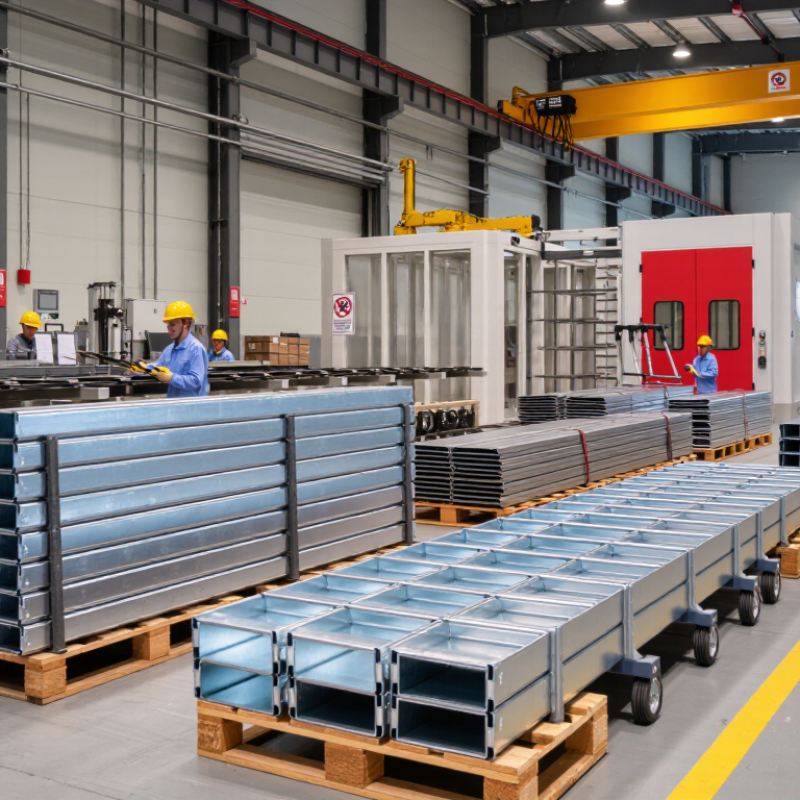
Table of Contents [Hide]
Steel Cable Tray Basics and Key Selection Criteria
How to Choose the Best Steel Cable Tray from China?
Steel Cable Tray Basics and Key Selection Criteria
A steel cable tray supports power, control, and communication cables in industrial and commercial buildings. Its basic parts include side rails, rungs, couplers, covers, and mounting brackets. The tray width should match the cable load, not just today’s installation. Leave practical space for heat release and future cables. Looks can mislead. A thick tray may still bend if its joints are weak or poorly aligned. Check the working load, span rating, steel thickness, and deflection data before ordering.
Material protection matters in real project conditions. Pre-galvanized steel suits many indoor environments with moderate humidity. Hot-dip galvanized steel offers stronger protection for outdoor or damp locations. Stainless steel may be more suitable near salt, chemicals, or frequent washing. Select perforations carefully. Small openings improve support, while larger openings reduce weight and may affect cable stability. Confirm edge finishing, cover fit, and grounding provisions through drawings and samples.
When sourcing from China, request material certificates, coating thickness records, load-test reports, and dimensional inspection results. A dependable manufacturer should explain tolerances clearly and provide installation guidance. Ask for a sample coupler, because connection quality often reveals production accuracy. Packaging also deserves attention; bent side rails create expensive delays. I have seen projects focus on unit price and overlook brackets, freight volume, and replacement parts. That approach often costs more later. Recheck every assumption against the site environment, cable weight, support spacing, and applicable project standards.
Brands
Proudly Trusted by Top Suppliers Worldwide







Let us know and we will automate, together to fit your industrial needs.
 +91-97254 16844
Clients
Proudly Trusted by Top Companies Worldwide


Do you need Help? Get in touch.
X
Please fill out the form below and we will get back to you as soon as possible.