o
p
t
i
m
a
r
o
b
o
t
i
c
s

Make a Call


Make a Call
Blogs
How to Choose the Right Coupler Fitting?
Choosing the right Coupler Fitting is not a minor purchasing decision. It affects leak prevention, connection speed, equipment safety, and long-term maintenance costs. A coupler may look correct on a sample line, yet fail under vibration, pressure spikes, contamination, or repeated connection cycles. The details matter.
Industry reports support this concern. The National Fluid Power Association’s economic outlook tracks fluid-power demand across construction, manufacturing, agriculture, and mobile equipment. Its market indicators show how strongly component demand follows equipment production and replacement activity. MarketsandMarkets also identifies hydraulic equipment growth as a continuing industrial trend. However, broad market growth does not guarantee a suitable fitting for your application. That assumption deserves more caution.
Hydraulic author Brendan Casey expresses the practical lesson clearly: “The cheapest component is rarely the lowest-cost choice.” His observation fits coupler selection. A reliable choice begins with working pressure, flow rate, fluid compatibility, temperature, connection profile, and material. ISO 4413 guidance also emphasizes safe design, proper installation, and controlled stored energy in hydraulic systems. These are not catalogue decorations.
Look closely at the real operating environment. Is the fitting exposed to mud, salt spray, welding sparks, or constant movement? Will technicians connect it wearing gloves? Does the hose twist during service? A steel Coupler Fitting may suit harsh equipment, while stainless steel may better resist corrosion. Quick-disconnect designs can reduce downtime, but only when their pressure and flow ratings match the system.
Even experienced buyers can overlook seal material or interchangeability. That is where a neat specification can become an expensive mistake. The best selection balances safety, performance, serviceability, and verified manufacturer data.
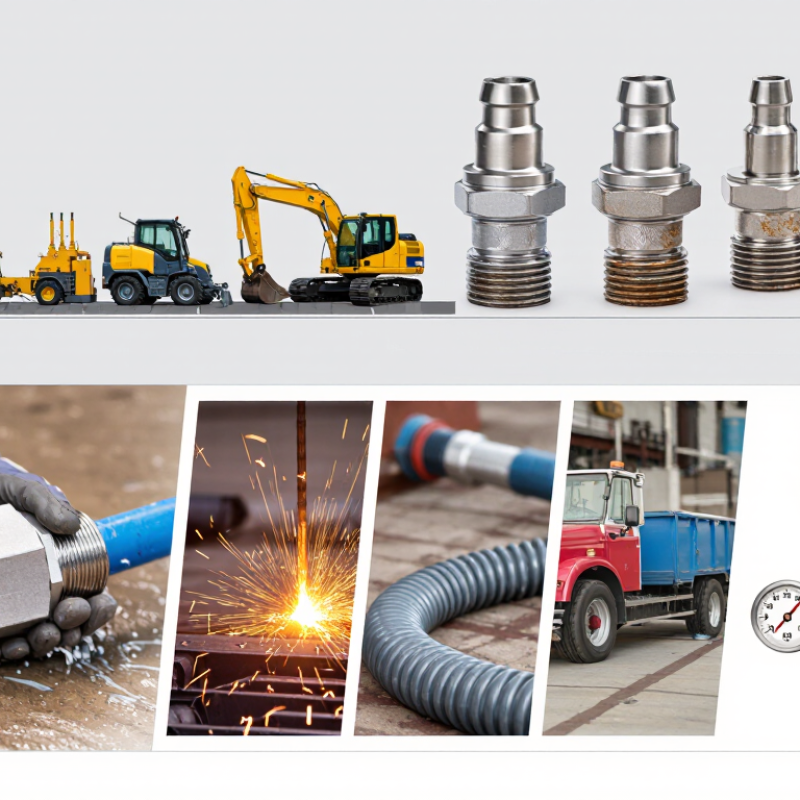
Table of Contents [Hide]
Classify Coupler Types by ISO 7241 Series A and Series B Standards
How to Choose the Right Coupler Fitting?
ISO 7241 classifies hydraulic quick couplers into Series A and Series B. These series use different connection profiles. They should not be treated as interchangeable, even when their sizes appear similar. Series A couplers commonly use a ball-valve design and are selected for many general hydraulic applications. Series B couplers often use a poppet-valve design and support a different interchange profile. Check the standard designation, not only the thread size.
A practical selection starts with the machine’s existing coupler. Inspect the plug nose, sleeve, locking balls, and seal condition. Measure the connection if records are incomplete. A catalog match can still fail in the field. That assumption is easy to make. Confirm the ISO 7241 series before ordering replacements.
Pressure, flow rate, temperature, and hydraulic fluid also affect performance. A coupler rated for high pressure may still restrict flow through a narrow internal passage. Look for pressure-drop data, working pressure, and allowable temperature ranges. Consider dust protection for exposed equipment. Clean connections reduce seal damage and contamination. The fitting material must suit the environment, especially near moisture, chemicals, or abrasive dust. In real maintenance work, identification marks may be worn or missing. When uncertainty remains, compare the physical profile with the manufacturer’s dimensional data and test one sample before changing an entire system.
Brands
Proudly Trusted by Top Suppliers Worldwide







Let us know and we will automate, together to fit your industrial needs.
 +91-97254 16844
Clients
Proudly Trusted by Top Companies Worldwide


Do you need Help? Get in touch.
X
Please fill out the form below and we will get back to you as soon as possible.