o
p
t
i
m
a
r
o
b
o
t
i
c
s

Make a Call


Make a Call
Blogs
How to Choose the Right Fuel Transfer Pump?
Choosing the right Fuel Transfer Pump is a practical decision, not a simple catalog search. The wrong model can cause slow refueling, premature wear, or unsafe pressure levels. A pump may look powerful on paper. Yet it can struggle when the hose is long, the filter is restricted, or the fuel is cold.
The U.S. Energy Information Administration’s Annual Energy Outlook 2025 continues to project substantial liquid-fuel use across transportation and industrial operations. That demand makes dependable fuel-handling equipment important for fleets, farms, workshops, and backup-power sites. EIA data also shows that transportation remains the largest petroleum-consuming sector in the United States. This context matters. A pump used for daily fleet refueling faces different demands from one used beside a generator tank.
Selection should begin with the fuel type, required flow rate, voltage, duty cycle, tank position, and delivery distance. Diesel, gasoline, and certain blended fuels may require different materials and certifications. UL 79 addresses power-operated pumps for petroleum products, while NFPA 30 provides widely recognized guidance for flammable and combustible liquids. OSHA requirements should also be reviewed for workplace installations. These references do not replace a qualified inspection. They provide a safer starting point.
A common mistake is choosing maximum flow instead of suitable flow. More speed is not always better. Excessive flow can increase splashing, static concerns, and nozzle control problems. Consider real conditions: a 12-volt pump drawing from a low tank, through a clogged filter, may deliver far less than its advertised rating. Product sheets are useful, but field experience often reveals the missing detail. The best choice balances performance, safety, maintenance access, and verified compatibility. No single pump fits every operation.
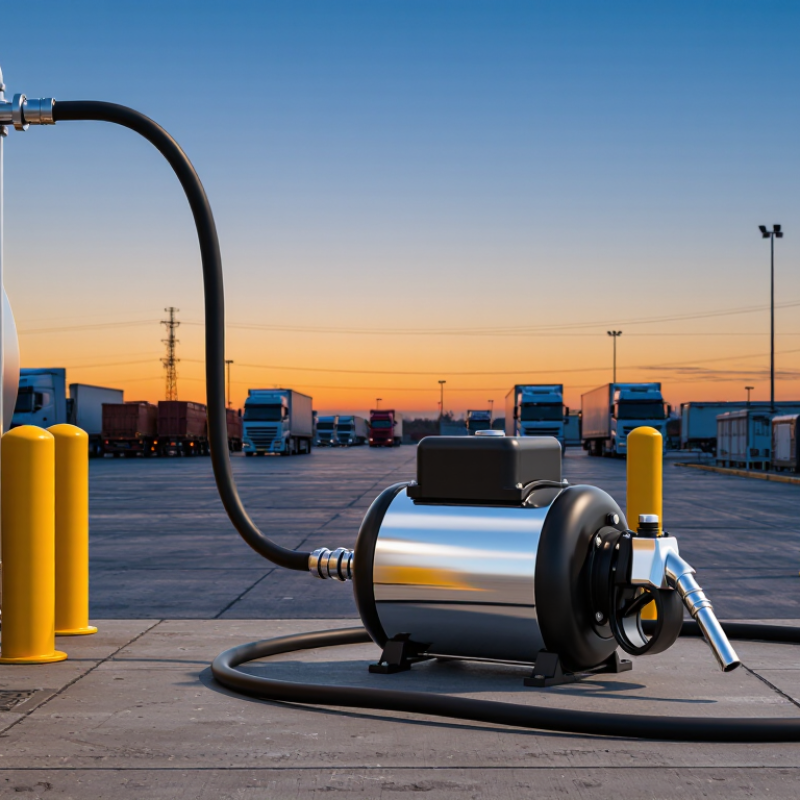
Table of Contents [Hide]
Understanding Fuel Transfer Pump Types and Their Operating Principles
How to Choose the Right Fuel Transfer Pump?
Understanding Fuel Transfer Pump Types and Their Operating Principles
Choosing a fuel transfer pump starts with understanding how it moves liquid. Positive displacement pumps use gears, vanes, or diaphragms to trap and push fuel forward. They usually provide steady flow and work well against higher resistance. Gear pumps are compact and durable, while vane pumps often operate more quietly. Diaphragm pumps can handle intermittent service and tolerate small particles better.
Centrifugal pumps work differently. An impeller spins rapidly, creating velocity that becomes pressure inside the housing. They suit clean fuel, high flow rates, and low to moderate pressure demands. However, they may struggle when the system needs strong suction or frequent self-priming. The correct choice depends on viscosity, flow rate, lifting height, hose length, and operating temperature.
I have seen a pump selected by flow rate alone, then perform poorly through a narrow hose. Fit changes everything. Check the pump’s duty cycle before installation. Continuous operation can overheat equipment designed for short transfers. Electrical models also require suitable voltage, secure connections, and proper grounding. Air-operated designs may fit areas where electrical power is limited, but they can consume more compressed air than expected.
Fuel compatibility matters too. Seals and internal materials must resist the specific liquid. A pump suitable for one fuel may swell, crack, or leak with another. I once underestimated temperature changes during outdoor use. That mistake reminded me to review manufacturer data, actual site conditions, and maintenance access before choosing a final configuration.
Brands
Proudly Trusted by Top Suppliers Worldwide





Let us know and we will automate, together to fit your industrial needs.
 +91-97254 16844
Clients
Proudly Trusted by Top Companies Worldwide


Do you need Help? Get in touch.
X
Please fill out the form below and we will get back to you as soon as possible.