o
p
t
i
m
a
r
o
b
o
t
i
c
s

Make a Call


Make a Call
Blogs
How to Choose the Right Gas Cylinder Transportation Frame?
Choosing the right Gas Cylinder Transportation Frame requires more than comparing prices or external appearance. The frame must match the cylinders, vehicle, handling equipment, and working environment. A narrow frame may fit through a doorway but become unstable during turning. A heavy frame may improve durability but reduce payload efficiency. Small details matter.
Start by confirming cylinder diameter, height, valve protection, total weight, and center of gravity. Check whether the frame supports upright storage without pressure on valves or regulators. Strong retaining chains, padded contact points, and secure locking bars can prevent movement on uneven roads. Forklift pockets should accept the actual fork dimensions, not only the advertised capacity. Inspect welds, corner joints, lifting points, and surface coatings for visible weaknesses or corrosion.
Safety comes first.
A reliable selection also depends on load ratings, maintenance access, and compatibility with the transport vehicle. Ask the frame manufacturer for drawings, test information, material specifications, and inspection guidance. Independent review may be appropriate for unusual loads or demanding environments. Local transport rules and workplace requirements should also be verified with qualified professionals. They can differ by cylinder type and operating location.
Do not assume the largest frame is the safest choice. It may leave cylinders poorly restrained. Do not trust painted steel alone. Coating quality can hide design weaknesses, and even a well-built frame needs regular inspection. A practical review should include loading, unloading, turning, parking, and emergency access. No checklist catches every mistake. Reconsider the design when real handling conditions reveal problems.
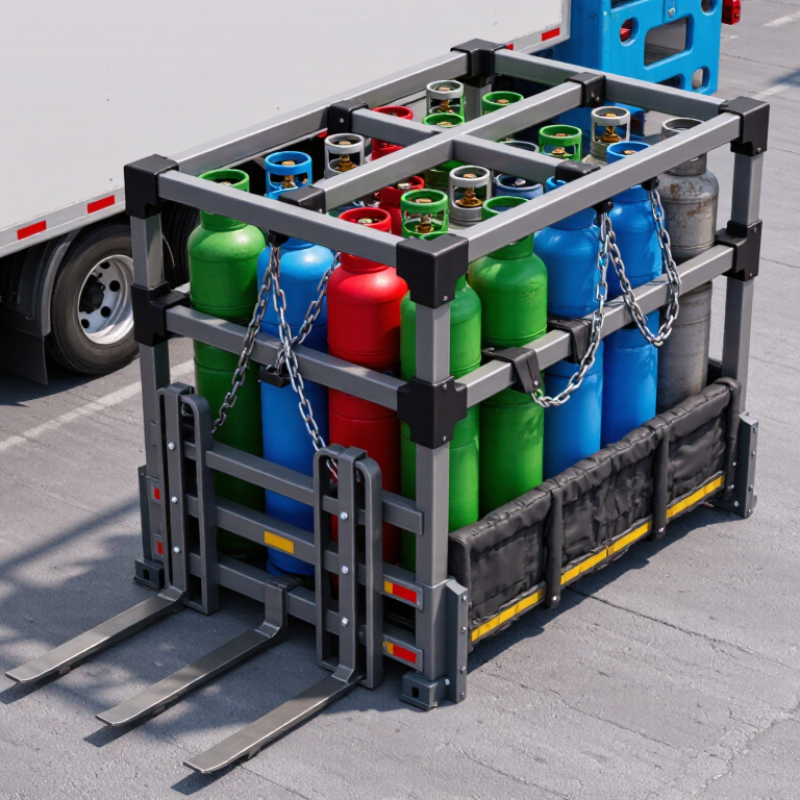
Table of Contents [Hide]
Understanding Gas Cylinder Transportation Frame Requirements
Choosing a gas cylinder transportation frame starts with the cylinders themselves. Measure their diameter, height, valve position, and total loaded weight. A frame must support these details without forcing the cylinders into tight spaces. Different gases may require separate handling procedures, so check the supplier’s safety data and local transport requirements.
A reliable frame should use strong restraints at more than one level. Chains, straps, or locking bars must prevent rolling, sliding, and upward movement. The base needs a non-slip surface and enough clearance for inspection. Rounded edges help protect cylinder walls. Good ventilation is essential, especially when a vehicle or storage area has limited airflow. Keep valves protected from impact. They are small, but they are not forgiving.
Frame compatibility matters too. Check its attachment points against the vehicle, lifting equipment, and loading route. A frame can look solid yet shift during sudden braking. That mistake is easy to underestimate. Inspect welds, fasteners, straps, and corrosion before every trip. Keep inspection records with dates and corrective actions. Requirements may differ by region, cylinder material, gas classification, and transport method, so confirm them with a qualified safety professional. A practical trial with an empty frame can reveal awkward access or poor balance, although it cannot replace a full safety assessment.
Brands
Proudly Trusted by Top Suppliers Worldwide






Let us know and we will automate, together to fit your industrial needs.
 +91-97254 16844
Clients
Proudly Trusted by Top Companies Worldwide


Do you need Help? Get in touch.
X
Please fill out the form below and we will get back to you as soon as possible.