o p t i m a r o b o t i c s

Blogs

How to Choose the Right IoT Batteries for Your Devices?

Choosing IoT Batteries is not a simple matter of picking the largest capacity number on a product sheet. A remote soil sensor, a factory vibration monitor, and a GPS tracker place different demands on their power sources. One may send a reading every few minutes; another must survive years of sleep between brief transmissions. Small details matter.

Thomas Edison, an inventor who worked on storage batteries, is often credited with saying, “I have not failed. I've just found 10,000 ways that won't work.” The line is a useful reminder, though it is not a substitute for testing. Battery performance depends on the device’s current draw, operating temperature, radio activity, and maintenance access. A coin cell might suit a low-power sensor, while a cellular tracker may need a higher-capacity pack. Cold mornings can reduce usable capacity. Frequent network retries can drain a battery faster than expected.

This guide outlines how to compare chemistry, voltage, capacity, discharge behavior, size, and service life. It also explains why a datasheet’s rated capacity may not match field performance. Measure the real device, not just the battery in isolation. There is a catch: even careful estimates can miss unusual usage patterns. A pilot test in the intended environment often reveals what a neat spreadsheet cannot.
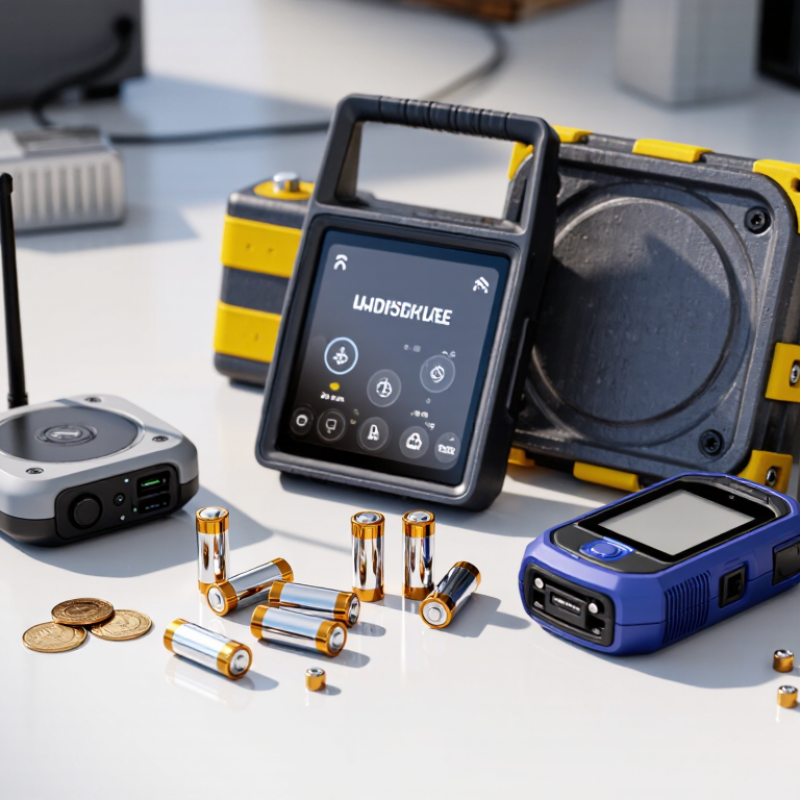
How to Choose the Right IoT Batteries for Your Devices?

Understanding the Power Requirements of an IoT Device

Choosing an IoT battery starts with measuring the device, not guessing from its size. List each load: sensor, processor, display, and radio. Record active current, sleep current, and how often the device wakes. A radio may draw brief current spikes that a small battery struggles to supply. Those moments matter.

Estimate energy use for each operating mode by multiplying its power by the time spent in that mode. Add the results in watt-hours, then compare them with the battery’s usable energy. Milliamp-hours alone can mislead when operating voltages differ. An outdoor meter sending one reading every ten minutes has a different profile from a tracker transmitting continuously. Measure a working prototype if possible. A spreadsheet helps, but it is not a test bench.

Include startup pulses, weak-signal retransmissions, sensor warm-up, and cold-weather operation in the estimate. Low temperatures can reduce available capacity, while poor coverage may keep the radio awake longer. Allow margin for aging and self-discharge, but avoid oversized cells that add cost and bulk. Exact runtime remains uncertain. Firmware changes can alter it. Validate battery life using the actual reporting schedule and expected temperature range before settling on capacity.

Comparing Battery Chemistries and Form Factors

How to Choose the Right IoT Batteries for Your Devices?
Comparing Battery Chemistries and Form Factors

Chemistry sets operating behavior; the package determines whether the cell fits and stays cool. Primary lithium cells, including lithium-thionyl chloride, suit low, steady loads and long service intervals. Their weakness is pulse delivery: a radio transmission can briefly demand more current than the cell supplies. Add a capacitor, or test the actual transmission pattern. Pulse loads matter.

Rechargeable lithium-ion suits devices that transmit often or can be serviced for charging. Alkaline cells can work for inexpensive, low-drain sensors, but cold conditions and frequent radio use can shorten service life. The International Energy Agency’s Global EV Outlook 2024 reports that lithium iron phosphate reached nearly 40% of the electric-car battery market in 2023. That is EV data, not a direct ranking for small IoT cells; scale and discharge profiles differ.

Form factor matters, too. Coin cells save space in tiny sensors, while cylindrical cells are easier to replace and often handle higher loads. Pouch cells can fit slim enclosures, but need support against swelling and pressure. The U.S. Department of Energy’s 2021 National Blueprint for Lithium Batteries projected global lithium-battery demand would grow five- to tenfold by 2030. That points to a changing supply landscape, not a guarantee of easy sourcing. Fit can mislead. Test samples inside the real enclosure, at expected temperatures, and with the device’s actual radio duty cycle.

Matching Battery Performance to Operating Conditions

A soil sensor in a shaded field and a tracker inside a sun-heated vehicle face different battery demands. Match the cell to the device’s coldest and hottest expected temperatures, not the average on a product sheet. Low temperatures can reduce available capacity and weaken voltage under load; heat can accelerate battery aging. Check the manufacturer’s discharge curves across the expected temperature range, then test the device in its real enclosure. Real installations are messier.

IoT Analytics’ State of IoT—Spring 2024 estimated 18.8 billion connected IoT devices worldwide by the end of 2024, a 13% year-over-year increase. That scale spans tiny sensors sending occasional readings and trackers transmitting frequent radio bursts, so “long life” is not one operating profile. For a remote meter, calculate average current and account for sleep current, self-discharge, and planned service intervals. For a radio-heavy tracker, check pulse capability and voltage sag during transmission, not just rated capacity. A primary lithium cell may suit low-drain, hard-to-reach equipment; rechargeable lithium-ion may fit devices with frequent high-power use and a charging plan. A neat spreadsheet can still mislead: validate estimates with logged current and a temperature-chamber test.

Estimating Battery Life and Replacement Needs

Estimating battery life starts with the device’s average current draw, not its advertised peak. Measure how much power it uses while sleeping, sensing, and transmitting. Then estimate each mode’s share of a typical day. A sensor that sleeps for 99 percent of the time may still use substantial energy during brief wireless transmissions. Divide usable battery capacity by the estimated average current to get a rough runtime. Treat that figure as a planning estimate, not a promise.

Battery capacity changes with temperature, age, discharge rate, and storage time. Leave a reserve instead of assuming every labeled milliamp-hour is available in the field. Field data matters. Test devices under realistic conditions, including weak signal areas where repeated transmissions can increase consumption. Compare measured battery voltage and reported charge levels over several weeks; a short test may miss seasonal changes or unusual usage. Plans drift. A neat spreadsheet can still be wrong.

Set replacement timing around the cost of failure and the ease of access. A remote meter may need an earlier service threshold than a sensor in a staffed building. Track actual replacement dates and battery readings across multiple devices, then adjust the schedule. If readings are inconsistent, check wiring, battery contacts, and measurement calibration before changing the estimate.

How to Choose the Right IoT Batteries for Your Devices?

Estimated Battery Life and Replacement Needs

Estimates use 80% of nominal battery capacity as usable capacity and calculate runtime as usable capacity divided by average current draw. Actual battery life can vary with temperature, transmission frequency, signal quality, pulse loads, self-discharge, and device settings. Use these illustrative estimates as a starting point for replacement planning.

Checking Safety, Compatibility, and Total Cost of Ownership

A battery can pass bench tests and still fail in a cold outdoor sensor. Check chemistry, voltage range, peak current, connector polarity, and charging profile against the device datasheet. Then review operating temperature, enclosure ventilation, and radio-transmission pulse loads. For rechargeable lithium cells, IEC 62133-2 sets safety requirements and tests. Request traceable test documentation, not just a supplier’s assurance. Small details matter. Include protection circuitry and safe charging behavior in the assessment.

IoT Analytics reported 18.8 billion connected IoT devices in 2024, forecasting 40.6 billion by 2030 in its State of IoT 2024 report. That growing fleet makes replacement planning matter. BloombergNEF’s 2024 Battery Price Survey found average lithium-ion pack prices of $115 per kilowatt-hour. This is a market benchmark, not a quote for small IoT cells. Calculate total cost across battery purchase, shipping, installation labor, downtime, and disposal. Compare service life under real temperatures and reporting intervals, not optimistic shelf-life claims. A $2 cell needing an annual site visit may cost more than a pricier pack lasting five years. That estimate can be wrong; site access costs vary widely. For remote nodes, test samples through cold starts and peak radio bursts before finalizing the specification.

How to Choose the Right IoT Batteries for Your Devices? - Checking Safety, Compatibility, and Total Cost of Ownership

Battery Chemistry Typical Nominal Voltage Rechargeable? Typical IoT Fit Safety and Handling Considerations Compatibility Checks Total Cost of Ownership Considerations
Lithium Thionyl Chloride (Li-SOCl₂) 3.6 V per cell No Low-current, long-life devices such as utility meters, remote sensors, and asset trackers with infrequent transmissions. Use only cells and packs specified for the application. Check manufacturer safety data and transport requirements. Long storage or low-current use can cause voltage delay when a sudden high pulse is demanded. Confirm the device accepts a 3.6 V lithium primary cell. Test peak radio and startup current; a pulse capacitor or suitable cell design may be needed. Often higher purchase cost than alkaline, but long service intervals can reduce site visits and replacement labor. Evaluate expected current profile and usable capacity, not capacity alone.
Lithium Manganese Dioxide (Li-MnO₂) 3.0 V per cell No Compact sensors, backup power, and devices needing a relatively high pulse capability from a primary lithium cell. Do not recharge or short-circuit. Protect cells from damage, heat, and incorrect installation; follow the cell maker’s handling and disposal instructions. Check whether the electronics are designed for a 3.0 V source and whether the cell’s dimensions, connector, pulse capability, and discharge curve meet requirements. May cost more initially than alkaline cells. Total cost depends on required capacity, pulse performance, operating temperature, replacement frequency, and service access.
Alkaline (Zinc-Manganese Dioxide) 1.5 V per cell No Low-cost, easily replaceable devices with modest energy needs and convenient access for battery changes. Leakage can damage equipment, particularly after deep discharge or prolonged storage. Do not mix old and new cells or different chemistries in one device. Check the number of cells, voltage range, peak-current demand, and low-voltage behavior. A device designed for lithium cells may not be compatible. Low upfront cost, but frequent replacement, labor, travel, and downtime can make it expensive for remote or hard-to-reach installations.
Lithium-Ion (NMC-type) Typically 3.6–3.7 V per cell Yes Rechargeable IoT equipment with regular charging access, higher power needs, or repeated charge-and-discharge cycles. Requires appropriate charging and protection against overcharge, over-discharge, overcurrent, and temperature extremes. Use a properly designed battery pack and charger. Verify the full charge and discharge voltage range, protection circuitry, connector, charging method, and device operating-temperature limits. It is not a direct substitute for a 3.0 V or 3.6 V primary cell. Higher system complexity and charging costs may be offset by reuse. Include charger, protection, replacement interval, charging labor, and the cost of any downtime.
Lithium Iron Phosphate (LiFePO₄) Typically 3.2 V per cell Yes Rechargeable devices where cycle life and a comparatively stable operating profile are priorities. Still requires a compatible charger and battery protection. Follow pack-specific limits for charging temperature, discharge, and storage. Confirm that the device supports the cell’s voltage range and charging profile. A 3.2 V nominal cell is not automatically interchangeable with a 3.6–3.7 V lithium-ion cell. Initial pack and charging-system costs can be higher. Compare expected cycle life, charge availability, pack replacement, and maintenance over the device’s service life.
Nickel-Metal Hydride (NiMH) 1.2 V per cell Yes Devices designed for multiple low-voltage cells, especially where batteries can be removed and recharged routinely. Use a charger designed for NiMH cells. Prevent short circuits and follow charging instructions; performance and storage behavior vary between cell types. Check the device’s minimum operating voltage, number of cells, charging arrangement, and current demand. Its 1.2 V nominal voltage differs from a 1.5 V alkaline cell. Rechargeability can reduce disposable-cell purchases, but account for chargers, charging energy, labor, self-discharge, and eventual cell replacement.

Selection note: Values and performance are chemistry-level guidance, not a substitute for a specific cell datasheet. Before deployment, verify the device’s voltage limits, average and peak current, temperature range, pulse behavior, physical fit, applicable safety requirements, and expected service life.

Brands

Proudly Trusted by Top Suppliers Worldwide

Let us know and we will automate, together to fit your industrial needs.

Clients

Proudly Trusted by Top Companies Worldwide

Do you need Help? Get in touch.

X

Please fill out the form below and we will get back to you as soon as possible.

    Subscribe our newsletter & get updates







