How to Choose the Right Packaging Robots for Your Business Needs?
In the ever-evolving landscape of logistics and manufacturing, choosing the right packaging robots is crucial. According to Dr. Emily Hart, a leading expert in automation solutions, “The right packaging robot can transform efficiency and accuracy in production lines.” This highlights the importance of assessing unique business needs when integrating packaging robots into operations.
Businesses must evaluate their specific requirements carefully. Factors like product type, packaging speed, and integration with existing systems matter greatly. Dr. Hart emphasizes that not all packaging robots are created equal; understanding capacity and technical specifications is essential. Many companies overlook these intricacies and face complications later.
Moreover, navigating the choices available can be overwhelming. With various models and features, one may question which best aligns with their goals. The right decision can lead to significant improvements in productivity, while a hasty choice may derail operations. Companies must be diligent, learning from others' missteps to ensure they make informed decisions in adopting packaging robots.

Understanding Different Types of Packaging Robots in the Market
When navigating the world of packaging robots, it’s essential to understand the different types available. According to a 2023 report by the Association for Packaging and Processing Technologies, the use of packaging automation has grown by over 25% annually. This trend pushes businesses to explore options that best suit their needs.
Robotic arms are one of the most common types of packaging robots. They excel in tasks like picking and placing products in boxes efficiently. Collaborative robots, or cobots, work alongside human operators, making them ideal for small-scale environments. Automated mobile robots (AMRs) enhance warehouse operations by transporting materials. Each type serves a unique function, making it crucial to analyze your specific requirements before deciding.
Tip: Assess the scale of your operations. Smaller businesses might lean towards cobots due to their flexibility. Larger operations could benefit from investing in robotic arms or AMRs.
Some challenges remain in the industry. Many companies find it difficult to integrate new automation solutions with existing systems. Employees may also require retraining to adapt to changing roles.
Tip: Prioritize seamless integration when choosing packaging robots. Consult with experts to avoid operational disruptions. Understanding the unique advantages and limitations of each type can aid in making a well-informed decision.
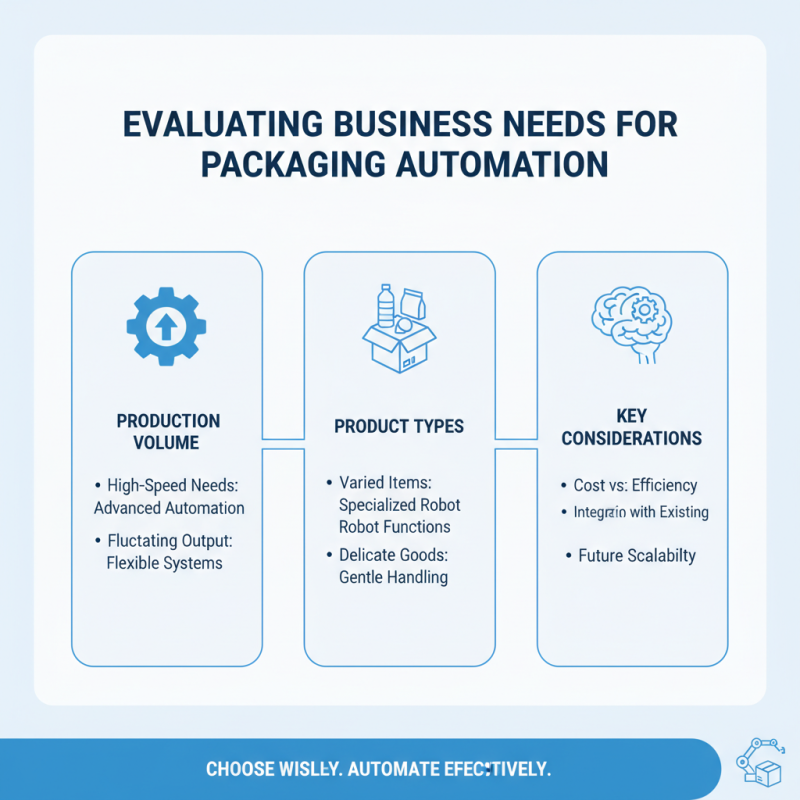
Evaluating Your Business Needs for Effective Packaging Automation
Choosing the right packaging robots for your business requires a clear understanding of your needs. Start by assessing your production volume. High-speed packaging might demand advanced automation solutions. If your output fluctuates, a flexible system is essential. Consider the types of products you handle. Different robots offer varied functionalities that cater to specific items.
Tips: Evaluate your current bottlenecks. Are labor costs rising? Is packaging speed a concern? Analyzing these factors helps streamline your automation process. Understand the nature of your packaging. Fragile items may need gentle handling, while bulk products require robustness.
It’s important to involve your team in this assessment. They can provide insights into daily challenges that impact efficiency. Sometimes, robots do not fit seamlessly into existing workflows. Reflection on these aspects can uncover hidden needs. Lastly, keep an eye on technological trends. Innovations can guide your decision. Perfect solutions rarely exist; balancing perfection and practicality is key.
Analyzing Cost-Benefit Metrics for Packaging Robot Investment
Investing in packaging robots demands careful analysis of cost-benefit metrics. Over the past few years, the market for packaging robots has seen exponential growth. It is estimated that the global market will reach $5.2 billion by 2027, with a compound annual growth rate (CAGR) of 12.5%. This growth speaks to the potential return on investment for businesses ready to automate.
Cost savings comprise one of the primary metrics in this analysis. According to industry reports, implementing packaging robots can reduce labor costs by up to 30%. Labor shortages in various sectors make this advantage even more critical. However, initial investment costs often lead businesses to hesitate. A typical packaging robot can range from $25,000 to $100,000, depending on capabilities. Companies must weigh this upfront cost against long-term savings and efficiency gains.
Another key metric is productivity. Some reports suggest that automating packaging processes can boost productivity by nearly 50%. Robots can work continuously, decreasing production time significantly. However, some companies find that integration into existing workflows can present challenges. It’s essential to consider training and maintenance costs in any investment plan. Effective implementation ensures that the potential benefits of packaging robots are fully realized, though the path may not be straightforward.
Key Factors in Selecting Packaging Robots: Speed, Precision, and Versatility
When selecting packaging robots, key factors such as speed, precision, and versatility play a crucial role. Speed is essential for meeting production deadlines. A robot that operates quickly can significantly enhance your output. However, consider the balance between speed and quality. A fast machine may sacrifice precision, leading to packaging errors.
Precision matters greatly in packaging. Errors can lead to costly wastage and customer dissatisfaction. Look for robots equipped with advanced sensors that ensure accurate placement and sealing of products. This attention to detail enhances reliability and protects your brand’s reputation. Investing in precision technology pays off in the long run.
Versatility is another important aspect. Your chosen robot should adapt to various packages and products. If your product line changes, a versatile robot can save you from future costs. It allows for seamless integration into your existing workflow.
Tips: Evaluate the specific needs of your product line. Be ready to reassess your choices. Sometimes, a more adaptable solution is better. Don’t hesitate to question the specifications offered. Understanding your operational requirements will lead to smarter decisions.
How to Choose the Right Packaging Robots for Your Business Needs?
Feature
Description
Importance Level
Example Applications
Speed
The rate at which the robot can package products, usually measured in units per minute.
How easily the robot can be integrated into existing production lines.
High
Manufacturing plants upgrading technology.
Cost Efficiency
The return on investment (ROI) achieved by automating packaging processes.
High
Small to medium-sized enterprises looking to optimize expenses.
Future Trends in Packaging Robotics: Innovations and Industry Growth Statistics
The packaging robotics industry is experiencing rapid innovation and growth. According to recent statistics, the market is projected to expand significantly over the next few years. Companies are increasingly adopting automation, driven by the need for efficiency and cost-effectiveness. Automated systems minimize human error and increase speed in production lines, enabling businesses to meet rising consumer demands.
Current trends include the integration of artificial intelligence into packaging robots. These smart systems can adapt to various packaging types and perform complex tasks. This adaptability can reduce downtime and enhance production flexibility. As businesses explore these advanced solutions, many are realizing the importance of proper training and support for staff. Addressing skill gaps in workforce readiness may pose challenges as technology evolves.
Businesses must evaluate their specific packaging needs before investing in robotics. It’s essential to conduct comprehensive research and possibly engage with industry experts. This process can help identify the right technology and align it with operational objectives. However, not every robot will suit every need. Companies might invest in equipment that later proves too complex or unnecessary, highlighting the importance of a tailored approach.
Future Trends in Packaging Robotics: Market Growth and Innovations
This bar chart illustrates the growth of the packaging robotics market from 2019 to 2023, highlighting the significant increase in market value as innovations continue to drive industry advancements.