o
p
t
i
m
a
r
o
b
o
t
i
c
s

Make a Call


Make a Call
Blogs
How to Choose Parchment Paper for Your Business?
Choosing Parchment Paper for a business is more complex than picking the cheapest roll. The right product must match your equipment, recipes, packaging process, and customer expectations. A bakery may need strong, non-stick sheets for croissants. A meal-preparation company may require food-safe liners that resist oil, moisture, and repeated handling. Small details matter, especially when paper tears beside a busy oven.
Chef Thomas Keller, known for precision in professional kitchens, has described parchment as “a baker’s best friend.” That idea remains useful, but it is not the whole decision. Businesses should examine silicone coating, heat resistance, sheet size, roll performance, and grease release. Unbleached Parchment Paper may appeal to sustainability-minded customers, although its color can vary between suppliers. Some products look similar but behave differently under high heat. Testing is essential.
Start with a real production trial. Bake cookies on two brands. Compare browning, sticking, curling, and cleanup. Then test the paper inside your actual trays, cutters, and packing workflow. Ask whether employees can tear it quickly without waste. Review supplier documentation, food-contact compliance, and batch consistency. Certifications and technical data deserve attention, not blind trust.
There is no universal best option. A premium sheet may reduce labor, yet its higher price can challenge low-margin products. A cheaper roll may seem efficient, but frequent tearing creates hidden costs. I would also reconsider glossy marketing claims. Performance should win. Select Parchment Paper that protects the product, supports reliable output, and makes sense financially. Your first choice may not be perfect. That is why measured testing matters.
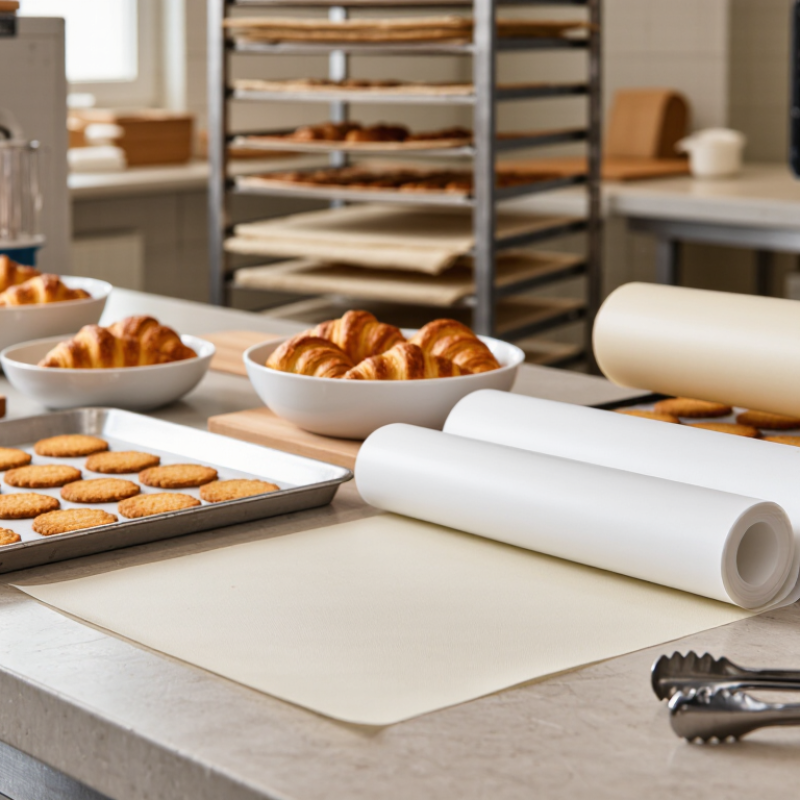
Table of Contents [Hide]
What Is Parchment Paper and How Is It Used in Business?
Parchment paper is a cellulose-based sheet with a smooth, heat-resistant coating, often made from silicone. It helps prevent dough, sugar, and oily foods from sticking to trays and work surfaces. Unlike wax paper, it is designed for controlled oven use. In business kitchens, this reduces scraping, broken pastries, and cleaning time. That small detail matters during busy production hours.
A bakery may use parchment for cookies, bread rolls, cakes, and roasted ingredients. A pastry kitchen can fold it into piping cones or place it between delicate layers. Food manufacturers may use it as a separator for frozen dough, candies, or prepared portions. Caterers often line serving trays to improve hygiene and presentation. For chilled products, parchment can reduce surface contact and protect fragile textures. Still, parchment is not fireproof. Never use it over an open flame. Heat limits vary, so staff should check the supplier’s technical instructions.
Choosing parchment requires more than checking sheet size. Look for consistent thickness, reliable grease resistance, and clean cutting edges. The coating should remain stable without peeling or leaving residue. Test a sample during actual production. A sheet that performs well with cookies may tear under wet dough. One practical caution: some operations buy oversized rolls to reduce restocking. That can create more trimming waste. Review the workflow, tray dimensions, storage conditions, and expected oven temperature before ordering. Small tests reveal problems that a product description may hide.
Brands
Proudly Trusted by Top Suppliers Worldwide







Let us know and we will automate, together to fit your industrial needs.
 +91-97254 16844
Clients
Proudly Trusted by Top Companies Worldwide


Do you need Help? Get in touch.
X
Please fill out the form below and we will get back to you as soon as possible.