o
p
t
i
m
a
r
o
b
o
t
i
c
s

Make a Call


Make a Call
Blogs
How to Choose the Right SAE LED Lightbar?
Choosing the right Sae Led Lightbar begins with more than brightness or a low purchase price. It requires a clear understanding of visibility, optical performance, vehicle compatibility, and operating conditions. SAE International’s J845 standard addresses optical warning devices for authorized emergency, maintenance, and service vehicles. Its testing framework considers photometric performance, flash characteristics, and visibility. That distinction matters. A lightbar can look powerful in a dark driveway yet perform poorly through rain, dust, or midday glare.
Real-world selection also depends on evidence. The U.S. Department of Energy has reported that LED technology generally delivers higher efficiency and longer service life than traditional lighting sources. However, efficiency claims vary between products. Buyers should examine measured wattage, thermal management, warranty terms, and test conditions. The National Highway Traffic Safety Administration has repeatedly emphasized conspicuity and safe operation in emergency vehicle guidance. Therefore, beam pattern, mounting height, color selection, and synchronization deserve careful review. More light is not always better.
Fit the work, not the marketing.
A reliable Sae Led Lightbar should match the vehicle roof, electrical system, duty cycle, and local operating requirements. Review SAE J845 or J595 references carefully, because compliance language may differ by application and jurisdiction. Look for documented test results, ingress protection ratings, vibration testing, and replacement support. This article will compare those factors in practical terms, from a driver’s seat facing wet glass to a fleet manager reviewing five-year maintenance costs. No selection guide is perfect. Product data can be incomplete, and field conditions remain unpredictable. Careful verification is still the strongest safeguard.
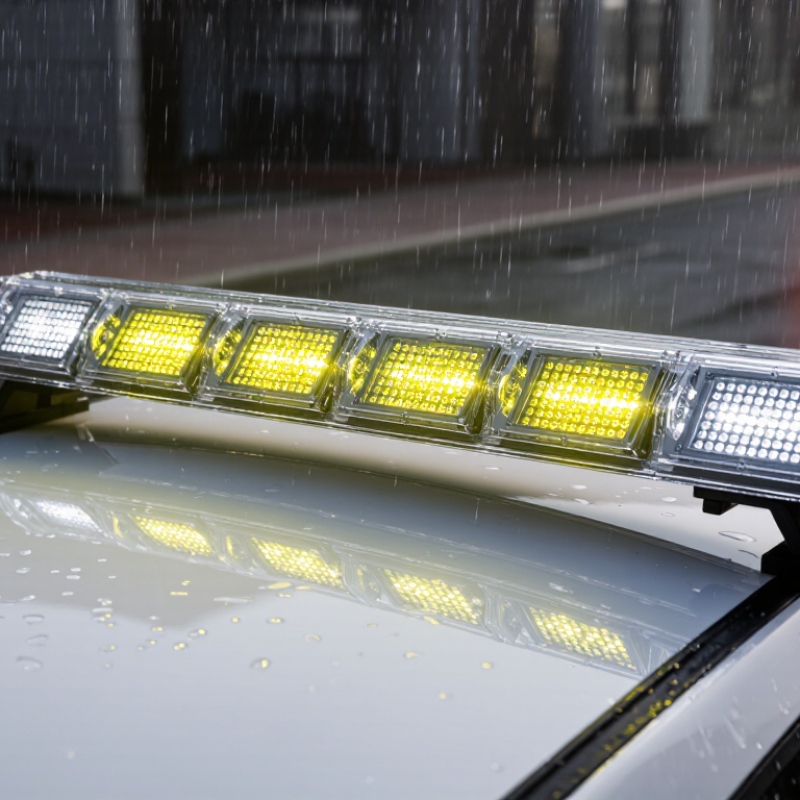
Table of Contents [Hide]
Define the Mission: Match SAE J845 Class 1 or 2 Warning Requirements
How to Choose the Right SAE LED Lightbar?
Define the Mission: Match SAE J845 Class 1 or 2 Warning Requirements
Before comparing brightness claims, identify the vehicle’s operating environment. SAE J845 defines performance classes for optical warning devices, including Class 1 and Class 2. Class 1 is the higher-intensity category; Class 2 provides a lower output. The standard evaluates measured light performance, not simply the number of LEDs or a product’s appearance. Check the lightbar’s test documentation against the applicable SAE J845 edition. Details matter.
Match the class to real conditions. A vehicle working beside sunlit roads, fast traffic, or large equipment may need the stronger warning output of Class 1. For controlled sites or lower ambient light, Class 2 may be suitable, subject to the vehicle’s role and applicable requirements. SAE J845 classification is not a substitute for checking local rules or agency specifications. A bright beam can also create glare, so mounting height, viewing angles, and flash pattern deserve attention.
Specify the required class before selecting size or features. Ask for documented SAE J845 test results, and confirm the exact model and configuration tested. A lightbar’s color or LED count alone does not prove compliance. In practice, teams sometimes choose by appearance first. That is easy to regret when the unit is installed high on a cab, partially blocked, or difficult to see from the side.
How to Choose the Right SAE LED Lightbar? - Define the Mission: Match SAE J845 Class 1 or 2 Warning Requirements
| Decision Factor | Class 1 Consideration | Class 2 Consideration | Practical Selection Check |
|---|---|---|---|
| Typical mission profile | Consider Class 1 when the vehicle regularly operates in high-risk or high-priority situations where stronger warning performance is required. | Consider Class 2 for duties where a lower warning-output class is suitable for the operating environment and applicable rules. | Document the vehicle’s tasks, operating locations, and required warning level before comparing products. |
| Traffic and roadside exposure | May be appropriate for demanding roadside or emergency-response work, subject to the relevant vehicle requirements and local regulations. | May suit less demanding service or maintenance duties when the responsible authority permits this class. | Consider traffic speed, lane exposure, work duration, sight lines, and whether the vehicle is stationary or moving. |
| Light output classification | Class 1 represents a higher performance class than Class 2 under the applicable SAE J845 test criteria. | Class 2 represents a lower performance class than Class 1 under the applicable SAE J845 test criteria. | Request test documentation for the exact lightbar configuration; do not infer a class from appearance or LED count. |
| Ambient conditions | Evaluate whether the mission calls for the higher class in bright daylight or other challenging viewing conditions. | Assess whether the lower class is adequate for the expected ambient light and work setting. | SAE class alone does not guarantee a specific viewing distance in every environment. |
| Glare and close-range exposure | Higher output should be managed carefully to reduce unnecessary glare for nearby workers and road users. | A lower class may be preferable where close-range exposure is frequent, if it still meets the mission’s requirements. | Review dimming options, nighttime operating procedures, mounting position, and applicable rules. |
| Compliance verification | Confirm that the precise model and configuration are documented as meeting the required SAE J845 class. | Confirm that the precise model and configuration are documented as meeting the required SAE J845 class. | Check the test report or compliance documentation, including the tested configuration and any limitations. |
| Color, flash pattern, and installation | Class selection does not by itself establish that a color, pattern, or installation is legally permitted. | Class selection does not by itself establish that a color, pattern, or installation is legally permitted. | Verify permitted colors, flash patterns, placement, and use with the relevant jurisdiction and vehicle authority. |
| Recommended decision | Choose Class 1 when the mission or governing requirement calls for the higher performance class and the installation is authorized. | Choose Class 2 when it meets the documented mission requirement and is permitted for the vehicle and jurisdiction. | When requirements are unclear, consult the fleet authority, safety officer, or applicable regulator before purchase. |
Important: SAE J845 class is a performance classification based on standardized testing. It is not, by itself, proof that a lightbar’s color, flash pattern, installation, or use is legal in a particular jurisdiction.
Brands
Proudly Trusted by Top Suppliers Worldwide






Let us know and we will automate, together to fit your industrial needs.
 +91-97254 16844
Clients
Proudly Trusted by Top Companies Worldwide


Do you need Help? Get in touch.
X
Please fill out the form below and we will get back to you as soon as possible.