o
p
t
i
m
a
r
o
b
o
t
i
c
s

Make a Call


Make a Call
Blogs
How to Choose a Security Robot in 2026?
Choosing a security robot in 2026 requires more than comparing cameras, wheels, and artificial intelligence claims. The right decision begins with the site. A university courtyard needs different capabilities from a warehouse corridor or a residential entrance. Lighting, rain, floor surfaces, elevator access, network coverage, and human traffic can change performance within minutes.
Industry evidence shows strong momentum. The International Federation of Robotics’ World Robotics 2024 report records continued growth in professional service robots, especially for transport, inspection, and public-facing operations. MarketsandMarkets’ Security Robots Market forecast also identifies surveillance, patrol, and remote monitoring as major application areas. These reports are useful, but they should not be treated as purchase guarantees. Market forecasts often combine different robot types and regional assumptions.
“ The future of security is autonomous,” says William Santana Li, Chairman and CEO of Knightscope. His statement captures the direction of the sector, yet autonomy should remain measurable. Buyers should examine detection accuracy, false-alarm frequency, battery endurance, charging time, response procedures, and integration with existing security teams. A robot that records a quiet parking lot but misses a person behind a delivery truck is not truly effective.
Look for pilot evidence, not polished demonstrations. Ask vendors for maintenance records, uptime data, cybersecurity controls, accessibility testing, and independent evaluation results. Privacy governance matters as much as patrol coverage. The NIST AI Risk Management Framework offers a practical reference for assessing reliability, transparency, and human oversight.
There is no perfect machine. Even experienced teams can choose poorly when demonstrations replace site testing. A careful 2026 decision should balance automation with human judgment, measurable outcomes, and honest limitations.
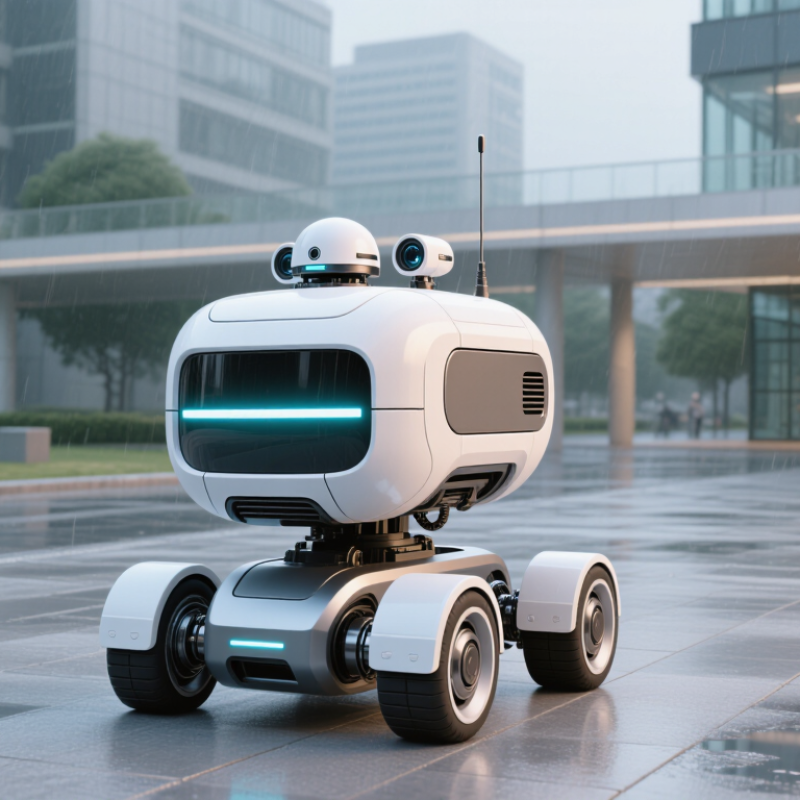
Table of Contents
[Hide]
Define Your Security Needs and Operating Environment
Choosing a security robot in 2026 starts with the site, not the machine. Start with the site. Walk the planned route at 2 a.m. Record entrances, blind corners, elevators, ramps, reflective glass, rain exposure, and radio dead zones. Define the real objective: visible deterrence, incident detection, patrol records, or faster human response. These are different jobs. A robot designed for smooth warehouses may struggle on gravel, crowded lobbies, or wet loading docks. Set measurable targets, such as verified alerts per shift and response time.
The International Federation of Robotics reported more than 205,000 professional service robots sold worldwide in 2023, in its World Robotics 2024 report. That growth shows a developing market, not automatic suitability. NIST’s AI Risk Management Framework also emphasizes context, monitoring, and human oversight. These principles matter when cameras face changing light, uniforms, visitors, and moving vehicles. Test detection accuracy by location and shift. Do not trust a daytime demonstration alone.
Define autonomy boundaries before procurement. Decide when the robot may reroute, pause, escalate, or transfer control to an operator. Measure battery endurance on the actual route, not a brochure loop. Check network resilience, maintenance access, and data retention with technical and privacy teams. I would not ignore staffing realities. A robot still needs people. A neat specification sheet can mislead. I have seen pilots fail because floor plans were outdated. That was preventable. Leave room for exceptions, repairs, and human judgment. Perfect routes rarely survive the first busy week.
How to Choose a Security Robot in 2026? - Define Your Security Needs and Operating Environment
| Decision Dimension | Operating Environment | Security Need and Risk Profile | Recommended Capability or Data Range | Selection Guidance |
|---|---|---|---|---|
| Site Coverage Area | Warehouses, campuses, logistics yards, parking facilities, and industrial compounds | Large areas require regular patrols, incident verification, and fewer blind spots | Typical autonomous patrol planning should support routes of approximately 5–20 km per shift, depending on terrain, speed, payload, and charging access | Choose route-planning software with configurable waypoints, geofencing, and automatic return-to-charge functions |
| Indoor or Outdoor Operation | Indoor corridors and production floors, outdoor roads, loading zones, or mixed sites | Outdoor deployment introduces rain, dust, uneven surfaces, temperature changes, and changing light conditions | Outdoor models should have a documented ingress-protection rating, all-terrain drive system, obstacle detection, and weather operating limits | Select a platform tested for the actual site conditions rather than relying only on laboratory specifications |
| Surface and Terrain | Smooth floors, ramps, pavement, gravel, expansion joints, curbs, or moderate inclines | The robot must maintain stable movement and sensing across the most difficult section of the patrol route | Check maximum slope, ground clearance, turning radius, wheel or track design, and ability to cross the site’s largest floor gaps | Test the robot on representative surfaces with its complete sensor and payload configuration |
| Patrol Duration | Sites requiring continuous monitoring during one shift or overnight periods | Frequent charging interruptions can create unmonitored periods and reduce patrol consistency | A practical target is 6–12 hours of operating time per charge, subject to speed, terrain, sensors, temperature, and network usage | Compare effective patrol time, charging time, battery replacement process, and automatic charging reliability |
| Detection and Verification | Perimeters, entrances, restricted zones, equipment rooms, and parking areas | The system should identify people, vehicles, open doors, smoke, abnormal heat, and unauthorized access where applicable | Consider visible-light cameras, low-light or infrared imaging, thermal sensing, microphones, and configurable event rules | Prioritize useful detection accuracy in the site’s real lighting and background conditions over the number of installed sensors |
| Perimeter Monitoring | Fences, gates, remote boundaries, construction sites, and outdoor storage areas | The robot must detect intrusion attempts while reducing false alarms caused by animals, shadows, weather, or moving vegetation | Use route geofencing, intrusion-zone alerts, night-capable imaging, obstacle detection, and location-stamped event records | Confirm that alerts include image or video evidence, exact location, time, and escalation options |
| Navigation and Positioning | Complex indoor layouts, open yards, repetitive aisles, or areas with changing obstacles | Reliable navigation is essential for repeatable patrols and accurate incident location | Look for map-based navigation using suitable combinations of lidar, cameras, inertial sensors, wheel odometry, and satellite positioning outdoors | Evaluate performance when people, pallets, vehicles, doors, or temporary barriers change the planned route |
| Connectivity | Sites with stable Wi-Fi, private cellular coverage, wired infrastructure, or intermittent connectivity | Loss of connectivity should not immediately stop basic patrol and safety functions | Support for more than one communication method, local data buffering, remote diagnostics, and safe behavior during connection loss | Verify coverage throughout the entire route and define what functions remain available offline |
| Human-Robot Interaction | Public buildings, campuses, hospitals, retail areas, and shared industrial spaces | The robot must operate safely around pedestrians, workers, visitors, and mobility aids | Use speed limits, emergency stop controls, audible or visual status indicators, obstacle avoidance, and configurable yielding behavior | Conduct supervised trials during peak pedestrian activity and review accessibility and workplace-safety requirements |
| Alarm and Response Workflow | Sites with security control rooms, guards, emergency teams, or integrated access-control systems | Detection is valuable only when alerts reach the right person and support a documented response process | Look for role-based notifications, event prioritization, live video access, two-way audio where appropriate, and system integration interfaces | Map each alert type to an owner, response time, verification step, and escalation procedure before deployment |
| Data Protection | Locations recording people, vehicles, conversations, or sensitive operational activity | Collected data must be protected, access-controlled, retained only as needed, and handled according to applicable privacy rules | Require encrypted communications, user authentication, audit logs, configurable retention, secure updates, and controls for camera or microphone access | Review data storage location, administrator permissions, deletion procedures, and privacy impact before purchase |
| Environmental Tolerance | Hot, cold, dusty, humid, rainy, or partially exposed locations | Temperature, moisture, dust, and vibration can affect battery performance, sensors, and mechanical reliability | Check published operating temperature, humidity limits, ingress protection, charging temperature limits, and maintenance requirements | Use the worst expected seasonal conditions, not the average annual conditions, as the acceptance baseline |
| Maintenance and Serviceability | Remote facilities, multi-site operations, or locations with limited technical staff | Long recovery times can reduce coverage and increase total ownership cost | Evaluate modular battery and sensor access, remote health monitoring, consumable replacement intervals, diagnostics, and spare-part availability | Estimate annual maintenance hours, downtime, training needs, and local service capability |
| Safety and Compliance | Workplaces, public areas, industrial facilities, and sites with regulated operations | The system must support safe operation, documented risk assessment, and site-specific operating procedures | Check emergency stop functions, collision-risk controls, audible or visual warnings, software access controls, and available technical documentation | Complete a site risk assessment and pilot acceptance test before allowing unsupervised operation |
| Total Cost of Ownership | Single-site deployments or larger fleets across multiple locations | Purchase price alone does not reflect charging infrastructure, software, connectivity, training, maintenance, and replacement costs | Calculate five-year costs using hardware, software subscriptions, batteries, charging stations, network service, support, and labor savings | Select the solution with the best verified coverage and operational value, not simply the lowest initial price |
Note: Performance ranges are indicative planning values. Final requirements should be confirmed through an on-site pilot using the actual route, weather conditions, network coverage, staffing model, and applicable safety and privacy regulations.
Related Posts
-
Top 5 Security Robots to Watch in 2025 for Advanced Safety Solutions
-

How to Choose a Reliable Robotics Website?
-

10 Best Benefits of Cobot Automation for Modern Manufacturing
-

China Top Robot Vision Manufacturers for Global Buyers
-

Top 10 Serve Robotics Innovations for Global Buyers?
-

Top 10 Robotic Solutions Transforming Industries Today
Brands
Proudly Trusted by Top Suppliers Worldwide







Let us know and we will automate, together to fit your industrial needs.
 +91-97254 16844
Clients
Proudly Trusted by Top Companies Worldwide


Do you need Help? Get in touch.
X
Please fill out the form below and we will get back to you as soon as possible.